
Imagine an Indian garment manufacturer receives a large export enquiry from a European retailer. The product quality is excellent, the pricing is competitive, and the production capacity is sufficient. But before discussing the order, the buyer asks three questions: Are workers paid fairly? Are factory safety practices documented? Can the manufacturer show where its raw materials come from?
This is where a good product is no longer enough. International buyers increasingly want to understand how a product is made, who makes it and whether the businesses involved follow responsible working practices.
For Indian manufacturers, this shift makes Sedex supply chain transparency an important part of building long-term relationships with international buyers. It helps businesses share information about workplace conditions, labour practices, health and safety, environmental performance and business ethics through a common platform.
However, Sedex is not simply another compliance document to collect before exporting. It can help businesses identify workplace risks, improve internal processes, prepare for buyer assessments and demonstrate a more responsible approach to sourcing.
In this guide, we will explore how Sedex works, its commercial benefits for Indian businesses, its role in ethical sourcing and how manufacturers can use it to build stronger buyer relationships.
What Is Sedex and How Does It Work?
Sedex is a global membership organisation and online platform that helps businesses manage, assess and share information about responsible business practices across their supply chains. It gives buyers and suppliers a common system to review workplace conditions, identify risks and track improvements.
The platform is particularly useful for manufacturers working with international retailers, importers, distributors and sourcing companies.
Sedex works through three important elements:
- Business membership: Companies register on the platform to maintain and share information about their business operations and supplier sites.
- Supplier assessments: Businesses complete self-assessment questionnaires covering their workplace practices, policies and potential risks.
- SMETA audits: Independent, approved audit companies conduct workplace assessments using the Sedex Members Ethical Trade Audit (SMETA) methodology.
According to Sedex’s official explanation, its platform supports supply chain due diligence, risk assessments, supplier information sharing and continuous improvement. It also helps buyers review information about suppliers without repeatedly requesting the same information.
Sedex vs SMETA: Are They the Same?
No. Sedex and SMETA are connected, but they serve different purposes. Sedex provides the platform for managing and sharing ethical trade information, whereas SMETA is the audit methodology used to assess workplace practices.
Understanding this difference is important because many Indian manufacturers use the term Sedex certification when referring to their SMETA audit or membership.
| Parameter | Sedex | SMETA |
| What is it? | Global membership organisation and platform | Social and ethical audit methodology |
| Main purpose | Manage and share supply chain information | Assess workplace conditions and business practices |
| Who uses it? | Buyers, suppliers and manufacturers | Suppliers, manufacturers and buyers |
| Assessment | Self-assessment and risk information | Independent workplace audit |
| Outcome | Shared business and supplier information | Audit findings and corrective action plan |
| Certification status | Not a certification | Not a certification |
Important: Sedex does not issue a pass or fail certificate. Neither membership nor a completed SMETA audit is a certification. The purpose is to identify risks, document findings and encourage improvements. Sedex confirms this distinction on its official website.
For businesses looking for Sedex certification services, the first step should therefore be to understand the buyer’s actual requirement: supplier membership, a SMETA audit, a specific audit scope or a combination of these.
Why Is Supply Chain Transparency Important for Indian Businesses?
Supply chain transparency means knowing where products and raw materials come from, who is involved in their production and whether suppliers follow responsible business practices. It helps companies identify risks before they affect workers, customers or business relationships.
India has a large manufacturing and export ecosystem covering textiles, garments, food processing, pharmaceuticals, chemicals, leather, engineering goods and other industries.
According to the Ministry of Commerce and Industry’s Annual Report 2025–26, India’s merchandise exports reached approximately US$437.70 billion in FY 2024–25. This scale of international trade makes supplier reliability and responsible sourcing increasingly important for businesses competing in global markets.
Commerce.gov.in
Consider an Indian garment exporter supplying products to a European retail brand. The buyer may want information about:
- Whether workers receive wages on time.
- Whether working hours and overtime are properly recorded.
- Whether employees have access to safe drinking water and clean facilities.
- Whether fire exits and emergency equipment are maintained.
- Whether subcontractors follow acceptable labour practices.
- Whether the factory manages waste and hazardous materials responsibly.
Without proper records, even a factory with good workplace practices may struggle to demonstrate them to an international buyer.
This is where Sedex supply chain transparency becomes commercially useful. It helps businesses organise relevant information, communicate their practices and make workplace risks more visible to their customers.
Why Are International Buyers Asking More Questions About Ethical Sourcing?
International buyers are under increasing pressure to understand the working conditions and environmental impact associated with their products. As a result, supplier selection is no longer based only on price, quality and delivery timelines.
The International Labour Organization (ILO), in its 2022 Global Estimates of Modern Slavery, reported that approximately 27.6 million people were living in forced labour worldwide. Its research also highlights the connection between forced labour, exploitation and weaknesses in employment practices.
For an Indian manufacturer, this means that buyers may ask for evidence of responsible recruitment, wage payments, working hours, worker safety and supplier monitoring.
Regulatory developments are adding to these expectations. The European Union’s Forced Labour Regulation will apply from 14 December 2027, prohibiting products made with forced labour from being placed on, made available on or exported from the EU market. It applies regardless of where the products originate.
This regulation does not make Sedex membership mandatory. However, it highlights why manufacturers should build reliable systems to understand their suppliers and identify labour-related risks.
For Indian exporters, Sedex for exporters can support this preparation by providing a structured way to share workplace information and respond to buyer assessments.
8 Major Ways Sedex Improves Supply Chain Transparency and Ethical Practices
The biggest advantage of Sedex is that it turns scattered workplace information into a more organised system for identifying risks, sharing evidence and tracking improvements. Instead of treating compliance as a one-time exercise, businesses can use it as an ongoing management process.
Here are eight practical ways it can improve operations for Indian manufacturers and exporters.
1. Improves Visibility Across the Supply Chain
Supply chain visibility allows businesses to understand which suppliers, production facilities and business partners are involved in delivering a product. This helps buyers identify potential problems beyond their direct suppliers.
For example, an Indian food processing company may purchase packaging material from one supplier, ingredients from another and transportation services from a third party. If one of these partners has poor labour practices, the buyer may face reputational or commercial risks.
Sedex supply chain transparency helps businesses maintain relevant supplier information and share details with authorised customers through its platform.
This can support:
- Better supplier identification and mapping.
- More organised supplier information.
- Easier sharing of workplace assessment results.
- Improved visibility of identified risks.
- Better communication between buyers and suppliers.
Sedex’s platform also provides supplier discovery and information-sharing features, helping businesses review supplier profiles and available assessment information.
2. Helps Identify Labour Rights Violations
Responsible sourcing starts with understanding how workers are treated at the workplace. Businesses need to identify issues such as unpaid wages, excessive working hours, discrimination, forced labour and unsafe employment conditions.
SMETA audits assess workplace practices and help identify areas where improvements are required.
For example, a textile manufacturing unit in Tiruppur may maintain wage records but fail to document overtime payments correctly. An assessment can identify this gap and help the factory establish a more consistent payroll process.
Some common areas reviewed include:
- Employment contracts and wage records.
- Working hours and overtime.
- Child labour and forced labour risks.
- Discrimination and worker treatment.
- Grievance mechanisms.
- Freedom of association and worker representation.
The ILO’s estimate of 27.6 million people in forced labour globally demonstrates why these issues require serious attention rather than being treated as routine documentation requirements.
3. Strengthens Workplace Health and Safety
A factory cannot claim to follow responsible business practices if employees are regularly exposed to unsafe working conditions.
Sedex assessments help businesses review workplace safety arrangements and identify hazards that could affect employees.
For example, a food processing factory may have high-speed machinery, electrical equipment, hot surfaces and chemical cleaning agents. Without suitable protective equipment, machine guards and emergency procedures, these conditions can put workers at risk.
A workplace assessment may examine:
- Fire safety equipment and emergency exits.
- First-aid facilities and medical arrangements.
- Machine safety and protective equipment.
- Electrical safety and maintenance records.
- Safe storage of chemicals.
- Employee training and emergency drills.
Addressing these issues can reduce workplace incidents, improve employee confidence and support more consistent production operations.
4. Encourages Better Environmental Management
Ethical business practices also involve understanding how manufacturing activities affect the environment.
SMETA’s four-pillar methodology includes an Environment pillar that helps businesses assess environmental management practices at their worksites.
For Indian manufacturers, this can involve reviewing:
- Waste segregation and disposal.
- Water consumption and wastewater management.
- Air emissions and pollution controls.
- Chemical storage and handling.
- Environmental permits and applicable legal requirements.
- Energy consumption and environmental improvement measures.
Consider a dyeing unit in Gujarat that generates wastewater during fabric processing. If wastewater is not properly managed, it can create environmental concerns and expose the business to compliance risks.
An environmental assessment helps the factory identify gaps and take corrective action.
Sedex is not a replacement for statutory environmental permissions or regulatory compliance. Instead, it can complement existing environmental management systems by making relevant practices and findings more visible to business partners.
5. Makes Supplier Monitoring More Structured
Many Indian exporters work with several suppliers, subcontractors and third-party service providers. Monitoring each business through separate spreadsheets, emails and audit reports can become difficult as the supply chain grows.
Sedex provides a shared platform where relevant business information and assessment findings can be managed and made available to authorised customers.
This can help businesses:
- Maintain supplier information in one place.
- Review available assessment information.
- Identify suppliers requiring additional attention.
- Track corrective actions.
- Share relevant information with multiple buyers.
For example, an Indian home furnishing exporter working with 15 fabric and packaging suppliers can use a more structured monitoring approach rather than depending entirely on individual email updates.
This makes Sedex supply chain transparency useful not only for large manufacturers but also for growing businesses managing multiple buyer relationships.
6. Builds Trust Between Buyers and Suppliers
International buyers want suppliers who can provide clear answers about their operations and demonstrate that identified issues are being addressed.
When a manufacturer maintains organised records, communicates openly and takes corrective action, it becomes easier for buyers to evaluate its responsible sourcing practices.
This is particularly relevant for businesses targeting European, UK, Australian and other international markets where customers may have established supplier assessment processes.
The platform allows suppliers to share relevant information with connected buyers, subject to access permissions. Sedex also highlights the benefit of completing business information once and sharing it with multiple customers.
In practical terms, this can support Sedex buyer trust by giving customers greater visibility into supplier practices.
However, a good audit report does not automatically guarantee an order. Buyers also consider product quality, price, production capacity, delivery performance and their own sourcing requirements.
7. Supports Risk Reduction and Corrective Action
Identifying a problem is only the first step. Businesses also need a process to correct it, prevent it from happening again and monitor whether the solution works.
SMETA audits provide findings and a Corrective Action Plan (CAPR), which helps suppliers understand the issues identified and the actions needed.
For example:
| Audit finding | Possible corrective action |
| Missing overtime records | Maintain accurate overtime registers and payroll evidence |
| Blocked emergency exits | Clear exit routes and introduce regular safety inspections |
| Inadequate worker training | Conduct training and maintain attendance records |
| Poor chemical storage | Introduce proper labelling and designated storage areas |
| No effective grievance mechanism | Establish confidential worker complaint procedures |
| Missing wage documentation | Improve payroll records and payment tracking |
Sedex’s platform also supports assigning corrective actions, setting deadlines, requesting evidence and tracking closure.
This makes Sedex supply chain transparency more than an information-sharing exercise. It encourages businesses to use assessment findings to improve actual workplace conditions.
8. Prepares Businesses for Changing Buyer and Regulatory Expectations
Supply chain expectations are changing, particularly for businesses selling to international markets.
Buyers increasingly want suppliers to demonstrate how they identify labour risks, monitor working conditions and address environmental concerns.
The OECD’s Responsible Business Outlook 2026 explains that risk-based due diligence should help businesses identify and prioritise actual and potential adverse impacts across their operations and business relationships. It also highlights the importance of appropriate supplier engagement and supply chain information.
For Indian exporters, this means preparing supplier records, understanding subcontracting arrangements and maintaining evidence of workplace improvements.
Sedex supply chain transparency can support these activities by giving businesses a common platform for organising and sharing relevant information with their customers.
It should be viewed as one part of a wider responsible sourcing system, not as a substitute for applicable laws, buyer-specific requirements or other due diligence obligations.
Key Commercial Benefits of Sedex for Indian Manufacturers and Exporters
The value of Sedex goes beyond workplace compliance. It can help Indian businesses improve supplier relationships, respond to buyer requirements, reduce repeated assessments and strengthen their position when competing for international business.
Here are the most relevant commercial advantages.
1. Better Opportunities to Work With International Buyers
Many international retailers and sourcing companies have supplier assessment requirements before approving new manufacturing partners.
A manufacturer with organised workplace records and a completed buyer-requested assessment may find it easier to move through the supplier evaluation process.
For example, an Indian leather goods manufacturer approaching a UK retailer may be asked to provide information about worker safety, wages, subcontracting and environmental practices.
Having this information ready can make the supplier evaluation process more organised.
This is one of the important Sedex benefits for businesses looking to build relationships with international buyers.
2. Reduced Repetition in Buyer Assessments
Suppliers often receive similar compliance questionnaires from different customers. Responding to every request separately can consume time and create inconsistencies.
Sedex allows businesses to share relevant information with multiple connected buyers, subject to access permissions.
This can help manufacturers:
- Reduce repeated information requests.
- Maintain more consistent supplier records.
- Share available audit information.
- Improve communication with sourcing teams.
- Spend less time managing separate compliance responses.
3. Stronger Business Reputation
A company’s reputation depends on more than the products it manufactures. Buyers also consider how it treats employees, manages suppliers and responds to identified problems.
A business that can demonstrate responsible workplace practices is better positioned to communicate its approach to ethical sourcing.
This is where ethical trade benefits become commercially relevant. Responsible practices can support stronger business relationships, improve supplier credibility and help manufacturers meet customer expectations.
4. Better Preparedness for Export Market Requirements
Exporters targeting international markets may face different requirements depending on their buyers, products and destination countries.
For example, a European retailer may have a supplier code of conduct, while a UK food importer may require specific workplace assessment information.
Maintaining organised compliance records helps manufacturers respond to these requests more efficiently.
This is one reason the benefits of Sedex for exporters in India extend beyond audit preparation. It can help businesses establish a more organised approach to supplier communication and responsible sourcing.
5. Improved Internal Management
A well-managed compliance system can improve everyday factory operations.
When businesses regularly review wages, working hours, safety arrangements and environmental practices, they can identify gaps before they become larger operational problems.
For example, a factory that introduces regular safety inspections may identify damaged electrical equipment before it causes an accident.
These improvements can support employee confidence, reduce avoidable disruptions and create more consistent operating procedures.
6. Greater Supplier Accountability
A manufacturer’s ethical responsibilities do not always end at its factory gate.
If a business purchases materials from suppliers that use unsafe working conditions or unacceptable labour practices, these issues can affect its own buyer relationships.
A structured supplier monitoring process encourages businesses to communicate expectations, review available evidence and address concerns with their suppliers.
This is particularly important for exporters working with subcontractors or multiple production partners.
How Does Sedex Support the Four Pillars of Ethical Trade?
The SMETA four-pillar audit assesses four important areas: Labour Standards, Health and Safety, Environment and Business Ethics. These pillars help businesses understand workplace conditions and identify areas requiring improvement.
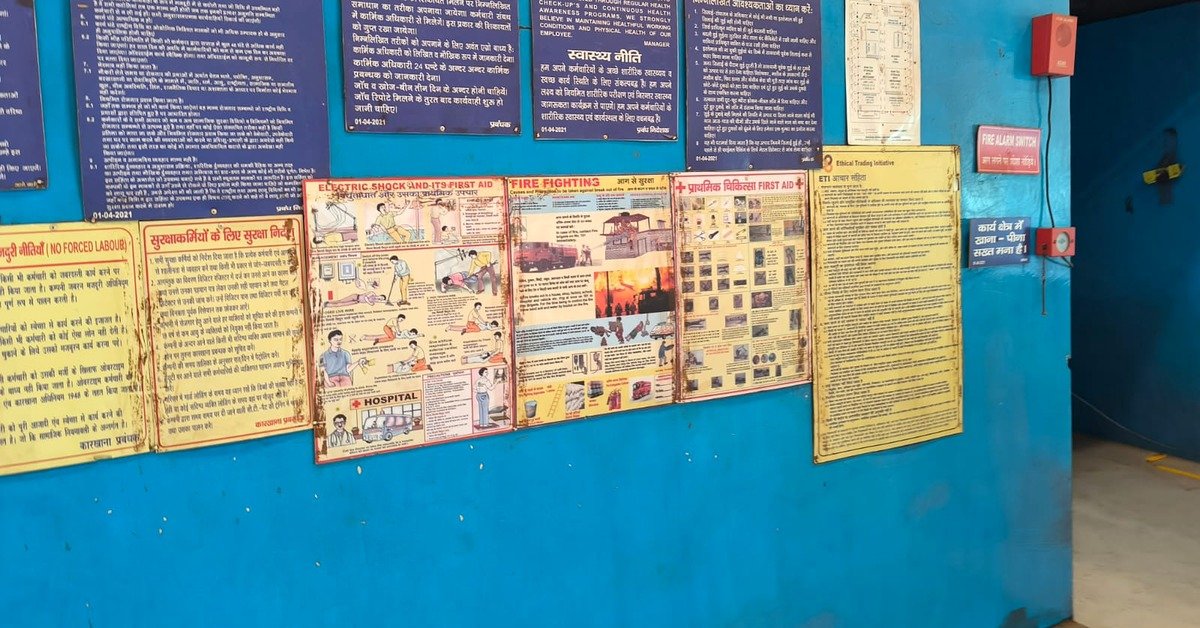
Sedex’s official SMETA information explains that the four-pillar assessment combines the two foundational pillars with environmental and business ethics assessments.
Responsible Sourcing & Ethical Practices
- Labour Standards
Reviews wages, working hours, employment terms, discrimination, forced labour and child labour risks.
- Health and Safety
Examines workplace hazards, fire safety, emergency arrangements, protective equipment and employee welfare.
- Environment
Reviews waste management, pollution control, chemical handling, resource use and environmental compliance.
- Business Ethics
Examines corruption, bribery, unfair business practices, transparency and effective grievance arrangements.
The four pillars are assessed through the SMETA audit methodology. The applicable audit scope should be confirmed with the buyer.
Which SMETA Audit Should an Indian Manufacturer Choose?
SMETA offers two main audit scopes: a two-pillar audit and a four-pillar audit. The right option depends on the buyer’s requirements and the level of assessment needed.
| Assessment area | Two-pillar audit | Four-pillar audit |
| Labour Standards | Yes | Yes |
| Health and Safety | Yes | Yes |
| Environment | No | Yes |
| Business Ethics | No | Yes |
Sedex reports that around 70% of SMETA audits use the four-pillar scope, reflecting its wider coverage of workplace sustainability practices.
Responsible Sourcing & Ethical Practices
Practical advice: Do not select an audit scope only because it appears more comprehensive. Confirm what your buyer expects before booking an assessment.
How Indian Businesses Can Prepare for Sedex Membership and a SMETA Audit
Preparing for an assessment involves reviewing workplace practices, organising supporting documents and correcting existing gaps. Businesses should not wait until an auditor arrives to start checking their records.
A structured preparation process can make the assessment more manageable.
Step 1. Understand Your Buyer’s Requirements
Start by asking the buyer what exactly is required.
Confirm whether the buyer expects:
- Active Sedex supplier membership.
- A SMETA two-pillar or four-pillar audit.
- An initial audit or follow-up audit.
- A specific audit scope or site coverage.
- Additional customer-specific policies or documents.
This prevents businesses from spending money on an assessment that does not meet the customer’s expectations.
Step 2. Register Your Business on Sedex
The next step is to select the appropriate membership and register the business or manufacturing site.
Sedex supplier membership allows businesses to maintain their information, complete relevant assessments and share information with connected buyers.
According to Sedex’s published supplier membership information, the platform offers different membership options, with pricing charged annually per site. Its published prices are £224 for Standard membership and £374 for Supplier Plus membership. Businesses should verify the latest fees and applicable taxes directly with Sedex before budgeting.
Grow Beyond Compliance
Step 3. Complete the Self-Assessment Questionnaire
The Self-Assessment Questionnaire (SAQ) helps businesses review their existing policies and workplace practices.
It covers areas such as:
- Labour management.
- Employee working conditions.
- Health and safety arrangements.
- Environmental practices.
- Business ethics.
- Supplier management.
The questionnaire helps identify areas where further documentation or operational improvements may be required.
Step 4. Organise Your Compliance Documents
One of the most common preparation challenges for Indian factories is maintaining complete and updated records.
Businesses should organise the following documents according to their operations and applicable legal requirements.
| Document category | Examples of records |
| Employee records | Employee register, appointment letters, identity and age verification records |
| Wage records | Salary registers, payslips, bank payment evidence |
| Working hours | Attendance registers, shift schedules and overtime records |
| Health and safety | Risk assessments, training records, fire equipment maintenance |
| Environmental | Waste disposal records, environmental permissions and monitoring records |
| Business ethics | Anti-bribery policy, grievance procedures and disciplinary policies |
| Legal compliance | Applicable registrations, licences and statutory records |
Not every document applies to every business. The factory should maintain records based on its activities, workforce and applicable laws.
Step 5. Conduct an Internal Gap Assessment
Before the actual audit, review whether the factory’s existing practices match its documented policies.
For example, a company may have a written policy against excessive overtime but its attendance records may show employees regularly working beyond permitted limits.
Such gaps need to be identified and corrected rather than simply explained during the assessment.
A pre-audit review should cover:
- Employee interviews and workplace feedback.
- Wage and attendance record verification.
- Workplace safety inspections.
- Environmental management practices.
- Subcontractor and supplier information.
- Existing legal and buyer-specific compliance gaps.
Step 6. Complete the SMETA Audit
The audit is conducted by an approved, independent Sedex Affiliate Audit Company.
Depending on the audit scope, the assessment may include:
- Management interviews.
- Worker interviews.
- Document reviews.
- Physical workplace inspections.
- Assessment of applicable legal requirements.
- Identification of non-compliances and improvement opportunities.
The auditor records findings and prepares the relevant audit report and corrective action requirements.
Step 7. Address Findings and Implement Corrective Actions
After the audit, the business should review every finding and prepare an action plan.
For instance, if the assessment identifies inadequate emergency exit signage, the factory should install appropriate signage, verify its visibility and maintain evidence of the corrective action.
Corrective actions should have:
- A clearly identified issue.
- A responsible person.
- A defined completion timeline.
- Supporting evidence.
- A method for checking whether the issue has been resolved.
This final step is essential because the objective is not simply to complete an audit. It is to improve workplace practices and maintain them over time.
How Much Does Sedex Membership and a SMETA Audit Cost in India?
The total expenditure depends on the membership option, number of sites, audit scope, factory size, workforce and the audit company’s quotation. There is no single fixed price applicable to every Indian manufacturer.
It is important to separate membership charges from audit fees and professional preparation costs.
| Cost component | What determines the cost? |
| Sedex membership | Membership type and number of sites |
| SMETA audit | Audit scope, site size, workforce and audit duration |
| Gap assessment | Existing compliance level and preparation requirements |
| Consultant charges | Scope of documentation, training and audit support |
| Corrective actions | Changes needed to address identified issues |
What Is the Difference Between Membership Fees and Audit Fees?
Membership fees are paid to Sedex for access to its platform and associated membership services. Audit fees are paid for the independent assessment carried out by an approved audit company.
A manufacturer’s total budget may also include consultant charges, staff training, documentation improvements and workplace changes.
Businesses searching for Sedex audit cost should request a quotation based on their actual site details rather than relying on a generic market estimate.
The second important consideration is the condition of the factory. A site with updated employee records, proper safety arrangements and established policies may require less preparation than one with significant compliance gaps.
For a realistic estimate, a Sedex consultant in India can review the factory’s requirements and help identify the likely preparation work before the audit is scheduled.
Is Sedex Worth It for Small Indian Manufacturers?
Yes, Sedex can be valuable for small manufacturers when their target buyers require supplier membership, ethical sourcing information or a SMETA audit. However, businesses should evaluate the cost against their actual customer requirements and export plans.
A small supplier does not necessarily need every available assessment or membership feature.
For example, consider a small textile unit in Noida supplying finished garments to an established export house. If the buyer requires a particular SMETA audit, the supplier should focus on that requirement instead of paying for unnecessary services.
Before investing, smaller manufacturers should consider:
- Whether an existing or prospective buyer requires Sedex.
- Whether the audit applies to one site or multiple facilities.
- Whether the buyer expects two-pillar or four-pillar coverage.
- Whether the factory can maintain the required records.
- Whether the investment supports a realistic business opportunity.
The benefits of Sedex for exporters in India are particularly relevant when businesses want to become more prepared for buyer assessments and develop long-term sourcing relationships.
A small manufacturer should not treat membership as a guaranteed route to export orders. It is a tool that can support credibility and responsible business practices when combined with product quality, competitive pricing and reliable delivery.
Sedex Membership and SMETA Audit: Common Mistakes Indian Manufacturers Should Avoid
Many businesses focus on obtaining an audit report but overlook the operational improvements that should come before and after the assessment.
Avoiding these mistakes can make the process more useful and reduce unnecessary delays.
| Common mistake | What businesses should do instead |
| Assuming Sedex is a certification | Understand the difference between membership and an audit |
| Selecting the wrong audit scope | Confirm the buyer’s requirements first |
| Maintaining incomplete wage records | Reconcile payroll, attendance and overtime information |
| Preparing documents only before the audit | Maintain records throughout the year |
| Ignoring worker feedback | Establish accessible grievance mechanisms |
| Overlooking subcontractors | Review relevant supplier and subcontractor risks |
| Treating audit findings as paperwork | Implement corrective actions and verify improvements |
| Assuming an audit guarantees buyer approval | Meet the buyer’s wider quality and commercial requirements |
A common misunderstanding is that completing Sedex certification automatically makes a factory approved by every international buyer.
This is incorrect. Buyers make their own supplier approval decisions, and they may have additional requirements beyond a SMETA audit.
Why Choose Legal4Sure for Sedex and SMETA Audit Support?
Preparing for an ethical trade assessment requires more than collecting documents. Businesses need to understand buyer expectations, review existing workplace practices, identify compliance gaps and implement corrective actions before the audit.
Legal4Sure helps Indian manufacturers and exporters prepare for Sedex membership and SMETA audits through practical compliance guidance and assessment support.
With experience across multiple industries, Legal4Sure supports businesses at different stages of their compliance journey.
How Legal4Sure Can Help
- Initial compliance assessment: Review existing workplace practices and identify potential gaps before the assessment.
- Documentation support: Help organise employee records, wage registers, working-hour records, safety documents and relevant policies.
- SMETA audit preparation: Guide businesses on the applicable audit scope, assessment requirements and preparation process.
- Corrective action support: Help companies understand audit findings and prepare suitable corrective action plans.
- Workplace compliance guidance: Support improvements in labour practices, occupational safety, environmental management and business ethics.
- Ongoing compliance assistance: Help businesses maintain records and improve their internal compliance systems.
Whether you are a garment manufacturer, food processor, leather exporter, engineering company or home furnishing supplier, the preparation process should reflect your actual business operations and buyer requirements.
Businesses looking for Sedex certification services should first understand what their customers expect and which assessment is relevant to their manufacturing site.
Legal4Sure also provides guidance for companies looking for a SMETA audit consultant to prepare for workplace assessments and address identified compliance gaps.
If you are unsure about the documentation, audit scope or preparation requirements, speak with Legal4Sure before scheduling your assessment.
Get Your Free Sedex Readiness Assessment
Find out where your factory stands before approaching an independent SMETA audit.
- Identify documentation gaps.
- Understand buyer-specific requirements.
- Review workplace compliance practices.
- Plan the next steps for audit preparation.
Connect with Legal4Sure for expert compliance guidance.
Key Takeaways
- Sedex is a global membership organisation and platform, not a certification body.
- SMETA is the audit methodology used to assess labour standards, health and safety, environment and business ethics.
- Better Sedex supply chain transparency helps businesses organise supplier information and communicate workplace practices to buyers.
- Indian exporters can use the platform to support responsible sourcing and respond to customer assessments.
- A SMETA audit can identify workplace risks and provide a basis for corrective action.
- Completing an audit does not guarantee an export order or automatic buyer approval.
- Businesses should confirm their buyer’s requirements before selecting membership and audit scope.
- Regular monitoring and corrective action are more valuable than preparing documents only before an assessment.
Conclusion
International buyers want more than a supplier who can manufacture products at the right price. They want businesses that understand their responsibilities towards workers, suppliers and the environment.
For Indian manufacturers, Sedex supply chain transparency provides a structured way to share workplace information, identify potential risks and demonstrate improvements to business partners.
It can also support responsible sourcing, improve internal management and help suppliers prepare for changing buyer expectations.
However, businesses should remember that Sedex membership and SMETA audits are not formal certifications. Searching for why get Sedex certified should lead manufacturers to a more useful question: how can they demonstrate responsible business practices and meet their customers’ actual compliance requirements?
If your company is planning to enter new export markets, approaching international retailers or strengthening its supplier compliance system, now is a good time to review its readiness.
Contact Legal4Sure for a free Sedex readiness assessment and understand the steps required to prepare your business for a SMETA audit.
Build a Transparent and Ethical Supply Chain with Sedex Compliance
Want to strengthen buyer trust and improve supply chain transparency? Legal4Sure helps Indian manufacturers with Sedex membership, SMETA audit preparation, supplier compliance assessments, documentation and corrective actions. Get expert guidance with a free Sedex readiness assessment.
Frequently Asked Questions
What are the benefits of Sedex?
The main benefits include improved supply chain visibility, organised supplier information, better workplace risk management, easier information sharing with buyers and support for responsible sourcing. It can also help manufacturers identify areas requiring improvement before problems affect their business relationships.
Does Sedex help win export orders?
Sedex can support supplier credibility and help businesses meet buyer-specific ethical sourcing requirements. However, it does not guarantee export orders. Buyers also evaluate product quality, pricing, production capacity, delivery performance and other supplier approval criteria.
Why do buyers ask for Sedex?
Buyers ask for Sedex to obtain better visibility into supplier operations, workplace conditions and potential labour, environmental and business ethics risks. The platform also helps suppliers share relevant information and audit findings with authorised customers.
Is Sedex worth it for small suppliers?
Yes, when a small supplier’s existing or target buyers require it. It can help smaller manufacturers organise compliance information and demonstrate responsible workplace practices. However, the supplier should first confirm the required membership and audit scope to avoid unnecessary expenses.
Why get Sedex certified if Sedex is not a certification?
Businesses often use this phrase when referring to Sedex membership or a SMETA audit. Neither provides a formal certification. The actual value lies in demonstrating workplace practices, identifying risks, addressing non-compliances and sharing relevant information with buyers.
Can a manufacturer complete a SMETA audit without Sedex membership?
No. According to Sedex, businesses and sites must have an active Sedex account to undergo a SMETA audit and share the resulting report and information through its platform.
How much time does Sedex audit preparation take?
The preparation period depends on the factory’s size, existing documentation, workplace conditions and the number of corrective actions required. Businesses with established compliance systems may need less preparation than factories with significant gaps.
Is a two-pillar SMETA audit enough for exporters?
It depends on the buyer’s requirements. A two-pillar audit covers Labour Standards and Health and Safety, while a four-pillar audit also covers Environment and Business Ethics. Exporters should confirm the required scope before scheduling the assessment.