
FSSC 22000 Updates 2026: FSSC 22000 (Food Safety System Certification) is an internationally accepted food safety standard for manufacturers, processors, packagers, distributors, and food warehouses. Developed on the basis of ISO 22000, this standard helps in ensuring safe production of food products and increasing transparency in the supply chain to help businesses meet the global food safety standards.
With the updated Version 6 imposing even more stringent criteria in order to increase consumer safety, mitigate risks, and ensure sustainability in the food industry, the upcoming FSSC 22000 Version 7 updates make it equally essential to be well aware of FSSC 22000 requirements 2026 as it is today to follow Version 6.
What is FSSC 22000?
FSSC 22000 Certification combines:
- ISO 22000: Food Safety Management System (FSMS)
- Sector Specific PRP’s
- FSSC 22000 additional requirements
This system is a combination of everything related to food safety, from hazard analysis, control procedures, traceability, and compliance. Companies that get certified according to FSSC 22000 show their dedication to manufacturing safe and quality food products.
Who Should Get FSSC 22000 Certification?
The certification is essential for a wide range of food businesses, including:
- Food processing and manufacturing plants
- Manufacturers of packaging materials
- Warehouses and distributors
- Suppliers of ingredients
- Caterers and hotels
- Food distribution channels
By obtaining FSSC 22000 Certification, these businesses show their commitment to reliable and consistent food safety practices.
Get Your FSSC 22000 Certification
Legal4sure helps food brands plan, prepare and successfully pass FSSC 22000.
Talk to our BRC experts and start your certification journey today.
Key Updates in FSSC 22000 Version 6
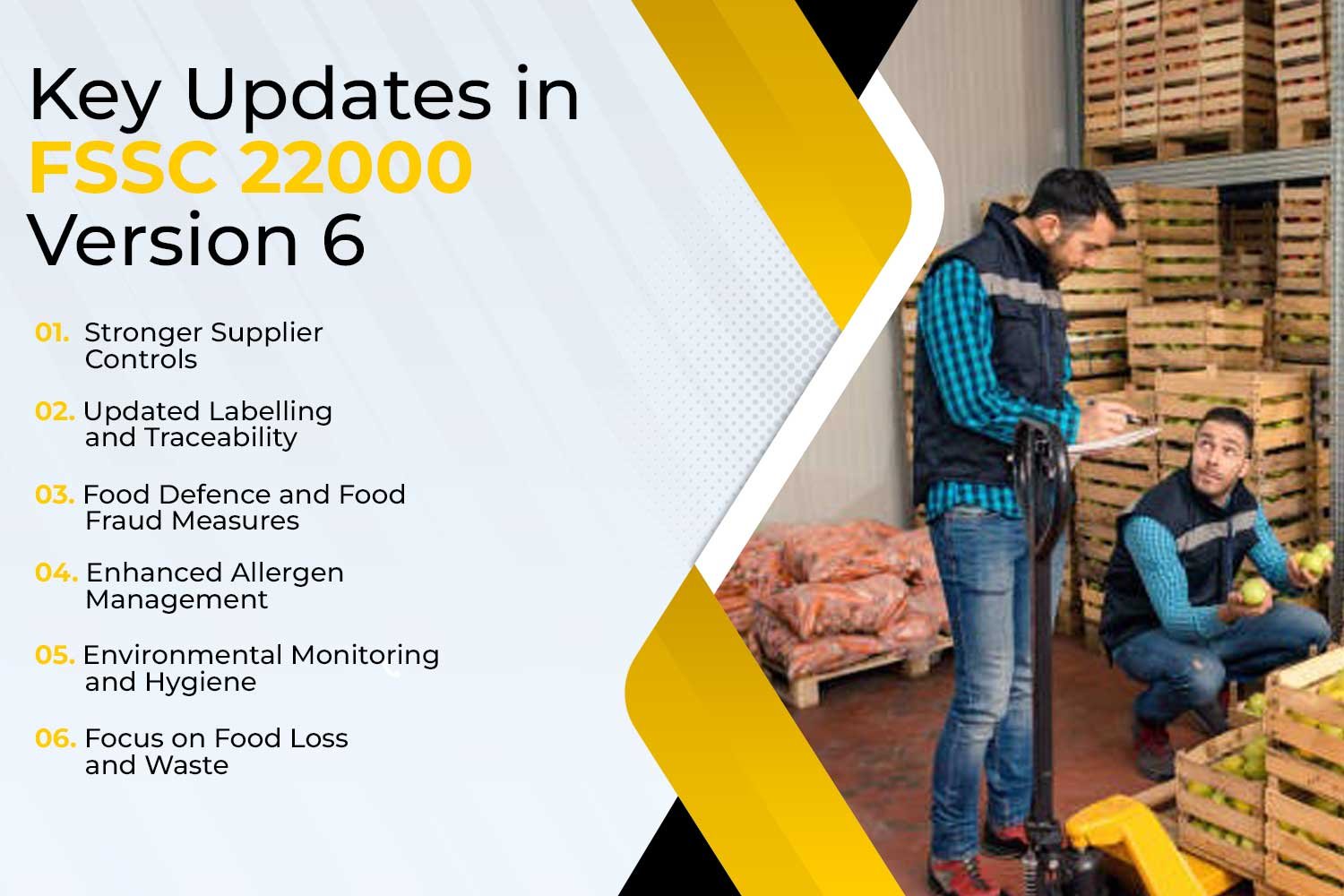
Version 6 introduces significant changes to strengthen food safety compliance and align with international expectations. Key updates include:
- Improved Supplier Control
It is important for companies to evaluate and approve suppliers of raw material, packaging, and ingredients. Documenting the assessment process will guarantee safety throughout the entire supply chain.
- Upgraded Labeling and Traceability
Labelling and traceability information should be correct and include batch numbers, ingredient information, and production data. This will decrease any chances of error and prevent mislabeling.
- Food Defense and Food Fraud
Mandatory risk assessments need to be conducted in order to minimize the potential for intentional contamination and fraud, like misrepresentation or adulteration.
- Better Allergen Control
One of the most notable changes in Version 6 is that the standard focuses on prevention of allergen cross contact.
- Environmental Monitoring and Hygiene
Environmental monitoring will be done to improve the safety of the environment for manufacturing and reduce chances of contamination.
- Food Loss and Waste Reduction
Facilities should monitor food loss and waste reduction to increase their efficiency.
All together, the above areas clearly indicate how the future upgrades to the FSSC 22000 Version 7 will develop, and as such, organizations that take steps to improve their controls in these areas will be more prepared for the upcoming FSSC 22000 requirements in 2026
FSSC 22000 Certification Requirements
To meet certification standards, organizations need to:
- Implement a documented Food Safety Management System (FSMS)
- Perform Hazard Analysis and Risk Assessment
- Implement specific PRPs for the sector
- Keep a documented supplier approval and monitoring process
- Create Food Defence and Food Fraud Plans
- Keep traceability and recall systems in place
- Perform internal audits
- Train employees on food safety procedures
- Implement hygienic practices, sanitization, and equipment maintenance
- Keep complete documentation
Step-by-Step Certification Process
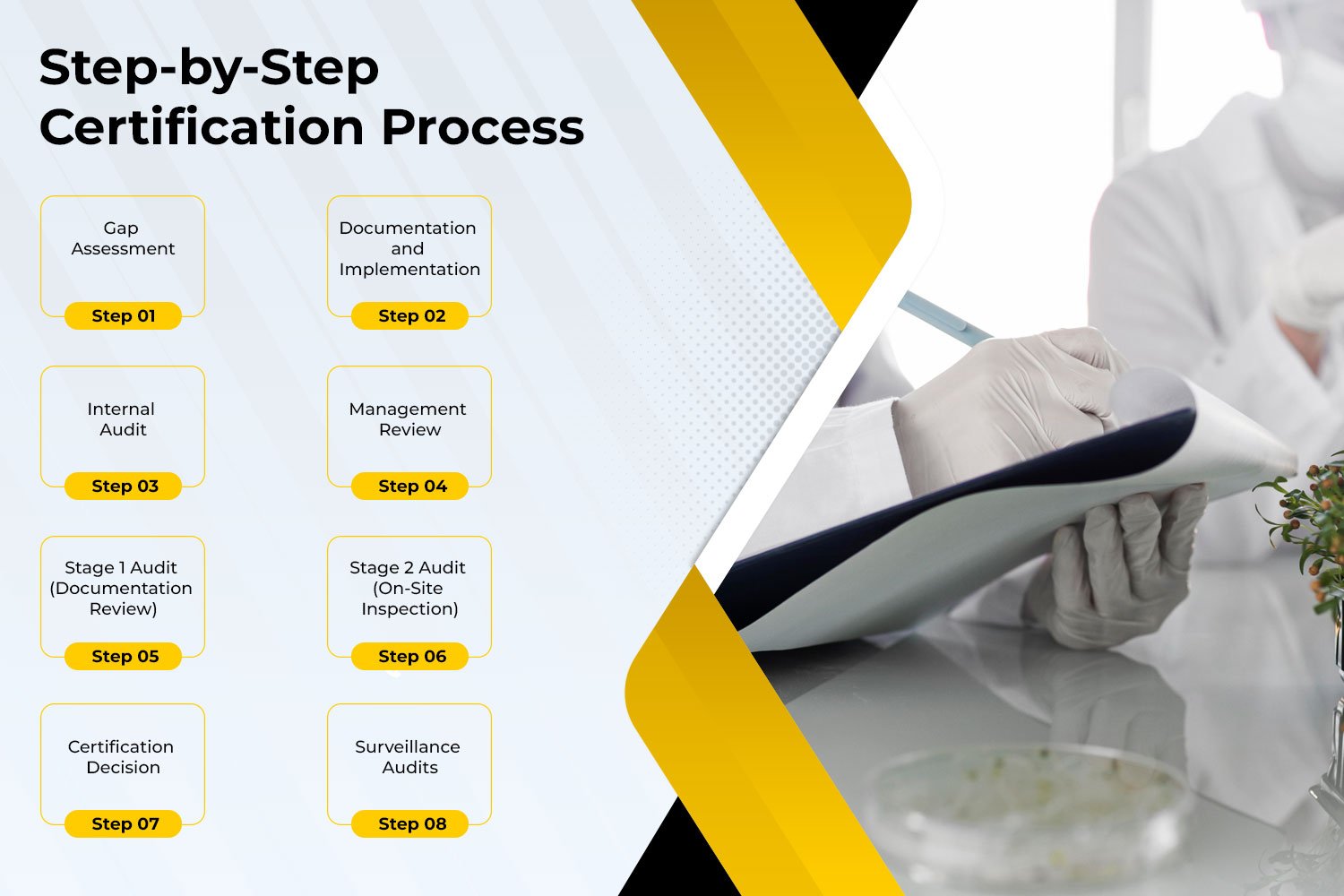
Step 1: Gap Analysis
Compare the current system with the requirements of Version 6 to spot gaps.
Step 2: Documentation and Implementation
Documentation of manuals, SOPs, hazard analysis results, PRPs, and operational control measures is done.
Step 3: Internal Audits
Perform internal audits to verify conformance and find improvements where necessary.
Step 4: Management Review
Senior management reviews audits, closes gaps, and approves actions.
Step 5: Stage 1 Audit (Document Review)
Certification body reviews your documents, processes, and readiness.
Step 6: Stage 2 Audit (Site Visit)
Auditors verify production practices, hygiene, equipment, traceability, and documentation through physical inspection.
Step 7: Certification Decision
Your organization will be awarded FSSC 22000 Certification upon satisfaction of requirements.
Step 8: Surveillance Audits
Audits performed to maintain compliance and certification.
Helpful Guide:- FSSC 22000 Certification Benefits: Why Every Food Business in India Should Get Certified (2026)
Frequently Asked Questions
What is FSSC 22000?
FSSC 22000 is a widely recognized, GFSI-certified food safety certification scheme for manufacturers of food and food packaging materials based on the ISO 22000 standard, technical standards for PRPs, and FSSC requirements.
What is the difference between ISO 22000 and FSSC 22000?
ISO 22000 is just the management system standard. FSSC 22000 is an entire GFSI-certified scheme, which includes ISO 22000, sector-specific PRPs (such as ISO/TS 22002-1) and additional requirements of FSSC 22000. Only FSSC 22000 is accepted by most global retailers.
Is FSSC 22000 recognized by GFSI?
Indeed, the FSSC 22000 is entirely recognized by the Global Food Safety Initiative (GFSI), and accepted by big retailers, including Walmart, Tesco, Costco, Carrefour, Aldi, etc.
Who needs FSSC 22000 certification?
Food producers, food ingredients suppliers, food packaging manufacturers, catering companies, food storage facilities, and transportation companies delivering food products to international retailers or aiming at food safety certification usually require FSSC 22000 certification.
What is the latest version of FSSC 22000?
The latest one is FSSC 22000 Version 6, published in April 2023 and mandatory for all audits from April 1, 2024.
How long does it take to get FSSC 22000 certified?
FSSC 22000 certification usually takes between 6 to 18 months, depending on company size and current system readiness. Stage 1 audit follows documentation completion, while Stage 2 is typically conducted 3–6 months later.
How long does it take to get FSSC 22000 certified?
The FSSC 22000 certification process lasts around 6 to 18 months, according to the size of the company and its system readiness. The Stage 1 audit comes after document preparation; the Stage 2 audit is performed 3 to 6 months later.
How much does FSSC 22000 certification cost?
It costs roughly from €8,000 to €50,000 and more according to company size, certification scope, location, consulting services, and audit costs.
How often are FSSC 22000 audits conducted?
Initial certification involves Stage 1 and Stage 2 audits. After the initial certification, a surveillance audit is done annually, and the full recertification audit every three years.
Can small companies achieve FSSC 22000 certification?
Surely, it is! The program is highly scalable, and thousands of small and medium-sized food manufacturers across the world have successfully passed the FSSC 22000 certification.
Which major companies are FSSC 22000 certified?
Over 30,000 sites across 190 countries are FSSC 22000 certified including companies like Nestlé, Unilever, Coca-Cola, Danone, PepsiCo, Mondelēz, Kraft Heinz, and many private label suppliers worldwide.