
Today’s food business environment in India differs significantly from what it was five years ago for several reasons. Primarily, it is that it can no longer be thought of as only about taste or price or package; regulatory compliance is now a core operational function of food companies. Companies must consider the impact of changing consumer behaviour, the rapid increase in the need to export products, and a more stringent enforcement approach to FSSAI. Therefore, it will be important for food companies to be aware of the Latest FSSAI Guidelines to be able to successfully operate as well as expand their companies and build brand trust and loyalty in 2026. The FSSAI will continue to update their regulations to improve the safety of the food we eat and increase transparency and traceability of products from production through distribution to consumers. This focus on increasing the safety and traceability of food products will be very important to food entrepreneurs, manufacturers, food cloud kitchens and food direct-to-consumer businesses because it enables them to remain in compliance with FSSAI’s regulations to ensure the continued viability and growth of their companies.
This blog post will help those who operate food businesses understand what FSSAI updates and amendments will be important for them to follow in 2026. In recent years, FSSAI has changed its focus from being a licensing body to acting as an active regulator in the areas of prevention, traceability, and protection of consumers. As a result, there have been rapid increases in the number of inspections performed, increased restrictions placed on digital reporting, and there are now stricter penalties associated with being out of compliance with FSSAI regulations. For food businesses, this means:
- Faster scrutiny during audits
- Higher documentation expectations
- Greater accountability for product claims
- Major importance of compliance readiness
Neglecting the updated FSSAI guidelines can lead to delayed launches, product recalls, license suspension, or legal penalties.
Chat with us directly on WhatsApp for a free review:
Intense Focus on Food Safety Management Systems (FSMS)
One of the most vital regulatory directions carrying forward into 2026 is FSSAI’s emphasis on Food Safety Management Systems (FSMS).
Food businesses are now expected to:
- Maintain written FSMS plans
- Identify critical control points in production
- Document hygiene, sanitation, and pest control practices
- Train staff on food safety protocols
During inspections, officers increasingly check whether food safety is built into daily operations rather than handled as a one-time compliance activity.
Mandatory Digital Compliance and Online Reporting
The FSSAI’s emphasis has aggressively expanded toward the “digital” era. By 2026, it is anticipated that the entire Food Business sector will be interacting with FSSAI online during the licensing, renewal, modification and annual returns processes.
Key updates include:
- Online submission of Form D1 (annual returns)
- Digital tracking of license validity and modifications
- Faster response timelines for compliance notices
Any deadlines missed from now on for the submission of an annual return or for updating a license will automatically lead to a violation notice being issued, together with penalties. In case a food business is running in more than one state, it is very important to have the same details in all the digital files.
Learn More About: How to Get FSSAI Registration →
Food Labelling and Claim Regulations
The food labelling market continues to be tightly regulated by the FSSAI, and the most recent guidelines are designed to promote consumer clarity, accuracy and honesty regarding food labelling.
Key labelling updates food businesses should track:
- Clear distinction between nutritional information and marketing claims
- Tighter control over terms like “healthy,” “natural,” “immunity boosting,” and “high protein”
- Mandatory allergen declarations with improved visibility
- Uniform font size and placement requirements
Misleading claims, as a matter of fact, even if they are not deliberate, are handled with seriousness these days. Brands are under an obligation to check whether every single claim made on their labels is not only backed up by scientific evidence but also allowed by law.
Increased Scrutiny of Health Foods and Nutraceuticals
Food and Nutraceuticals, health foods, dietary supplements, and functional beverages are still considered a high-risk category under FSSAI regulations. This is the main reason for the continued strict oversight of the authorities in 2026. The authorities’ attention to this segment is caused by the increasing demand of consumers and the misuse of claims.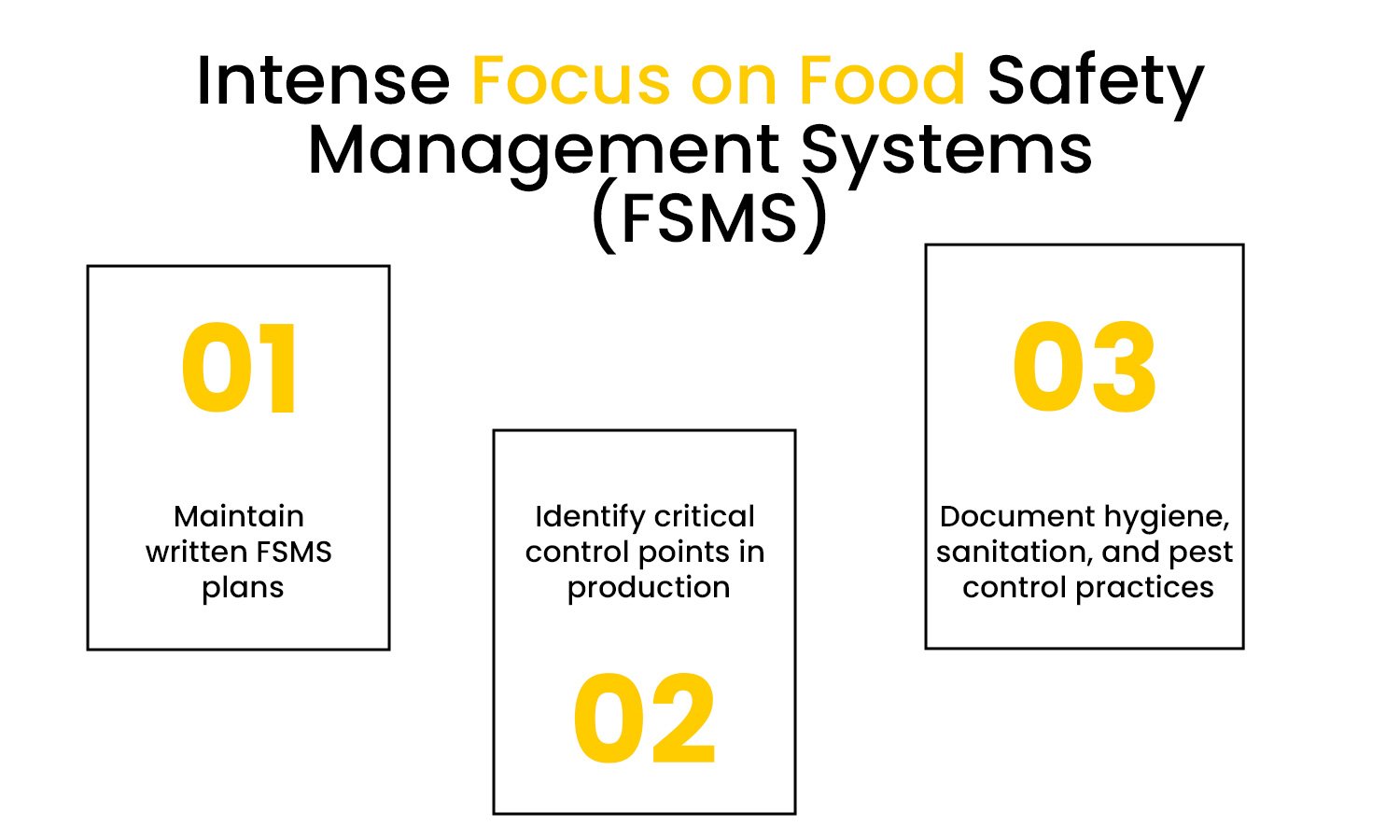
Important regulatory expectations include:
- Ingredient compliance with approved lists
- Defined dosage limits for vitamins, minerals, and bioactives
- Clear disclaimers where required
- Stability and shelf-life justification
Before entering the market for protein products, functional drinks or fortified foods, food industry participants should check that they have met all FSSAI regulatory requirements.
Shelf-Life, Storage, and Stability Requirements
Another critical area of focus is shelf-life validation. FSSAI expects food businesses to justify declared shelf life using scientific data rather than assumptions.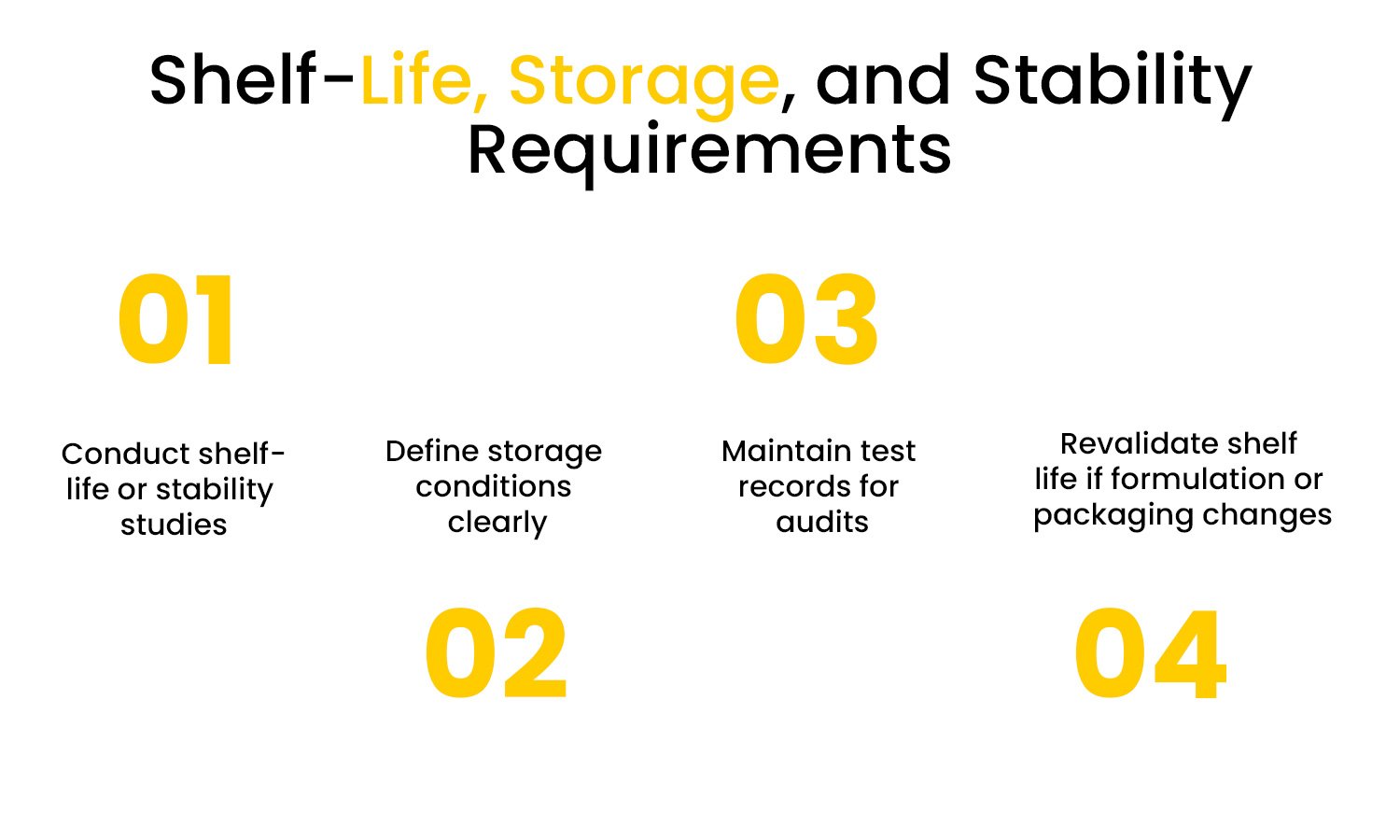
Businesses are now expected to:
- Conduct shelf-life or stability studies
- Define storage conditions clearly
- Maintain test records for audits
- Revalidate shelf life if formulation or packaging changes
Incorrect shelf-life claims are increasingly being flagged during inspections, especially for ready-to-eat and packaged foods.
Updated Guidelines for Online Food Businesses and E-Commerce
With the growth of online food delivery and B2B food brands, FSSAI has strengthened compliance rules for e-commerce operations.
Food businesses selling online must ensure:
- FSSAI license number is displayed on platforms
- Product information matches physical labels
- Hygiene and traceability standards are followed at fulfilment centres
- Responsibility is clearly defined between brand and platform
Cloud kitchens and aggregators, linked food brands are undergoing more frequent audits than they did in the past.
Traceability and Recall Preparedness
The Food Safety Standards Authority of India (FSSAI) requires food producers to have the ability to trace all of the ingredients used to make their product and all products made with those ingredients back to either where they were produced or to the person who purchased them. The FSSAI specifies that food producers must be able to provide this traceability in a time-sensitive manner when there are food safety concerns. Therefore, traceability is more than a theoretical concept.
By 2026, enterprises will be expected to:
- Keep detailed production records on a batch-wise basis
- Clearly identify suppliers and distribution channels
- Maintain a documented food recall plan
If a recall does not happen, the lack of acknowledgement may still result in the regulator taking action against you.
Penalty Trends
One noticeable shift in 2026 is consistent enforcement. FSSAI inspections are becoming more structured, and penalties are increasingly data-driven.
Common reasons for penalties include:
- Improper labelling
- Missing documentation
- Unhygienic practices
- Expired or incorrect licenses
Adhering to the regulations should be seen as one of the company’s strategies rather than a hurried gesture of filing forms at the last minute.
Want Help in FSSC Registration? Request a free Call!
Get Registered - Click Here
What Food Businesses Should Do Now
To stay compliant with updated FSSAI guidelines in 2026, food businesses should: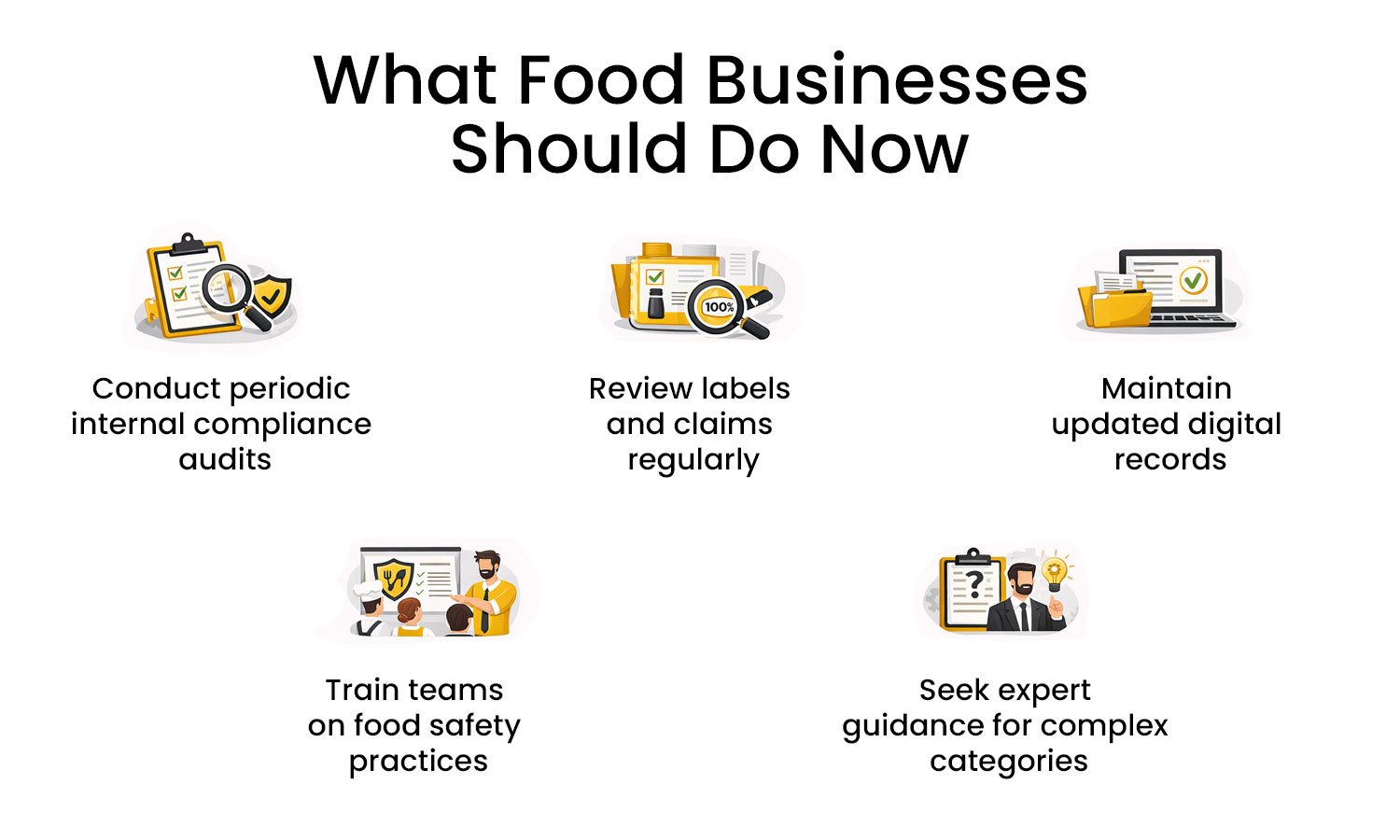
- Conduct periodic internal compliance audits
- Review labels and claims regularly
- Maintain updated digital records
- Train teams on food safety practices
- Seek expert guidance for complex categories
Final Thoughts
The FSSAI Registration, which will be effective in 2026, provide proactive steps forward toward having a more transparent, responsible, and consumer-centric food System (FSSAI). Whereas previously, following the FSSAI regulations was viewed as an obstacle to overcome when starting or growing a food business, now following the regulations will give businesses a solid foundation to build a reliable and scalable food enterprise. If companies are diligent about following FSSAI regulations, they can streamline their processes, enhance the credibility of their products, and contribute toward long-term sustainable growth.
Food brands that keep themselves well informed and keep accurate records through their documentation processes and proactively work to comply with the regulations through proper education of their staff to meet FSSAI compliance will reduce their regulatory risks – this means they will increase their level of trust among Consumers, business partners, and investors. Food businesses should be finding ways to obtain the benefits of FSSAI compliance as a competitive advantage rather than stifling their growth because of the fear of penalties. By embedding safety, quality and accountability in all aspects of their day-to-day business, Food Brands that follow these proactive steps will establish a resilient, trustworthy food enterprise capable to grow successfully well into the future.
Connect With Us for FSSAI Registration
FSSAI Registration is not only about paperwork. It requires food businesses to follow safety, hygiene, and compliance standards as per Indian regulations. Legal4sure supports businesses in preparing, applying, and obtaining FSSAI Registration smoothly and confidently.
How Legal4sure Helps With FSSAI Registration
- Assessment of business type and FSSAI license category (Basic, State, or Central)
- Guidance on FSSAI documentation and application requirements
- Support in implementing food hygiene and safety practices as per FSSAI norms
- Assistance with FoSCoS portal application and corrections
- Support during inspection, compliance clarification, and approval process
Who Should Apply for FSSAI Registration
- Food business operators, including FPOs and small manufacturers
- Food processing units involved in manufacturing, storage, transport, or distribution
- Startups, home-based food businesses, and cloud kitchens
- Manufacturers and sellers legally required to obtain FSSAI Registration or License
Start Your FSSAI Registration
Get expert guidance on documentation, license type, fees, and application timelines.
Legal4sure helps you complete FSSAI Registration smoothly without disrupting daily operations.
Frequently Asked Questions
What is FSSAI and why is it important for food businesses?
FSSAI regulates food safety in India to ensure products are safe, hygienic, and fit for consumption.
Are the FSSAI guidelines changing in 2026?
Yes, FSSAI has strengthened rules around labelling, compliance monitoring, and consumer safety.
Is FSSAI compliance mandatory for small food businesses and startups?
Yes, every food business operator must register or obtain an FSSAI license regardless of size.
What happens if a food business does not follow FSSAI rules?
Non-compliance can lead to fines, product recalls, or suspension of the FSSAI license.
Do online food sellers and cloud kitchens need FSSAI registration?
Yes, all online food sellers, cloud kitchens, and e-commerce food brands must be FSSAI compliant.
Have food labeling rules become stricter under FSSAI 2026?
Yes, labels must now clearly display ingredients, allergens, and accurate nutritional information.
Does FSSAI regulate health foods and nutraceutical products?
Yes, FSSAI closely monitors health foods to prevent misleading claims and ensure ingredient safety.
Is shelf-life testing required under updated FSSAI guidelines?
Yes, shelf-life claims must be supported by testing or scientific justification.
How often does FSSAI inspect food businesses?
Inspection frequency depends on the risk category and the past compliance record of the business.
How can food businesses stay compliant with FSSAI in the long term?
By maintaining proper documentation, following food safety practices, and tracking regulatory updates regularly.