
In the highly competitive and busy world of the Indian manufacturing and food processing industry, the need for quality and compliance is the highest priority. Be it a growing start-up company or a well established firm, the phrase ISO Certification has become a buzzword in the corporate suites and supplier briefs. But the biggest mistake many companies make is the misperception and misconception that the term ISO refers to a generic and overarching term. This has resulted in companies going down the wrong path and not realizing the actual benefits and clarity in the concept of quality management.
It is therefore essential for companies in India and the food industry at large to understand the actual and vital differences between ISO and ISO 9001. This blog post aims at providing the much-needed clarity and insights into the actual and vital ISO Certification vs ISO 9001 Certification.
Talk to Our Experts Today
Don’t apply for the wrong certification! Legal4Sure helps you pick the perfect ISO certification for your business and gets you certified without the stress or guesswork.
 Call Now
 WhatsApp Us
Unpacking the Confusion: Difference iso and iso 9001
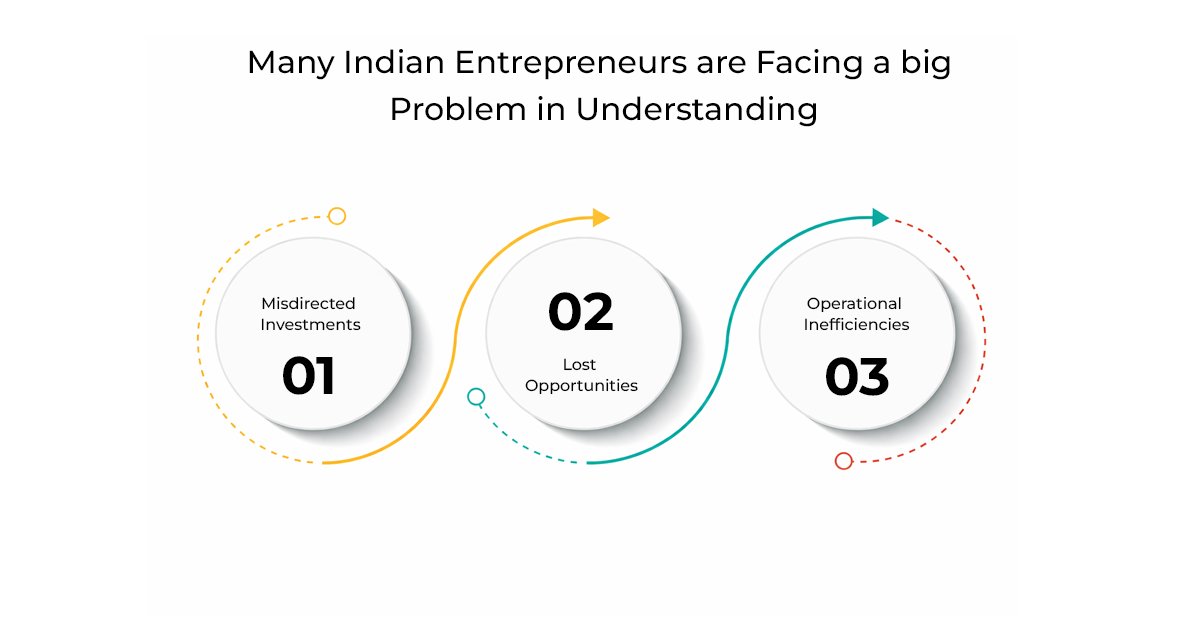
Many Indian entrepreneurs are facing a big problem in understanding the standards of quality because of the sheer volume of information, which, more often than not, is confusing in nature. Entrepreneurs are informed of the need to procure ISO certified products or services, but what does this term mean? Is this term applicable in all forms, or are there different types of certification? This, therefore, becomes a problem, leading to:
- Misdirected Investments: Entrepreneurs might invest in procuring a ISO certification without a clear understanding of the specific standard they need to be certified under.
- Lost Opportunities: Companies might not be able to procure contracts, both domestically and internationally, as they might not be certified under a specific standard of quality.
- Operational Inefficiencies: Companies might not be able to improve their operations because of a lack of understanding of the specific requirements of a standard of quality.
>Helpful Guide:- ISO 9001 Certification Process: 7 Steps To Get Certified In India (2026)
Root Causes of Misunderstanding
The cause of the confusion between iso and iso 9001 is not due to any lack of intelligence, but rather because of a combination of factors that are specific to the fast-paced world of business:
- Lack of Formal Training: The entrepreneur, although an expert in the product or service they provide, may not have the formal education and training required to understand the quality management system and the structure that international standards follow.
- Information Overload & Jargon: The abundance of information and the terminology that is used by some consultants and certification bodies can cause the entrepreneur to become confused about what is general and what is specific.
- One Size Fits All Perception: There is the general assumption that the term ISO is some sort of award that is granted to organizations, rather than the fact that there are thousands of different standards that pertain to everything from environmental management to information security.
- Outcome vs. Process: The entrepreneur is often focused on the outcome and the reason they want the certification is to fulfill the requirements to win the contract, rather than the process and the standard that must be implemented.
Questions on Quality Compliance
For the busy founder or operations head, these ambiguities translate into pressing questions:
- Is ISO just a fancy logo I need to put on my website or product packaging?
- Do I need all ISO certifications to compete internationally, or just one specific one?
- Will understanding iso vs iso 9001 actually help me secure new export orders or government contracts?
- Isn’t this iso comparison just about adding more paperwork and bureaucracy to my already stretched schedule?
- My business already focuses on quality; why do I need an external certification now?
>Helpful Guide:- Documents Required For ISO 9001 Certification: Complete Checklist India (2026)
Simplifying ISO: More Than Just a Number
In order to understand the iso vs iso 9001 debate properly, it is necessary to understand the meaning and definition of the term ISO. ISO is an independent, non-governmental international organisation that deals generally in the development and issuance of voluntary international standards. ISO has 170 member countries and acts as a bridge between the public and private sectors in the development of international voluntary technical standards.
Key Point: ISO does not certify companies. ISO only creates standards. If a company claims it is ISO certified, then this means the company has been certified as compliant with a certain ISO standard by an independent certification body. ISO has over 24,000 different standards, and this means ISO certification is a generic term referring to any number of iso types.
ISO 9001: The Gold Standard for Quality Management
Among the wide variety of ISO standards available, ISO 9001 is recognized as the most widely used quality management systems (QMS) standard in the world. It is a set of specific requirements intended to assist businesses in making sure they satisfy their customers’ needs and expectations while at the same time fulfilling all applicable laws and regulations related to a specific product or service.
ISO 9001 covers:
- Customer Focus: Meeting or exceeding customer requirements.
- Leadership: Developing a unity of purpose and direction.
- Engagement of People: Making sure all employees are competent and empowered.
- Process Approach: Managing activities as processes.
- Improvement: Continual improvement of products, services, and processes.
- Evidence based Decision Making: Making decisions based on evidence.
- Relationship Management: Developing mutually beneficial relationships with suppliers.
Thus, when a business refers to ISO certification in terms of overall quality and operational excellence, it is almost invariably referring to ISO 9001 certification. The difference between iso and iso 9001 is that ISO is the organization that publishes these standards, and iso 9001 is simply one of these published standards.
Some Other Important ISO types
| Standard | Area Of Concern | Main Benefit |
| ISO 9001 | Quality Management Systems (QMS) | Improves product consistency as well as customer satisfaction. |
| ISO 14001 | Environmental Management | Aids companies in achieving a reduced footprint on the environment. |
| ISO 27001 | Information Security | Manages cybersecurity threats as well as information security. |
| ISO 45001 | Occupational Health & Safety | Focuses on injury and illness prevention at work, creating a safe working environment. |
| ISO 22000 | Food Safety Management | Guards safety in the food chain, starting from farm to fork. |
| ISO 50001 | Energy Management | Aims at achieving energy efficiency, thereby cutting costs as well as emissions. |
| ISO 27701 | Privacy Information Management | A branch of 27001, but focused on data privacy as well as GDPR compliance. |
>Helpful Guide:- Top 10 ISO 9001 Certification Benefits: More Orders & Better Buyers (2026)
Key Benefits of Strategic Certification
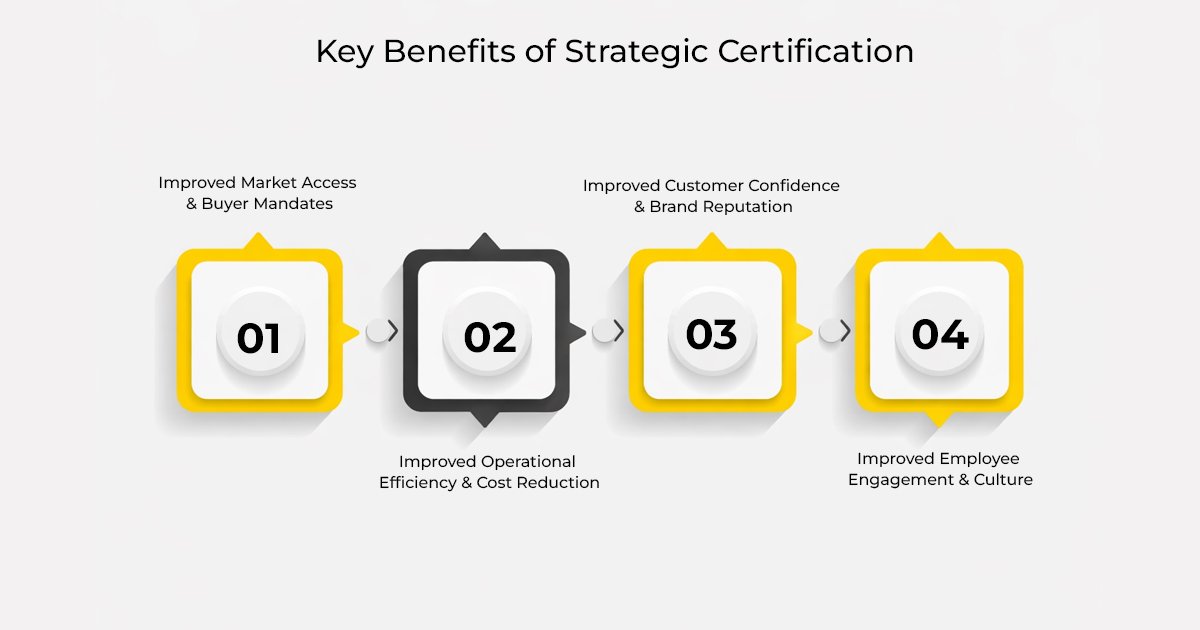
For Indian businesses, strategically seeking the correct ISO standard, holds immense benefits, namely:
- Improved Market Access & Buyer Mandates: In today’s scenario, many buyers, both local and global, including giant corporations and government organizations, demand ISO 9001 certification from their suppliers. This provides Indian businesses with opportunities to access new markets.
- Improved Operational Efficiency & Cost Reduction: Implementing a QMS as per the requirements of ISO 9001 certification standards not only increases efficiency but also helps reduce costs, errors, and waste, resulting in substantial cost savings in the long term.
- Improved Customer Confidence & Brand Reputation: ISO 9001 certification is a global standard, accepted universally as a measure of a company’s commitment to quality, thereby enhancing the reputation of the Indian company.
- Improved Competitive Edge: In a highly competitive marketplace, achieving ISO 9001 certification provides Indian companies with a competitive advantage over others who are not certified.
- Improved Employee Engagement & Culture: A QMS, as per the requirements of ISO 9001, helps create a better working environment, resulting in a more engaged workforce.
Key Points To Remember
- Don’t get confused by the generic term and understand the specific standard required.
- This is your go-to standard for core quality management.
- A good system generates real business benefits beyond compliance.
- It can open markets, build trust, and improve operational efficiency.
- A veteran compliance expert can make the journey simple and ensure successful implementation.
>Helpful Guide:- ISO 9001 Certification Cost In India | Fees Breakdown & Expert Support
Frequently Asked Questions
What is the difference between iso and iso 9001 certification India?
ISO refers to the International Organization for Standardization and ISO 9001 refers to a specific standard developed by ISO, focusing on Quality Management Systems.
Iso vs iso 9001 which is better for business?
For general quality management, operational efficiency, and customer satisfaction, ISO 9001 is universally accepted, being the most beneficial standard for businesses.
What are the types of iso certification and iso 9001 difference?
Types of ISO certification refers to various standards of ISO, such as ISO 14001,ISO 27001 and ISO 9001.
How does ISO 9001 impact food safety standards?
Although ISO 9001 is a general standard for QMS, process control, documentation, and continuous improvement, it supports the implementation of specific FSMS like ISO 22000 or HACCP.
Is ISO 9001 mandatory for exporting products?
NO, ISO 9001 is not legally mandatory for export purposes, it is a strong desire of international buyers to build supplier credibility and ensure consistent product quality.
How much USFDA cost for Indian manufacturers?
For Food Industries, the government fee is zero, though, you would be needing ₹45,000 to ₹1.5 Lakhs for services and setup.
What are the FDA registration fees and USFDA cost India considerations for exporters?
For food facilities, there is no registration fee, however, renewal is mandatory every two years. For medical devices, there is an annual registration fee and a product listing fee, as well as the cost of regulatory consultants.