

In the competitive global food market, quality certification is not a choice, but a necessity for food manufacturers and exporters in India. For food manufacturers and exporters, BRC certification, also known as BRCGS – Brand Reputation through Compliance Global Standards, ranks among the most sought-after food safety excellence certification.
It is not just a matter of ensuring that your food processing unit has good food safety practices in place. A significant part of your BRCGS audit success also lies in ensuring that all your brc certification documents are in place.
In this blog, we shall take you through a detailed brc audit checklist, brc requirements, why brc certification is required, and brc certification benefits.
What Is BRC Certification
BRCGS, previously known as BRC, is an international food safety standard developed in the UK. The BRCGS standard specifies the requirements for food safety, quality, legality, and authenticity. The BRCGS standard is recognized by the Global Food Safety Initiative (GFSI) and is adopted by major retailers and food companies in Europe, North America, the Middle East, and Southeast Asia.
>Top trending Guide:- BRC Full Form: All 3 Meanings Explained (Food, Education & Export) 2026
Why BRC Certification Is Needed
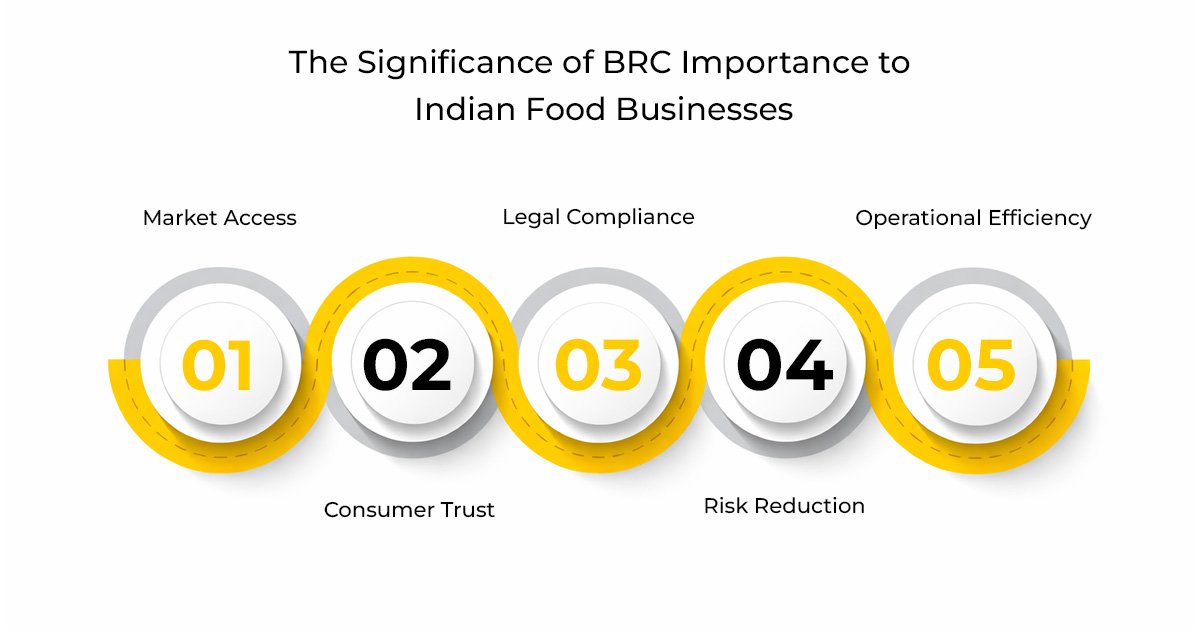
The significance of brc importance to Indian food businesses cannot be emphasized enough. This is why:
- Market Access: Many international retailers and foodservice companies require suppliers to be certified.
- Consumer Trust: BRCGS certification demonstrates to consumers that you produce safe food.
- Legal Compliance: It can help you comply with international food safety regulations and local FSSAI regulations.
- Risk Reduction: A structured approach to food safety can minimize the risk of product recall and legal action.
- Operational Efficiency: brc implementation can improve efficiency and reduce costs.
The benefits of brc certification to India-based food businesses include improved export opportunities, enhanced buyer relationships, and a more prestigious brand image in high-end markets.
BRC Certification Documents Required
The following is a detailed brc certification required documents checklist india food manufacturers and exporters should prepare before their audit. The list is in line with the BRCGS Food Safety Issue 9 standard.
- Senior Management Commitment Documents
- Signed food safety and quality policy statement
- Minutes of the management review meeting (at least once a year)
- Organisation chart showing the responsibilities related to food safety
- Records of involvement of senior management in food safety culture activities
- Food Safety Plan (HACCP) Documents
This is arguably the most important part of the brc audit documentation requirements of interest to the food industry.
- Documented study of the HACCP system with the team’s details and scope of the study and product descriptions
- Hazard analysis records on biological, chemical, physical, and allergen hazards
- Determination of CCPs with decision tree records
- Critical limits and monitoring procedures of CCPs
- HACCP verification and validation records
- Product flow diagrams with confirmation of the site map
- Supplier and Raw Material Management Documents
- Approved supplier list with risk assessment records
- Supplier audit reports or questionnaire responses
- Certificates of conformance or analysis from suppliers
- Raw material specifications signed and dated
- Incoming goods inspection and testing records
- Site Standards and GMP Documentation
The brc checklist puts a lot of weight on the documentation of Good Manufacturing Practice (GMP).
- Site map and facility layout plan
- Pest control contracts, inspection reports, and activity logs
- Cleaning and disinfection schedules with verification records
- Maintenance schedules and records of food contact equipment
- Waste management procedures and disposal records
- Water quality testing records (potability records)
- Environmental monitoring programme records
- Product Control Documents
One of the key aspects of brc certification document list india auditors review is product-specific controls.
- Product specification for all finished products
- Shelf-life and challenge test records
- Allergen management plan with risk assessment
- Packaging specification and approval records
- Label approval records, including nutritional information and allergen statements
- Product development and reformulation records
- Process Control Documents
- Process flow charts for all products
- Process parameters, monitoring logs, and out-of-tolerance records
- Calibration records for measuring and monitoring equipment
- Statistical process control data (where applicable)
- Weight, fill, and inspection records
- Personnel Hygiene and Training Documents
One of the most neglected areas in the brc audit documentation requirements food industry companies need to fulfill.
- Training matrix and competency records for all staff
- Induction training records for new employees
- Food hygiene training certificates
- Allergen awareness training records
- Hygiene policy acknowledgement forms signed by the employees
- Medical screening and illness reporting records
- Visitor and contractor hygiene rules and sign-in records
- Internal Audit and Non-Conformance Documents
- Internal audit schedule and completed internal audit reports
- Non-conformance reports with root cause analysis
- Corrective and preventive action records
- Trend analysis of non-conformances and complaints
- Traceability and Recall Documents
- Traceability system description and procedure
- Mock recall test records (at least annual)
- Customer complaint records and investigation outcomes
- Product withdrawal and recall procedure
- Records of traceability exercises with mass balance
- Food Fraud and Food Defence Documents
- Vulnerability Assessment (VACCP) data for raw materials
- Threat Assessment (TACCP) data for food defense
- Approved site access process
- Food fraud mitigation plan
>Helpful Guide:- Emergency BRC Certification: How to Get Approved When Audit Is Due in 15–30 Days?
How to Organise Your Documents
It is not enough that you have the brc certification documents; they have to be kept systematically. The following is the way the auditor expects to find the documents:
- Implement a document control system, where documents have version numbers, approval dates, and revision records.
- Maintain a master document list, where all documents are listed, along with their location and dates reviewed.
- Maintain records that are legible, dated, and signed by the relevant personnel.
- Maintain records for the minimum retention period, usually two years or the shelf life plus one year.
- Maintain documents in an easily accessible state, and the use of electronic documents is strongly recommended.
BRC Requirements Specific to India
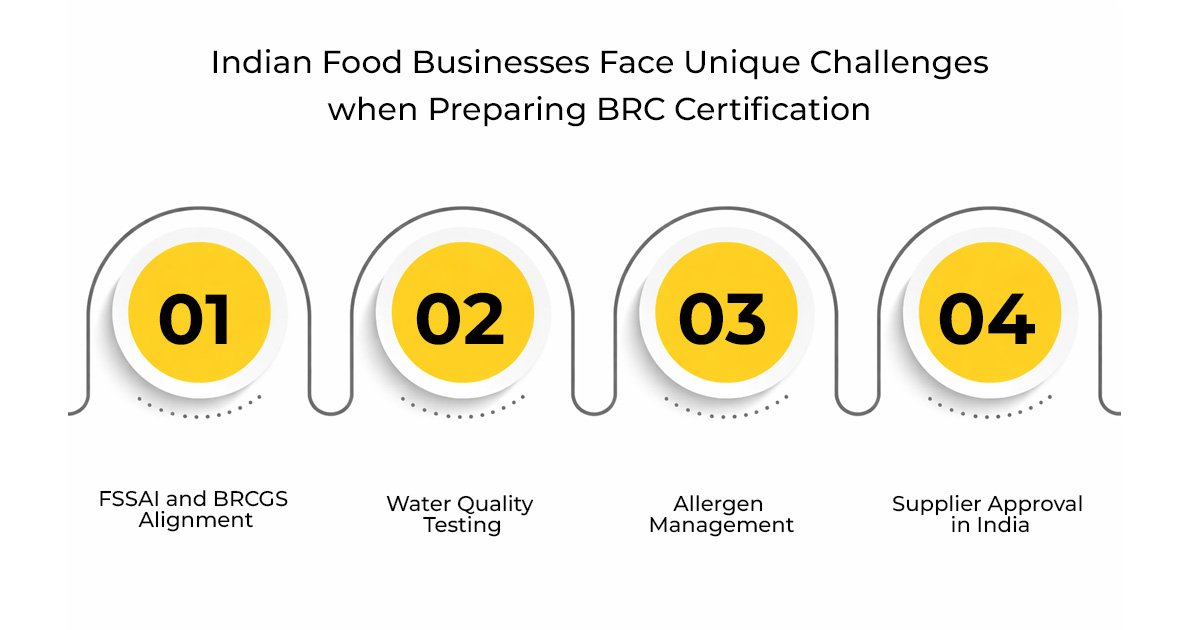
Indian food businesses face unique challenges when preparing brc certification required documents checklist india auditors review. Some of the challenges are:
FSSAI and BRCGS Alignment
Though FSSAI is similar to BRCGS, it is not exactly the same. Your documentation must comply with both sets of brc requirements at once. For example, FSSAI has specific labelling requirements that are also part of the BRCGS product control clauses.
Water Quality Testing
Considering the changing nature of water quality in Indian industrial areas, the brc checklist form must include detailed records of water testing. Water testing is not only restricted to potability tests but must also include regular microbiological and chemical tests.
Allergen Management
Allergen issues may vary between the Indian consumer and the Western consumer. However, the BRCGS standard requires the management of allergens based on the market destination of the product. Exporters must ensure that this is clearly documented in the brc certification documents.
Supplier Approval in India
In the case of the Indian food industry, most food businesses are likely to have unregistered suppliers. BRCGS requires documented approval from suppliers, and this is a major documentation requirement, especially for businesses with complex supply chains.
>Helpful Guide:- Top 5 Mistakes Indian Export Houses Make During BRCGS Audits
Common Gaps in BRC Certification Documents
On the basis of general findings in food facilities, the most common documentation issues are:
- Incomplete HACCP study results, particularly the lack of validation data for CCPs.
- Supplier specification documents are often not updated, meaning they may not have been reviewed in several years.
- Lack of equipment calibration records, which must be done on the equipment used to monitor CCPs.
- Lack of adequate training records, particularly for seasonal or contract workers.
- Lack of effective internal audits, which are often cursory in nature or lack proper follow-up action.
- Lack of traceability, which means the ability to trace finished product back to raw materials within the 4-hour benchmark is lacking.
Key Takeaways
- BRC certification documents form the basis of a successful BRCGS audit, and if one document is missing, there will be non-conformances.
- The brc checklist will involve issues such as food safety plans, approvals, internal audits, and compliance with labeling.
- Food manufacturers in India will have to ensure that BRC standards align with FSSAI regulations to ensure dual compliance.
- Documentation of corrective actions and training will be critical in ensuring a successful audit.
- Knowledge of brc certification benefits india will help organizations justify their expenditure and gain buyer confidence.
>Helpful Guide:- BRCGS Certification Cost | Apply With Trusted Experts Today
Frequently Asked Questions
What is included in the brc certification required documents checklist india food businesses need?
This includes HACCP plans, supplier approval documentation, GMP records, internal audits, traceability records, allergen plans, training records, and product specifications according to the BRCGS Issue 9 standard.
What are the brc audit documentation requirements food industry companies in India must meet?
Documentation of procedures is a prerequisite for food companies to maintain procedures in critical areas like food safety, hygiene, traceability, pest control, and supplier management with evidence of implementation and review.
How is the brc certification document list india different from global requirements?
Although the core document list is the same worldwide, India-based companies need to comply with FSSAI legislation and deal with the complexities of the supply chain in the country, which includes small supplier verification.
Why is brc certification needed for Indian food exporters?
It is a preferred compliance criterion of most international retailers and foodservice buyers and thus a prerequisite to access the premium international market.
What are the main brc certification benefits india-based food companies receive?
The brc certification advantages that businesses in India gain from include export opportunities, reduced buyer audits, premium pricing, brand credibility, and operational discipline.
What is the brc importance for small and mid-sized food companies in India?
The brc significance goes beyond big exporters; small food manufacturers benefit from a structured food safety system, increased buyer trust, and a platform for scalability into premium domestic and export markets.
How long does it take to prepare all brc certification documents?
Most businesses typically take three to nine months to prepare a comprehensive brc audit checklist, depending on existing food safety systems, operational complexities, and product lines.