
The BRCGS certificate for spice producers certifies that a spice manufacturing facility meets the requirements of the BRCGS Food Safety Global Standard This standard deals with issues of hygiene, quality control, and safety of the product in question. The BRCGS certificate has become compulsory for buyers of UK, EU, US, and Gulf countries before they place export orders for spices, especially ground spices, blends, and seasonings in which risk of contamination is much higher than in packaged spices.
This article explains all about the certificate, key criteria that need to be fulfilled by a spice manufacturer, areas of inspection, etc., and how the scope of BRCGS differs from other certificates regarding food safety. This article is intended for spice processors who have to pass their first inspection or renewal of the certificate.
What Is a BRCGS Certificate for Spice Manufacturers
A BRCGS Certificate for Spice Manufacturers is confirmation that a spice manufacturing facility has successfully completed an audit against the BRCGS Global Standard for Food Safety and is now in compliance with the criteria outlined within the food safety management system, HACCP, site standards, product control, process control, and personnel.
BRCGS stands for Brand Reputation through Compliance Global Standards (previously British Retail Consortium standard), and is one of the schemes approved by GFSI. In the case of spices, this approval means a lot because there are specific threats of contamination associated with this food category (microbial contamination from the raw agricultural product; adulteration with unapproved colouring agents; contamination with foreign objects during grinding and cross-contamination on the blending line).
The certificate itself is provided by the certification body after successful audit completion. It contains information about the certified site, scope of products, grade obtained, and validity period.
Why Spice Manufacturers Need BRCGS Certification
Is BRCGS Certification required by spice exporters? It is mandatory for most retailers and food producers to obtain BRCGS certification before purchasing spices from suppliers. Therefore, any export of spices to these regions will require BRCGS certification to be considered for order approval. Though it is not mandatory under Indian law, it serves as an informal requirement for entering international markets.
- Retailer requirement: large UK and EU retailers will only stock suppliers who have valid GFSI accredited certification
- Import due diligence: the buyer from another country uses the certificate to conduct a supplier check before contract
- Reduced duplicative audits: One audit of BRCGS may fulfill many customer’s second-party audit requirements simultaneously
- Increased risk classification: spices have been classified as high-risk raw agricultural commodity due to the past incidents of Salmonella contamination, aflatoxin contamination, and adulteration, hence buyers are more careful about their supplier certification than others
BRCGS Certification Requirements for Spice Manufacturers in India
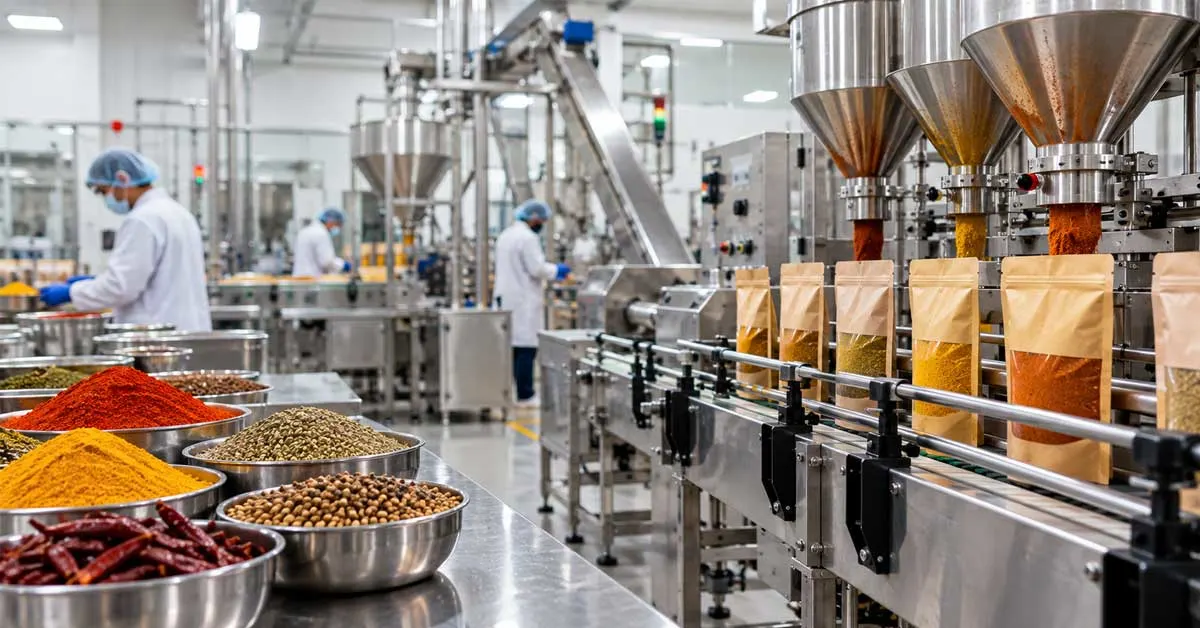
In order to achieve certification, a manufacturing facility of spices in India must have a documented food safety management system, a validated HACCP plan for all products involved, infrastructure that safeguards against contamination, and control of raw materials, processing, packaging, and transportation. The above-listed requirements for spice manufacturers in India are based on the same BRCGS clause structure as anywhere else in the world.
1. Senior Management Commitment
Food safety leadership will determine policy, resource allocation, and review of performance on schedule. The expectation is that auditors will be presented with evidence of management review and not merely a policy signature.
2. Food Safety Plan (HACCP)
The HACCP system must recognize hazards that are unique to the spices being processed, which include foreign materials, microorganisms, allergens, chemicals or pesticides, and if irradiated or ETO treated, then hazards relating to that process.
3. Food Safety and Quality Management System
The five categories included in this are: document control, internal audit, corrective/preventive action, supplier approval, and traceability. The supplier approval category is generally where spice units using three different sources of raw materials (farm gate, mandi, and broker supplied) are generally deficient.
4. Site Standards
Design and layout must ensure that there is no contamination between raw and processed products, that dust from grinding is controlled and that there is an effective pest control program in place. Dust from spices can also lead to an explosion hazard.
5. Product Control
It includes allergen control, verification of product genuineness/anti-adulteration measures, and foreign body inspection (metal detection, sieving or X-rays, depending upon the type of products).
6. Process Control
Process variables such as grinding particle size, blending ratios, moisture content, quantity control, etc., all come under this category.
7. Personnel
Training logs, hygiene procedures, and protective clothing procedures for employees working in processing and packaging facilities.
| Module | Focus Area for Spice Units |
|---|---|
| Senior management commitment | Food safety policy, resources, review records |
| Food safety plan (HACCP) | Hazards specific to spice processing identified and controlled |
| Food safety & quality management system | Documentation, internal audits, supplier approval, traceability |
| Site standards | Layout, dust control, pest management, cross-contamination prevention |
| Product control | Allergens, authenticity testing, foreign body detection |
| Process control | Process parameters, quantity control, equipment calibration |
| Personnel | Training, hygiene practices, protective clothing |
Scope of BRCGS Certification for Spice Processing Units
The extent of a BRCGS certification specifies precisely what product range, manufacturing processes, and site activities have been audited. The process for spice manufacturing includes raw spice cleaning, grinding, blending, and packaging, and even extends to additional processing like roasting or irradiation where it takes place within the facility.
Activities commonly included in scope:
- Whole spices preparation (cleaning, sorting and grading)
- Powdering and grinding process
- Blending spices into masala and other seasonings
- Packaging into retail and bulk forms
- Storage facility at site
- Laboratory testing, in case done on-site
Activities typically excluded unless separately audited:
- Manufacturing facilities or third-party production facilities not audited
- Logistics after leaving the facility premises
- Agriculture cultivation and farming before the procurement of the raw materials
Key BRCGS Audit Focus Areas for Spice Processing and Seasoning Companies
Spice and seasoning manufacturers tend to be audited mostly for foreign body controls, allergens, microbiological hazards, and authenticating the product. This is because it is at these areas that spices have the highest incidences of recall action taken against them.
- Foreign body control – metal detection or X-ray scanning and a documented approach to glass and hard plastic, as ground spices conceal foreign bodies visually better than the whole product.
- Allergen control – cross-contamination control of blends that include several types of seasoning products; among the allergens associated with spices, there can be mustard, celery and sesame seeds.
- Microbiological control – salmonella and E.coli contamination from raw materials, including a kill step process like steam sterilization, ETO treatment, irradiation when employed.
- Product authenticity / adulteration – testing for unapproved colourants, such as Sudan dyes in chilli powder and lead chromate in turmeric, as well as starch adulteration and wrong spice species.
- Pest control – spices are an attractive food source for stored product pests like weevils and moths, hence the auditor will thoroughly assess the pest control programme documentation.
- Traceability and mass balance – batch level traceability from raw material lots to the final packs, including test through recall simulation.
- Moisture / Water activity control – critical in order to prevent mold growth and formation of aflatoxins in stored spices.
- Dust control and explosion prevention – due to the explosivity of spices dust in grinding operations.
What are the BRCGS audit requirements for facilities processing spices? Below is a table listing what auditors look for in terms of each requirement area.
| Requirement Area | What Auditors Check |
|---|---|
| Hazard analysis | Spice-specific hazards identified and controlled in the HACCP plan |
| Foreign body management | Detection equipment performance, sieve and screen integrity checks |
| Allergen control | Segregation, cleaning validation, label accuracy across all blends |
| Supplier approval | Risk assessment and audit records for raw spice suppliers |
| Traceability | Mock recall results, typically expected within about 4 hours |
| Environmental monitoring | Pathogen swabbing programme, especially for Salmonella |
| Calibration | Metal detector, moisture analyzer, and weighing scale records |
BRCGS Grades and What They Mean for Spice Manufacturers
BRCGS certification is a graded one. This implies that the grade received by the spice facility will impact how frequently the audits will be done.
| Grade | Meaning | Typical Audit Frequency |
|---|---|---|
| AA | Highest level of compliance with minimal non-conformities | Annual, with eligibility for extended audit cycles |
| A | Strong compliance with only minor non-conformities | Annual |
| B | Compliance with more minor non-conformities, or one major | Annual, with closer follow-up |
| C | Multiple major non-conformities; certification status at risk | Annual, with a mandatory corrective action plan |
Common Non-Conformities Found in Spice Manufacturer Audits
- Failure to assess risks for incomplete allergens in blended masala and seasonings
- Absence of validation records for kill step such as steam sterilization or irradiation
- Inadequacy in the frequency and documentation of foreign body detection
- Supplier approval of spot or broker purchase of raw spices is lacking
- Trend analysis not being done in the pest control program
How to Prepare for a BRCGS Audit as a Spice Manufacturer
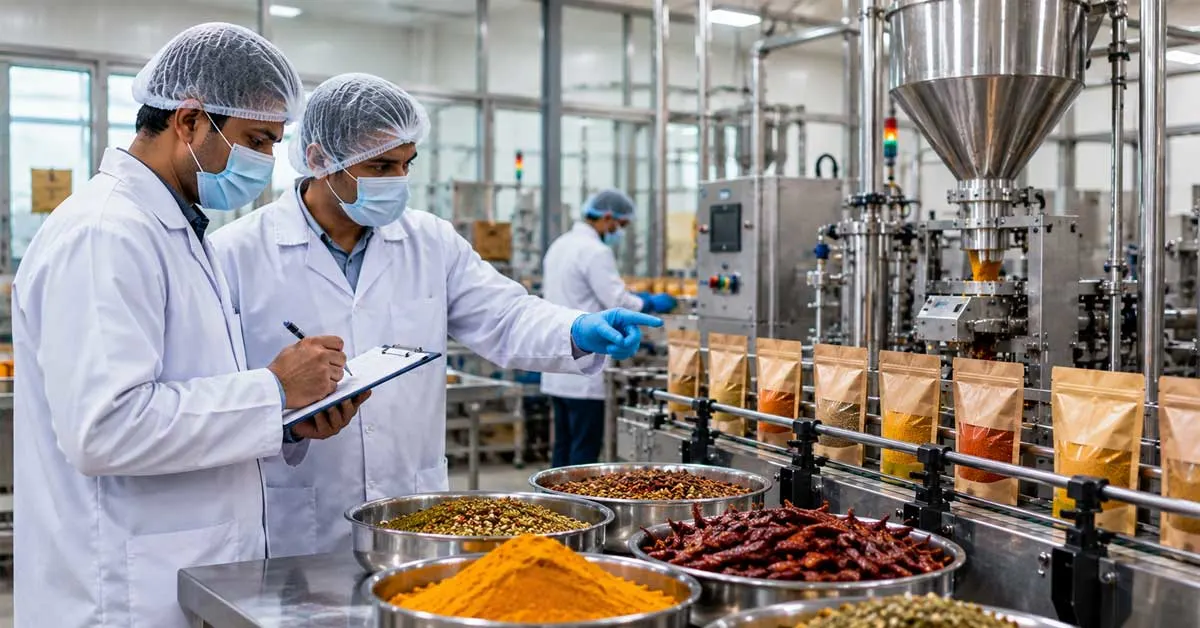
A structured pre-audit checklist minimizes the risk of significant nonconformances on the day of the audit:
- Perform a gap analysis against the existing BRCGS Global Standard for Food Safety
- Perform a validation of the HACCP plan against specific hazards associated with spices
- Perform a review of the allergen matrix for each blend and seasoning
- Conduct a mock recall and traceability test prior to the audit period
- Perform a review of calibration records of metal detectors and other foreign body detection equipment
- Perform an internal audit and close out all pending nonconformities
- Brief production personnel regarding hygiene and document requirements
BRCGS vs FSSC 22000 for Spice Manufacturers
The producers of spices who export to several countries often have to opt for either the BRCGS Food Safety Certification or FSSC 22000, or get both. Below is the comparison of the two.
| Factor | BRCGS | FSSC 22000 |
|---|---|---|
| GFSI recognized | Yes | Yes |
| Structure | Prescriptive, standalone standard | ISO 22000 plus sector PRPs and additional requirements |
| Common with | UK and EU retailers | Global food manufacturers and multinational buyers |
| Grading system | AA, A, B, or C grade | Pass or fail, no grading |
| Site standard detail | Very detailed, prescriptive site requirements | More flexible, process-based approach |
Key Takeaways
- The BRCGS Certification for Spice Producers is proof that the company complies with the BRCGS Food Safety Standard concerning HACCP, site standards, product/process control, and hygiene of staff.
- BRCGS certification is considered by most of the UK, EU, and North American companies as mandatory for buying spices from suppliers even though there is no obligation to have it in India.
- The audits pay particular attention to the issues of foreign bodies, allergens, microbiology, and authenticity since they are the issues with the best recall history for spices.
- The certification grades range from AA to C, and the grade defines the frequency of auditing as well as buyer’s risk assessment of the supplier.
- The preparation should involve validation of the spice-specific HACCP system, allergen matrix analysis, and mock recall.
Conclusion
The BRCGS Certification for Spice Manufacturers is not merely a formality of regulation; it frequently becomes a decisive criterion as to whether an overseas customer places an order with the company. The certification procedure compels spice manufacturers to develop systems of control that are much stricter in terms of foreign bodies, allergens, and authentication of products than any domestic regulation.
In order to get certified, one needs to implement documented systems of HACCP, traceability, and site hygiene that will stand the questions by an accredited auditor. Regardless of whether one is applying for certification for the first time or trying to improve its grade, knowledge of the particular points of interest for the auditors becomes crucial for a comfortable certification process.
Frequently Asked Questions
What are the BRCGS certification requirements for spice manufacturers in India?
Indian spice plants require an HACCP Plan, Food Safety Management System, Infrastructure controls, and product and process controls for all their spices.
What are the key BRCGS audit focus areas for spice processing and seasoning companies?
Audits concentrate mainly on foreign body prevention, allergens, microbiological hazards, and testing for adulterants.
Do spice manufacturers need BRCGS certification for exports?
Audits concentrate mainly on foreign body prevention, allergens, microbiological hazards, and testing for adulterants.
What are the BRCGS audit requirements for spice processing facilities?
They have to provide hazard analysis, foreign body prevention, segregate allergens, approve suppliers and traceability by mock recall test.
How long does BRCGS certification take for a spice manufacturing unit?
The process generally takes three to six months from gap analysis to certification audit based on their level of development of current systems.
What is the validity of a BRCGS certificate for spice manufacturers?
The certificates are valid for one year only, and a recertification audit is carried out annually.
Can a small-scale spice manufacturer get BRCGS certified?
Yes. Any size of facility will be able to get BRCGS certified if they satisfy the requirements of the standards.