
An exporter of garments based in Tiruppur receives an email from his UK buyer asking for him to provide the SMETA report before placing any new orders. On the other hand, an exporter who formulates chemicals from Ankleshwar receives an identical email requesting the “four pillars.” Neither of them knows what four pillars entail and if they will add up to the existing work.
Most often, this question comes with a deadline attached to it. The selection between the Sedex 2-pillar and 4-pillar SMETA Audit depends largely on the requirements set out by your buyer’s supplier code. You can see the differences, documents required, cost drivers, the process, and how to make your decision below.
Sedex 2-pillar vs 4-pillar SMETA audit: what’s actually different?
The 2-pillar SMETA audit includes labor standards and health and safety, together with some additional modules. The 4-pillar SMETA audit includes all of the above plus a more comprehensive environmental review and business ethics. It is your buyer who determines which one you require, and not Sedex or your auditor.
| Feature | 2-pillar | 4-pillar |
|---|---|---|
| Core pillars | Labour standards; health and safety | Same two |
| Add-on modules | Management systems, entitlement to work, subcontracting, homeworking | Same modules |
| Environment | Shortened assessment | Extended assessment |
| Business ethics | Not included | Included |
| Best suited to | Buyers focused on worker conditions | Buyers who also want environmental and integrity checks |
Both formats rest on the ETI Base Code for their labour standards. The extra pillars follow standards developed through a multi-stakeholder consultation, as audit firms such as V-Trust explain.
Is Sedex a certification? What membership really means
Not quite. Sedex is a membership-based system, but not a certification body. Suppliers sign up, create an account and submit audit reports to their buyers. There’s no such thing as a “Sedex certificate,” and SMETA reports don’t get any pass/fail score.
Here are the terms defined. Sedex – Supplier Ethical Data Exchange. Sedex membership is voluntary, but it may be required by buyers. SMETA – Sedex Members Ethical Trade Audit is an audit methodology to produce a report for multiple buyers. The audit is conducted by independent audit firms, not by Sedex.
As Eurofins Assurance, one of Sedex Affiliate Audit Companies, states, there are no mandatory regulations for SMETA, no certificates and no scores. You get a report of findings and Corrective Action Plan (CAP). This is a sampling snapshot. It does not confirm compliance with any law or guarantee approval from your buyer.
Scale explains why buyers ask. According to the Consumer Goods Forum, Sedex community consists of more than 90,000 organizations and 115,000 workplaces in 180 countries and 35 industries. For supplier ethical compliance and responsible sourcing, SMETA has become a common language.
What does a SMETA audit assess, and which documents do auditors ask for?
The SMETA audit focuses on the manner in which the site deals with its employees and the risks associated with this; this includes pay, working hours, employment freedom, discrimination, safety, and for 4-pillar audits, environmental and business ethics issues. The auditors examine documentation and inspect the site and workers/managers.
| Area | What auditors look at | Records to keep ready |
|---|---|---|
| Labour standards | Wages, hours, overtime, child and forced labour, discrimination, freedom of association | Payroll, attendance, age proofs, contracts, wage slips, grievance records |
| Health and safety | Fire safety, machine guarding, electrical and chemical safety, first aid | Fire NOC, drill logs, risk assessments, accident register, PPE issue logs |
| Management systems, entitlement to work | Policies, training, grievance handling, worker identity and age checks | Code of conduct, training matrix, identity records |
| Subcontracting, homeworking | Whether work leaves your site | Approved vendor list, contractor licences, subcontractor declarations |
| Environment (short in 2-pillar, extended in 4-pillar) | Permits, waste, water, energy, emissions | Consent to Operate, hazardous waste authorisation, effluent test reports |
| Business ethics (4-pillar only) | Bribery, record integrity, fair dealing | Anti-bribery policy, gift register, whistleblowing channel |
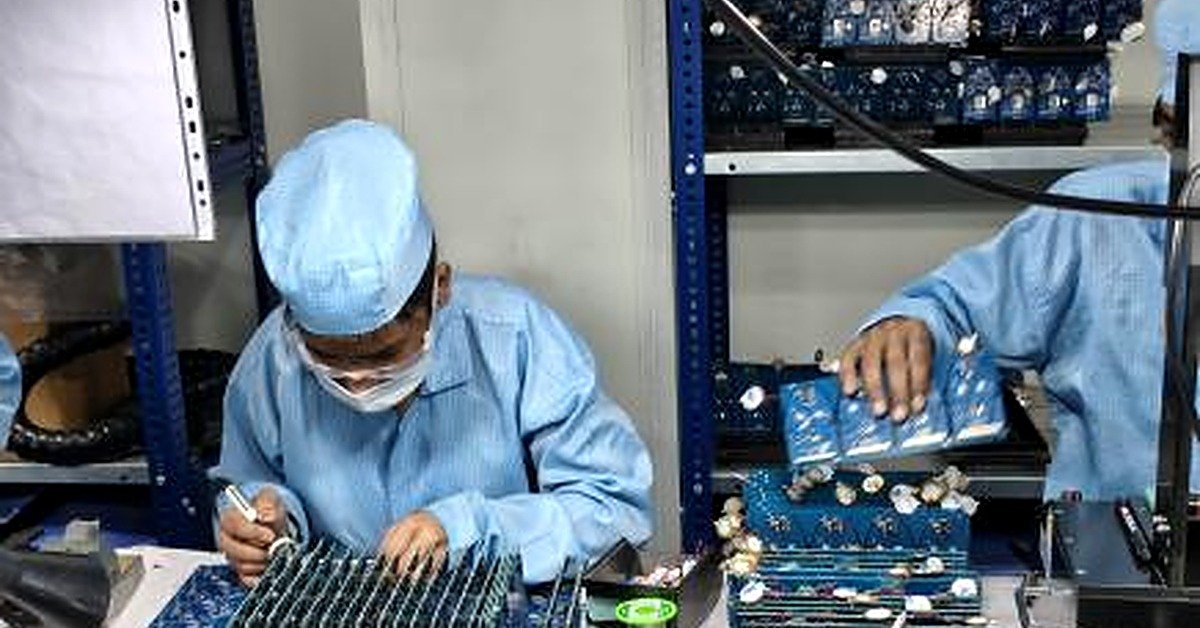
Consider this list of Sedex 2-pillar versus 4-pillar SMETA audit requirements and forms. This list needs to be checked against the list your auditor provides to you. There is always a cross-checking of records versus employee interviews; hence, discrepancies between time cards and employee responses are the main problem areas.
How do these audits play out across Indian industries?
Clusters differ, and so do the risks auditors focus on.
- Textile and garments industry (Tiruppur, Ludhiana, Noida, Surat): overtime work, piece-rate wages, migratory labor and sub-contracted embroidery and washing.
- Food processing industry (Gujarat, Maharashtra, Andhra Pradesh): seasonal labor, cold room safety, ammonia safety and wastewater management.
- Chemical industry (Vapi, Ankleshwar, Dahej, Tarapur): storage and ventilation, exposure control and waste clearance.
- Leather and tannery industry (Kanpur, Agra, Chennai area): chemical handling, effluent management and occupational health.
More hazardous operations require additional compliance:
- Safety data sheets, labeling and segregated storage of hazardous chemicals.
- Permits for confined space work and hot work by trained personnel.
- Certificates for boilers, pressure vessels and lifting machines.
- Effluent management records, waste clearance documentation and consents from State Pollution Control Board.
- Fire drills that involve contract labor and shift workers.
Do you need a 2-pillar or 4-pillar? A quick decision framework
Treat this as a scoping decision, not a quality ranking. Neither format is “better.”
- A 2-pillar audit will most likely be relevant if the buyer’s code includes labor and safety or if you’re conducting the first SMETA audit for them.
- A 4-pillar audit will most likely be relevant if the buyer asks for an environmental and business ethics audit or your process is heavily environmentally-loaded.
- It’s not necessary to conduct an audit if the buyer accepts a recently issued equivalent report.
Check these with your buyer prior to scheduling: pillar scope, accepted audit firms, announced or unannounced type, frequency of re-audits and your deadline.
Are you not sure about what scope the buyer wants you to conduct? Then use legal4sure to interpret your supplier code and determine the scope.
Sedex 2-pillar vs 4-pillar SMETA audit process step by step
- Confirm scope with your buyer including the accepted audit company.
- Get registered as a Supplier on Sedex and fill up your company and site details.
- Carry out a gap analysis against the ETI Base Code and Indian laws in all relevant pillars.
- First get your documents and policies sorted out followed by physical things such as fire exits and machine guarding.
- Arrange an approved audit company and set the number of auditor days and announced/ unannounced audit.
- Undertake the audit day – opening meeting, document check, site visit, interviews with workers and closing meeting.
- Receive the audit report and CAP and set realistic time lines for each finding.
- Close the findings with evidence and share your audit report with your buyers through Sedex.
How to prepare for Sedex 2-pillar vs 4-pillar SMETA audit
- Collect payroll records, attendance records, and wages information, usually of the last 12 months.
- Collect proof of ages, contracts, and contractor’s agreement.
- Check for fire certificates, drills register, and accidents register.
- Gather environmental and waste records if a 4-pillar is involved.
- Inform supervisors about the conduct of the audit. Do not advise employees; truthful responses benefit everybody.
What does a SMETA audit cost, and how long does it take?
There is no single validated price, as quotes differ from firm to firm, depending on the size of the team and its extent. These are the elements that make up the quote, and what influences each element. Ask for a quote in Indian Rupees.
| Component | What drives it | INR context |
|---|---|---|
| Sedex membership | Membership category and number of sites | Fees set by Sedex; check sedex.com |
| Audit fee | Auditor days: workforce size, site layout, 2- or 4-pillar scope | Usually quoted per auditor-day in INR plus GST |
| Auditor travel | Distance from the auditor’s base | Higher for remote industrial areas |
| Preparation support | Size of gaps, training needs | Optional; scales with the work |
| Corrective actions | Fire safety, wages, effluent, equipment findings | Often the largest spend |
| Follow-up audit | Buyer wants verification of fixes | Extra auditor days |
| Stage | Typical range | Main factor |
|---|---|---|
| Sedex registration | A few days to two weeks | Readiness of site data |
| Gap assessment | One to two days on site | Buildings and headcount |
| Fixing gaps | Two to twelve weeks | Paperwork is quick; fire systems or effluent upgrades take longer |
| On-site audit | One to several auditor days | Workforce size and pillar scope |
| Report and CAP | Days to a few weeks | Audit company turnaround and severity of findings |
Treat these as planning ranges from industry practice, not promises. Your audit company and buyer set the final timeline.
What’s changed recently: SMETA 7.0 and India’s labour codes
SMETA 7.0, which was rolled out by Sedex towards the end of 2024, is the latest methodology. The audit firms say that the process involves an evaluation of a site’s management systems instead of evaluating one day and provides more detailed reporting and gender disaggregation of information. “On 18 November 2025, the Consumer Goods Forum has announced that its Sustainable Supply Chain Initiative has acknowledged SMETA 7.0, and it could aid acceptance of reports under different programs,”
The situation in India was not the same as before. According to the Ministry of Labour and Employment, the four Labour Codes became operative from 21 November 2025. Consolidation of 29 central labor laws has been done through these codes. Make sure you do not confuse the two. SMETA is voluntary and buyer driven whereas the Codes are mandatory laws. A SMETA report does not certify statutory compliance.
Which mistakes trip up manufacturers?
- Seeing SMETA as a certificate to show off rather than a report to implement.
- Tweaking the paperwork without changing the practice. Any tampered documentation is seen as very serious.
- Selecting 2-pillar assessment because the buyer wants 4-pillar but saving time.
- Omitting the subcontractors, labour contractors and homeworkers.
- Missing the dates for the corrective action plan.
Be wary of anyone promising a guaranteed pass or fast-track approval. No consultant controls an auditor’s findings.
How can a consultant help, and what should you ask?
A consultant can’t audit you, since that creates a conflict of interest. They can prepare you through gap reviews, document systems, supervisor training and CAP planning. Ask any consultant:
- Are you familiar with units in my sub-sector and cluster?
- Will you use the ETI Base Code and Indian legislation in your review?
- What is covered and not covered in your quotation?
- Who will take care of CAPs after the report submission?
- Can you provide references without making any guarantees?
Legal4Sure helps exporters get prepared for such an event, from getting acquainted with Sedex membership to handling gaps and CAPs. If you need a consultation prior to your audit date, request a readiness session with Legal4Sure.
Key Takeaways
- Two-pillar audit includes labour standards, health and safety and additional items; four-pillar includes additional pillars of extended environment and business ethics.
- Sedex is a membership-based platform, while SMETA reports do not have any certificates or pass/fail grades.
- Scope will be determined by your buyer, so it is best to clarify it, approved audit firms and deadlines beforehand.
- All three documents – records, workers’ interviews and practices on-site should match, as they will all be double checked by the auditor.
- Costing depends on the number of auditor days and correction measures taken; obtain quotations in INR and be wary of guaranteed approval offers.
Conclusion
Sedex 2 pillar versus 4 pillar SMETA audit choice is a matter of scope: two pillars in case of labour and safety concerns, four in case when environment and business ethics are important for your buyer. Consult buyer first and be prepared.
Choose the Right SMETA Audit and Strengthen Your Supplier Compliance
Confused about Sedex 2-Pillar vs 4-Pillar SMETA audit requirements? Legal4Sure helps Indian businesses with Sedex membership, audit scope selection, gap assessment, documentation, compliance preparation and corrective action support. Get expert guidance to meet buyer expectations, improve responsible sourcing and prepare confidently for your SMETA audit.
Frequently Asked Questions
What is a SMETA audit?
SMETA (Sedex Members Ethical Trade Audit) is a tool for social compliance audits. An independent auditor prepares an audit report that can be made available to multiple buyers.
What is Sedex membership?
Platform membership whereby the suppliers submit site information, audit reports and CAPs that can be accessed by their buyers.
Is Sedex a certification?
NO. There is no certification issued by Sedex and the SMETA audit report also does not have any scoring system. The buyer will assess your findings and corrective action plan.
What does a SMETA audit assess?
Process and documentation testing: Interview and site visits are verified in relation to your documentation under the pillars that are covered.
Is the Sedex 2-pillar vs 4-pillar SMETA audit in India different from other countries?
The approach is the same, but the auditor also verifies against the applicable Indian laws such as the newly amended Labour codes and State permits.
What are the Sedex 2-pillar vs 4-pillar SMETA audit requirements and documents?
Payroll records, attendance sheets, age proof documents, employment contract and safety certificate, along with environmental permit and anti-bribery policy for 4-Pillar.
How to prepare for the Sedex 2-pillar vs 4-pillar SMETA audit?
Run a gap review, fix records and safety issues, and brief supervisors. The Sedex 2-pillar vs 4-pillar SMETA audit process step by step is covered above.