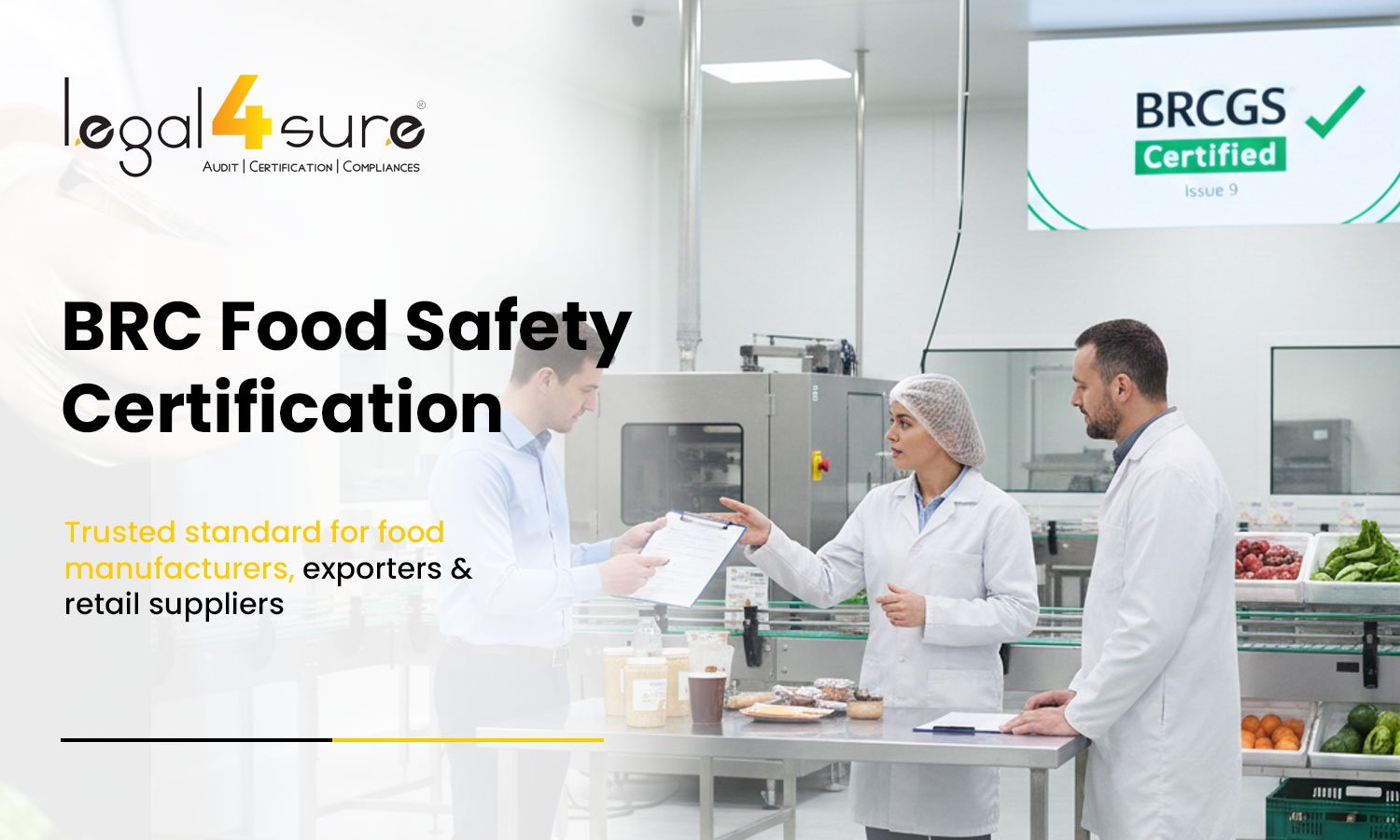
Understanding BRC Certification is important for any food business that wants to meet global safety expectations. Many companies search for brc full form, brc details, or what is brc certification because this standard plays a major role in building trust with buyers and retailers. The brc full form is British Retail Consortium and this organisation created a clear structure that helps food manufacturers keep products safe, clean, and consistent.
The purpose of BRC Certification is simple. It checks whether a food company follows correct safety, hygiene, and quality control practices throughout production. The certification is recognised worldwide, which means even new food brands can gain attention from importers when they follow this standard.
What Is BRC Certification
BRC Certification is a globally accepted food safety program that focuses on hazard control, hygiene, quality management, and strong operational discipline. It ensures that every step from raw material to final packing follows safe handling rules. Many buyers and retailers trust this standard because it reduces risks and improves product reliability.
When people search for brc details or what is brc certification, they mainly want to know how this helps their business. The simple answer is that it provides confidence. A certified company looks more committed, more organised, and more prepared for global market requirements.
Key Requirements of BRC Certification
The requirements are well structured so companies can follow them without confusion.

Quality Management System
A company must create clear policies, procedures, work instructions, and records. These documents guide the daily process and show auditors that the system is under control.
HACCP Based Food Safety Plan
Every certified company needs a complete hazard analysis plan. It covers identification of risks, preventive actions, monitoring, corrections, and regular verification.
Factory Hygiene and Good Practices
Cleanliness is a major part of BRC Certification. The company must show strong hygiene rules, cleaning schedules, pest control records, equipment maintenance logs, and proper staff training.
Traceability and Documentation
The business must track raw materials from the supplier to the final product. This makes recall handling faster and builds confidence for buyers.
Process of Getting BRC Certified
The process looks long but becomes easy when broken into steps.

1. Gap Analysis
The company reviews the standard and checks what is missing. This helps in planning improvements.
2. Documentation Work
All policies, procedures, checklists, training records, and forms are prepared. These documents become the base of the system.
3. Team Training
Everyone in the facility learns how to follow the new system correctly. Training ensures consistency.
4. Internal Audit
The company performs a full internal audit to test the system. Any issues found are corrected before the final audit.
5. Certification Audit
An approved auditor visits the facility, checks documents, assesses hygiene, inspects operations, and speaks with the team. After compliance is confirmed, the company receives BRC Certification.
Key Benefits of BRC Certification
The benefits of brc certification are strong and long term.
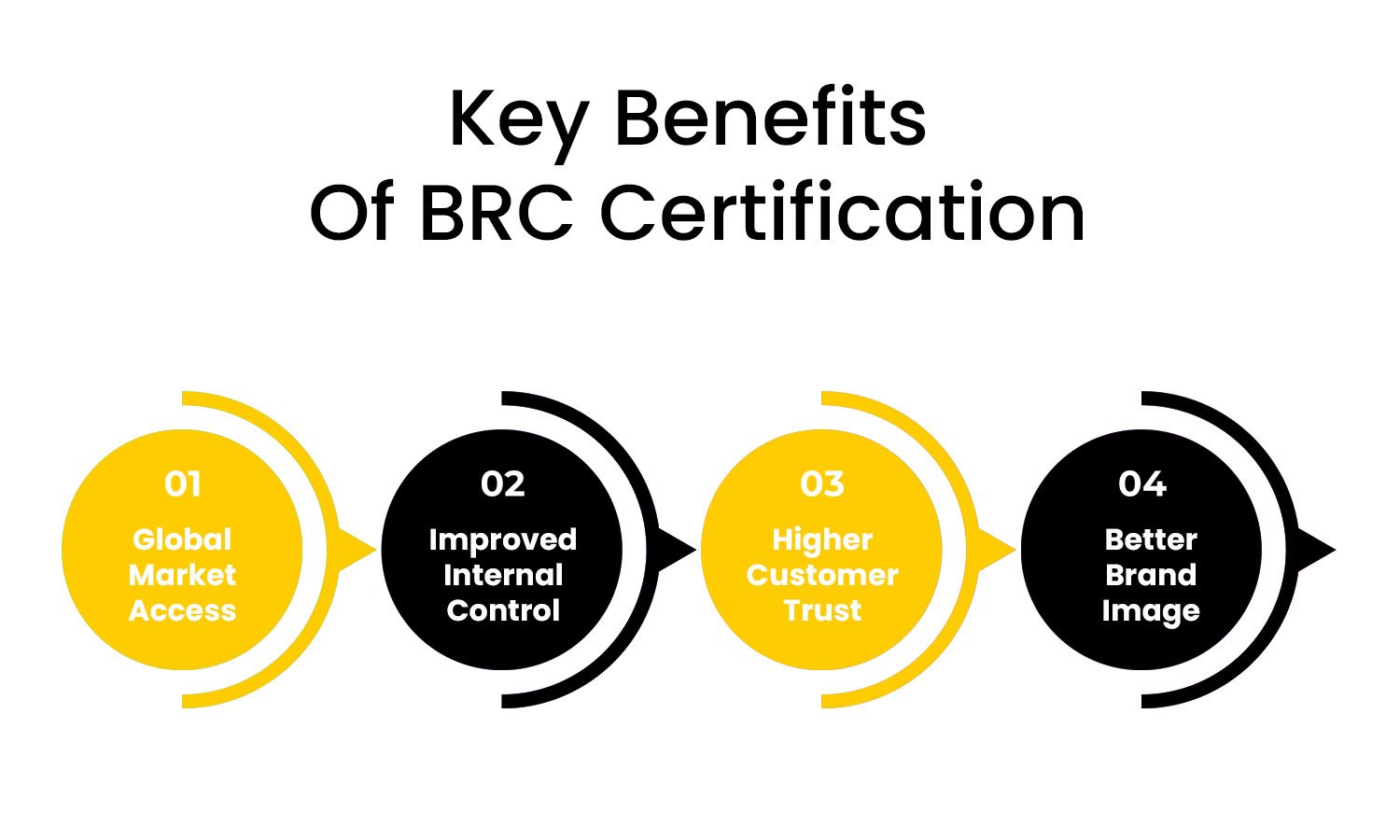
Global Market Access
Many international retailers prefer BRC certified suppliers because it reduces risk and shows strong commitment to safety.
Improved Internal Control
Standardised procedures reduce mistakes, improve workflow, and support higher productivity.
Higher Customer Trust
Certification creates confidence. It shows that the company follows globally accepted rules for food safety.
Better Brand Image
In a competitive market, a certified company stands out. It looks responsible and more dependable.
Ready to Get Your BRC Certification
Legal4sure helps food brands plan, prepare and successfully pass BRC Certification. Get expert support on documentation, plant hygiene, HACCP and end to end compliance.
Talk to our BRC experts and start your certification journey today.
Who Should Consider BRC Certification
Food manufacturers
Export oriented companies
Private label food brands
Processors and packaging units
Food startups preparing for large retail supply
Any company that wants to build a strong safety system and enter global markets should consider this certification.
Final Note for Businesses Looking for BRC Support
If your organisation is planning to get BRC Certification and wants expert support, a professional brc company can guide you through documentation, training, internal audits, and certification preparation. Working with an experienced team helps reduce errors and speeds up the entire process.
A strong BRC system not only improves your product safety but also opens the door to new buyers and international opportunities.
Need Professional Help for Your BRC Certification
Our team at Legal4sure provides complete support for BRC documentation, internal audits,
compliance checks and certification preparation. Get personalised guidance for your
organisation’s BRC journey.
FAQs
Q1. What is BRC Certification and why do food businesses need it?
BRC Certification is a globally recognised food safety standard that checks whether a manufacturer follows safe, hygienic, and organised processes. Businesses need BRC Certification because it improves customer trust, reduces safety risks, and opens doors to large retailers and export markets.
Q2. What is the brc full form and who created this standard?
The brc full form is British Retail Consortium, a group of major retailers that developed this standard to ensure consistent food safety and quality across the supply chain.
Q3. What are the basic requirements of BRC Certification?
Key BRC requirements include HACCP based food safety planning, hygiene practices, documentation, traceability, internal audits, team training, and a strong quality management system. These requirements help reduce contamination risks and maintain product reliability.
Q4. How difficult is it to get BRC Certification for a new food business?
For a new business, BRC Certification may feel complex, but once documentation, hygiene controls, and process discipline are in place, the journey becomes easier. Many companies start with a gap analysis to understand what is missing before applying for certification.
Q5. What is the step by step BRC process for certification?
The BRC process includes reviewing the standard, creating documentation, implementing safety practices, training staff, performing internal audits, correcting non compliances, and finally completing the third party audit. This stepwise BRC process helps companies stay well prepared.
Q6. Does BRC Certification help with exports and global buyers?
Yes. Exporters, private label brands, and large retailer chains prefer suppliers who hold BRC Certification because it reduces risk and ensures consistent food quality. Many global buyers specifically filter suppliers based on BRC approval.
Q7. How is BRC Certification different from other food safety programs like FSSC 22000 or ISO?
BRC is more retailer driven and focuses heavily on operational hygiene, site standards, and product safety. It includes strict auditing guidelines and yearly assessments. ISO and FSSC focus more on system management, while BRC blends both system and shop floor requirements.
Q8. How long does it take to get BRC Certification for a typical food plant?
Most companies complete the BRC Certification journey in 30 to 90 days depending on documentation readiness, facility hygiene, and team training. Plants with strong existing systems complete it faster.
Q9. What mistakes cause businesses to fail the BRC audit?
Common mistakes include missing records, poor hygiene controls, weak traceability, untrained staff, incorrect documentation, and gaps in HACCP plans. Strong internal audits often fix these issues before the final assessment.
Q10. Is BRC Certification worth it for small or medium food manufacturers?
Absolutely. Whether the company is small or large, BRC Certification builds trust, attracts bigger buyers, improves safety culture, reduces product failures, and raises overall brand value. It also makes expansion and exports much easier.