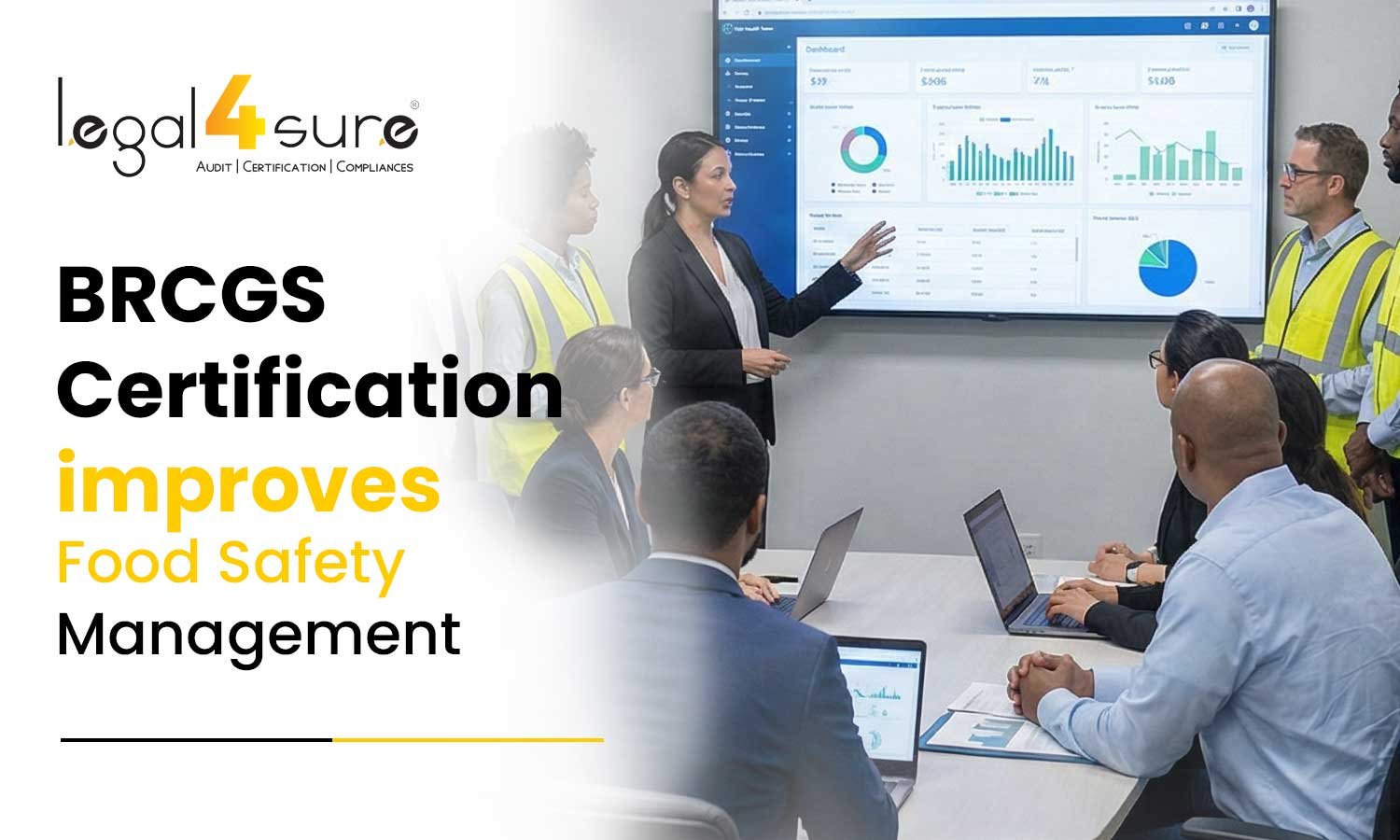
Every year, food contamination recalls cost the global industry billions, and most failures trace back to weak on-ground systems. But are your controls truly battle-ready? Hidden gaps in hygiene, audits, and traceability can destroy brands overnight. This is exactly how BRCGS Certification improves Food Safety Management, by replacing paper compliance with real-world operational control.
What Is the Latest Version of the BRCGS Global Standard for Food Safety?
- The BRCGS Global Standard for Food Safety establishes controls for any risk point that could potentially introduce contamination, cause a regulatory violation. Be subject to product recalls from all food manufacturing organisations.
- The BRCGS also places great emphasis on Management Accountability and Food Safety Culture (including Leadership Ownership, KPIs, and Management Review). Hazard Analysis Critical Control Point (HACCP) based Risk Control for Biological, Chemical, Physical, and Allergenic Hazards.
- Risk Assessment and Approval of Raw Material Profiles and Supplier Approval. Plant Structure and Design, Plant Hygiene, Zoning, Pest Control, as well as Equipment Design/Configuration.
How BRCGS Certification Strengthens Your Food Safety Practices
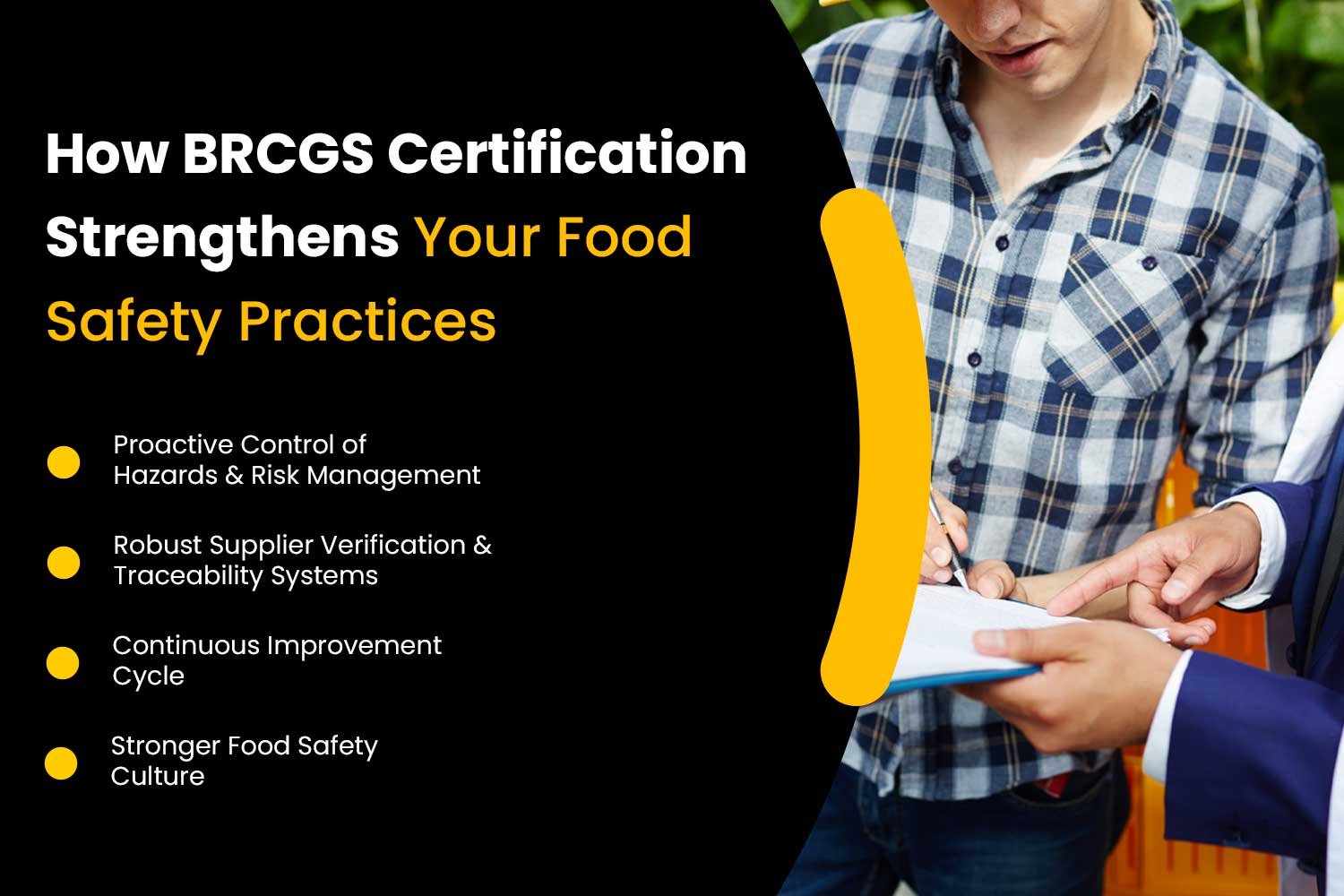
Instead of relying on paper to manage Food Safety, BRCGS Certification allows for a more visual method of tracking how many days away from the date of certification a product would be allowed to be sold. The areas that BRCGS Certification focuses on include:
- Proactive Control of Hazards & Risk Management – This improves the management of Food Safety by using a real-time system to monitor Hazard Analysis and Critical Control Point System. Hazard Analysis is the identification of the hazards associated with food and its packaging.
- Robust Supplier Verification & Traceability Systems – The system creates auditable and traceable verifications of the raw material and ingredients used to manufacture the product. Because the verifications are date-stamped. They will be rectified and tracked in a timely manner.
- Continuous Improvement Cycle – A system that creates a cycle of continuous improvement. Through using Internal Audits and Root Cause Analysis to correct issues using the CAPA process at their point of origin.
- Stronger Food Safety Culture – The creation of a Stronger Food Safety Culture will reduce potential for human error by providing a framework of training. For employees, responsibility for leadership and tracking of employee performance.
How BRCGS Certification Boosts Your Business and Brand
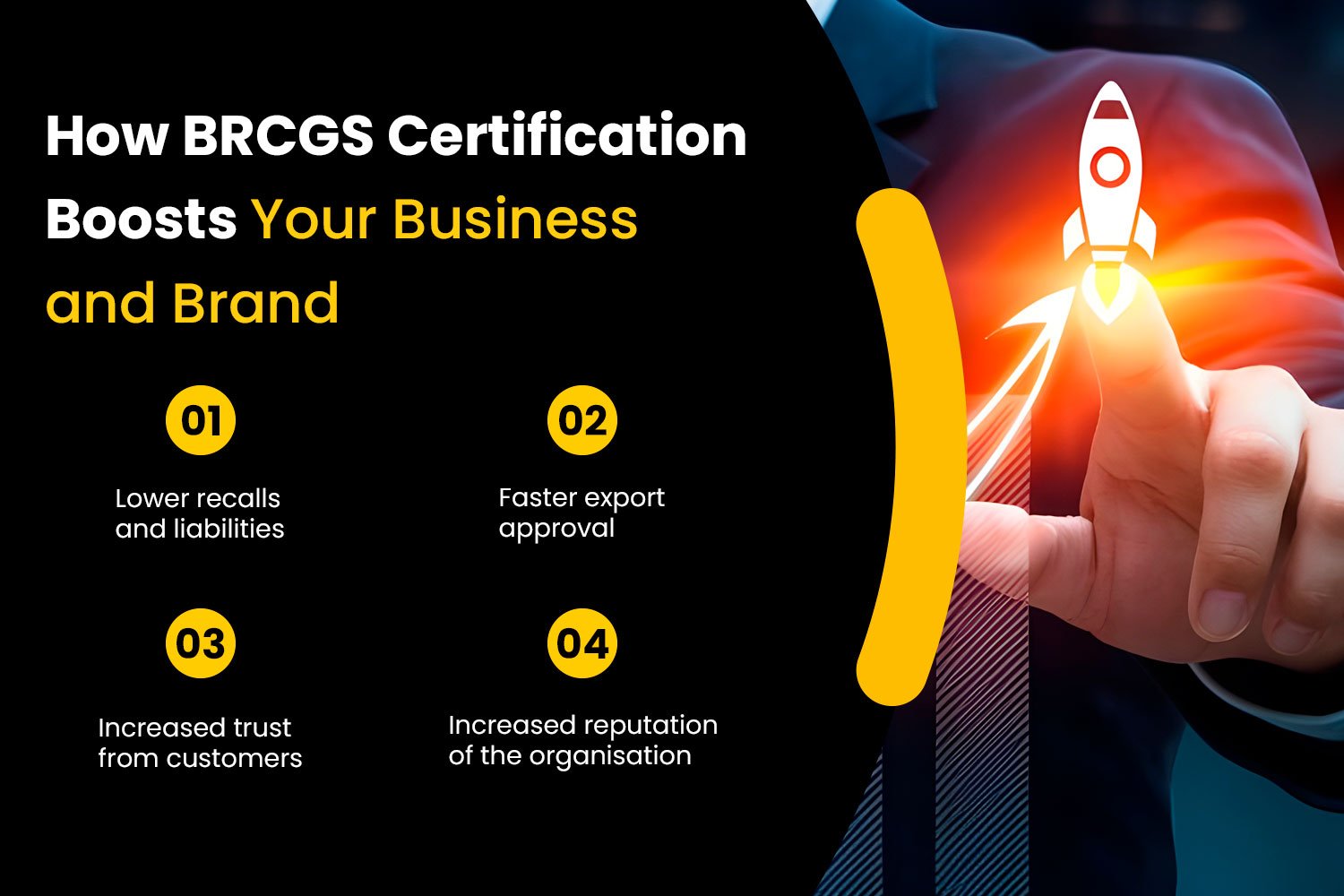
BRCGS (British Retail Consortium Global Standards) accreditation in relation to food safety leads to the following business benefits:
- Lower recalls and liabilities = Fewer product failures and fewer regulatory fines.
- Increased trust from customers/buyers = improved credibility throughout the world due to BRCGS accreditation.
- Faster export approval = Many large retailers and importers request BRCGS compliance prior to completing an export.
- Increased reputation of the organisation = BRCGS certification provides evidence of the organisation’s commitment to quality and safety.
Step-by-Step: How BRCGS Improves Your Food Safety System
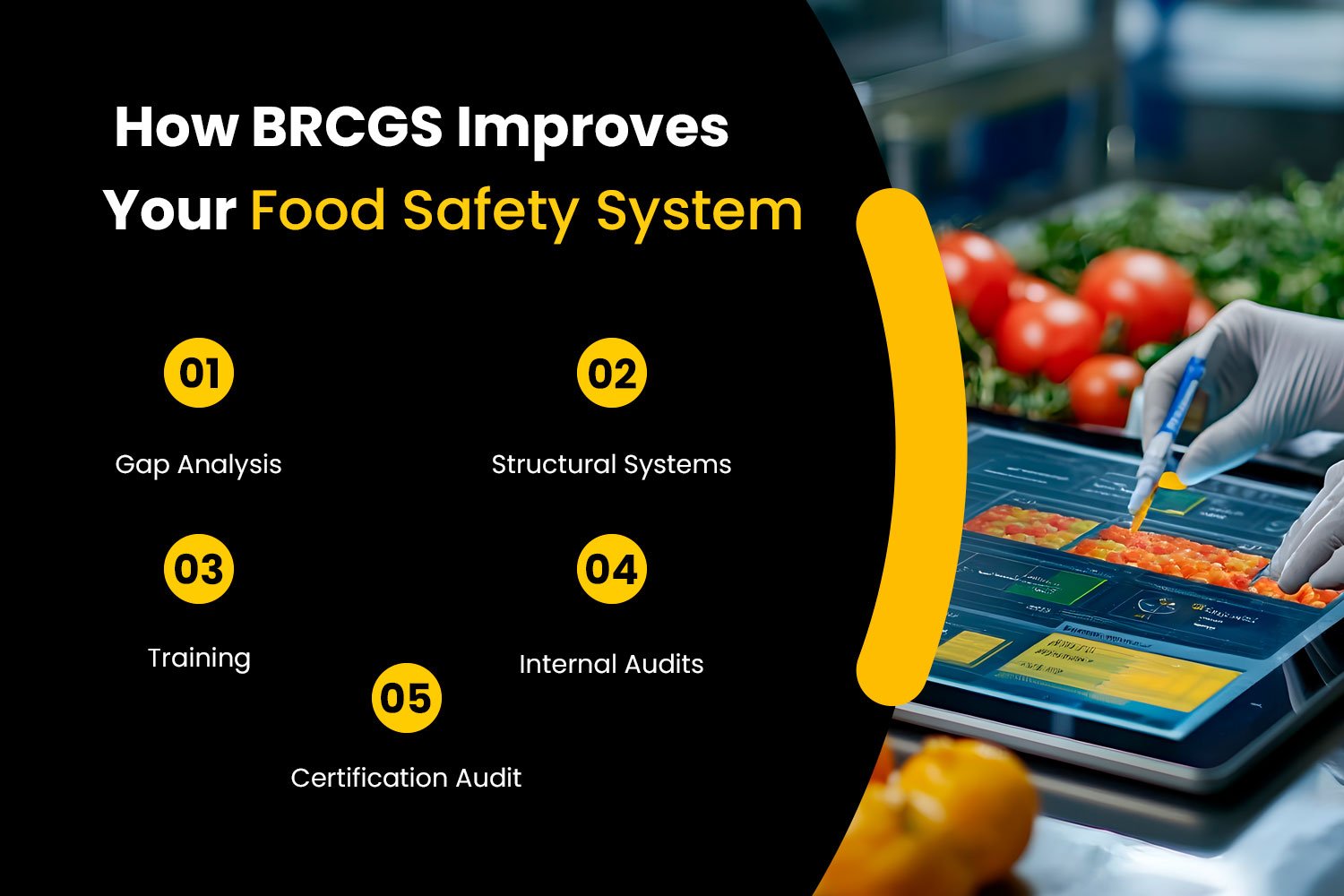
BRCGS Certification improves Food Safety Management, providing an effective approach to improving your Factory through the following:
- Gap Analysis identifies weaknesses in processes/documents/personnel.
- Structural Systems creates integrated HACCP plans, SOPs, risk-based controls, and traceability systems.
- Training/Implementation provides employee training on hygiene, monitoring CCPs, and corrective actions when deviation occurs.
- Internal Audits/Corrective Actions identify root causes and implement CAPA to fix issues before they occur.
- Certification Audit is a 3rd party audit of your Food Safety Management System.
The outcome is a functional, resilient BRCGS Food Safety Audit Process with a worldwide commitment to safety.
Also read: Understanding BRCGS Digital Audits For Compliance
Is BRCGS Certification Right for Your Business?
BRCGS Food Safety Certification represents the greatest value for food manufacturers and enables them to show continued total reliability in Safe, Compliant, and Globally Credible Food Manufacturing.
- Brands Imports & Retailers: Satisfy the requirements of Retailers/Importers around the world.
- FMCG Manufacturers & Private Label Suppliers: Establish confidence with the world’s Largest Buyers.
- Co-Packers and Third Party Manufacturers: Require consistent information regarding safety, quality, and control.
- Food Processing Companies with Significant Risk: Processors of Dairy Products, Ready-To-Eat Meals, Snack Foods, Frozen Meals & Allergen-Sensitive Products.
Also read: BRCGS Certification Cost | Legal4sure
Conclusion
Legal4sure believes food-safe systems go beyond certification. We want to allow every company that partners with us to develop an environment that fosters trust, create support resources for their food safety systems, and establish long-term criteria for food safety credibility.
FAQs
Q1. How does BRCGS certification improves food safety management practices?
Ans: The implementation of risk-based controls, conducting strict audits, and maintaining a disciplined operational approach in real time.
Q2. Is BRCGS superior to basic Food Safety Compliance programs?
Ans: Yes, BRCGS goes beyond just providing a large amount of documentation. It helps to ensure that we are in control of our processes and behaviour on a daily basis.
Q3. Does BRCGS help in reducing food recalls?
Ans: BRCGS goes beyond initial compliance. BRCGS provides better Traceability, Supplier Control, and Monitoring of your Critical Control Points.
Q4. Can Small Food Manufacturers Achieve BRCGS Certification?
Ans: Yes, provided they have an appropriate scalable system with adequate training.
Q5. Will BRCGS Certifications assist with Export Approvals?
Ans: Yes, Most Global Retailers and Import Buyers have incorporated this Certification into their requirements.
Q6. What Are The Ways BRCGS Will Improve Your Employees’ Behaviour Regarding Food Safety?
Ans: By providing Training, Accountability, and establishing Systems for Tracking Safety Performance.
Q7. Is BRCGS Certification only required once?
Ans: No, BRCGS Certification will require a full Annual Audit and Continuous Improvement of Systems.
Q8. Does BRCGS improve supplier quality control?
Ans: Yes, it requires formal supplier risk assessment and approval systems.