
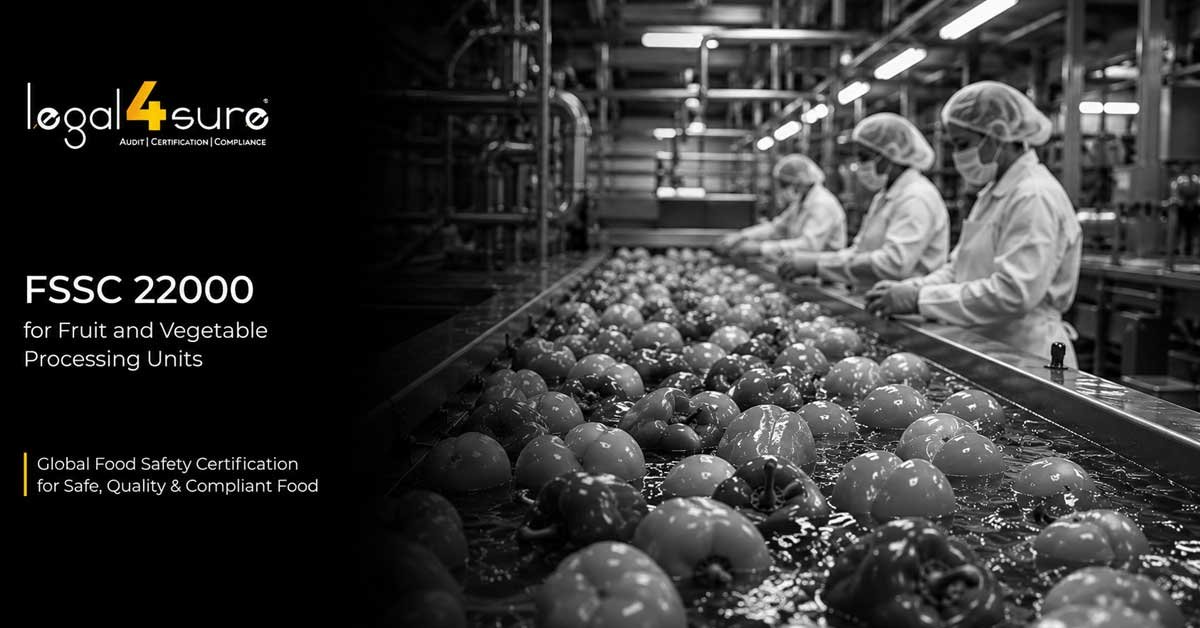
For an effective global food supply chain, food safety procedures must be tight. Processing plants for fruits and vegetables occupy one of the weakest links in such a chain. Produce poses biological, chemical, and physical risks that start right in the fields where it grows and continue until it reaches the consumer’s table. The FSSC 22000 standard for fruit and vegetable processing plants ensures such risk assessment in a benchmarked manner at every critical control point – from crop cultivation in the field to shipment of the final product out of the warehouse.
The following blog post is dedicated to the issue of how this standard can be used in processing plants, what types of pre-harvest and post-harvest controls should be in place, and why obtaining a fruit and vegetable processing certificate through FSSC 22000 is a must for businesses today.
Understanding FSSC 22000 Food Safety Standards and How They Apply to Produce
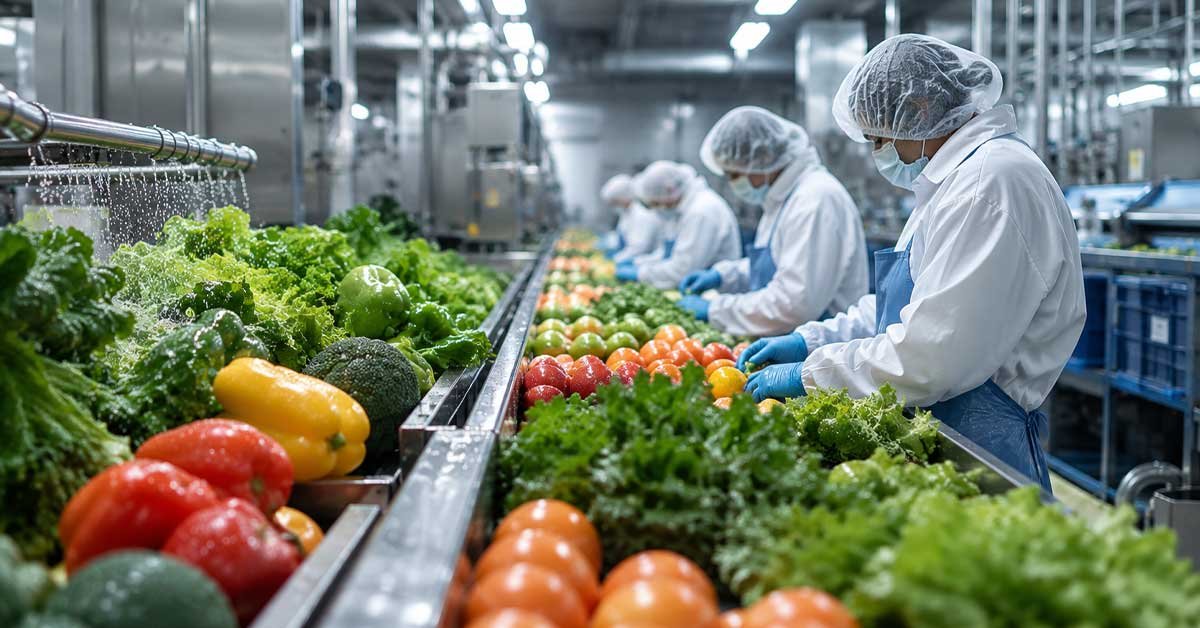
FSSC 22000 is a food safety standard that combines the elements of ISO 22000 (food safety management systems), ISO/TS 22002-1 (prerequisite programs for food manufacturing), and other specific food safety requirements related to food fraud, food defence, allergens, and environmental testing.
In the case of FSSC 22000 in fruit and vegetable processors, it should be noted that the uniqueness of such organizations is that their primary ingredient – fruits and vegetables – comes in the form of contaminated products as a result of cultivation. The hazard analysis in accordance with the food safety standards of FSSC 22000 should consider hazards related to the quality of irrigation water, fertilizers, pesticides, and practices of agricultural workers at the farm level.
Which Category Covers Produce Processors?
The fruit and vegetable processing industry normally falls into the FSSC 22000 Category C – Food Manufacturing category with the applicable industry-specific PRP requirement as ISO/TS 22002-1. The processes that may be included are as follows:
- Cleaning, peeling, slicing, and dicing of fresh produce
- Blanching, freezing, and canning of vegetables and fruits
- Juicing, pulping, and puree production
- Minimally processed or ready to eat (RTE) salads and sliced fruits
- Dried fruits and dehydrated vegetables
Pre-harvest Risk Management Under FSSC 22000 for Fruit and Vegetable Processing Units
One of the key characteristics of the FSSC 22000 standard for fruit and vegetable processing facilities is the emphasis on pre-harvest risks. Although certification is granted for the processing facility and not the farm, according to the standard’s supplier management and raw materials clauses, processors are obligated to have controls for their agricultural suppliers.
What Are the Pre-harvest Controls in FSSC 22000?
Pre-harvest risk management includes all activities that impact the safety of the raw material prior to entry into the processing facility. The following table highlights the control areas:
| Control Area | Key Practices | FSSC 22000 Relevance |
|---|---|---|
| Soil & Water Management | Testing for contaminants, proper irrigation sources | GMP prerequisite programs |
| Pesticide Application | Approved chemicals, correct dosage, pre-harvest intervals | Chemical hazard control |
| Fertilizer Use | Composted manure, safe organic inputs | Biological hazard prevention |
| Worker Hygiene | Handwashing, no sick workers in fields | GHP under ISO/TS 22002-1 |
| Pest & Wildlife Control | Buffer zones, traps, field inspections | Environmental monitoring PRPs |
To be consistent with the food safety requirements of FSSC 22000, fruit and vegetable processors need to have an approved supplier program where they have evidence that these controls have been implemented by suppliers who provide their produce. This usually entails:
- Audits or certification of the farm (Global G.A.P., etc.)
- Supplier survey and declaration of pesticide usage
- Testing of incoming batches for residues of agrochemicals
- Water test reports from irrigation water
- Training and hygiene of workers at farm level
Therefore, pre-harvest and post-harvest controls in FSSC 22000 are not viewed separately but connected via hazard analysis from field to fork.
Post-harvest Food Safety Controls Required by FSSC 22000 for Fruit and Vegetable Processing Units
As soon as the produce is introduced into the processing plant, the FSSC 22000 standard for fruit and vegetables processors provides an organized approach to food safety control systems based on prerequisite programs (PRP), operational prerequisite programs (OPRP), and Critical Control Points (CCP).
Core Post-harvest Control Stages
| Post-Harvest Stage | Control Measures | FSSC 22000 Requirement |
|---|---|---|
| Receiving & Sorting | Visual inspection, rejection of damaged produce | Incoming material control |
| Washing & Sanitation | Potable water, validated sanitiser concentrations | CCP or OPRP validation |
| Cold Chain Management | Temperature logs, calibrated refrigeration | Monitoring & measurement |
| Packaging & Labelling | Food-grade materials, allergen declarations | Packaging material PRPs |
| Storage & Distribution | FIFO, pest-free warehouses, traceability | Traceability system requirement |
Hazard Analysis and the HACCP Plan
The requirement mandates that processors carry out a detailed hazard analysis specific to each type of product category. The hazards associated with the processing of fruits and vegetables can be:
- Biological: Salmonella, E. coli O157:H7, Listeria monocytogenes, hepatitis A, norovirus
- Chemical: Presence of pesticides, mycotoxins, heavy metals (lead, cadmium), residual cleaning agents
- Physical: Soil, stones, metal particles, glass, insect pieces
- Cross-contamination with allergens: Pertains to mixed produce facilities where processing involves nuts, celery, or mustard
Controls related to post-harvest food safety that are designated as CCPs, like the chlorine rinse or metal detection stage, should have critical limits and methods of monitoring, corrections, and verification clearly laid out in the FSSC 22000 Food Safety Management System.
How FSSC 22000 for Fruit and Vegetable Processing Units Compares to Traditional HACCP
| Feature | Traditional HACCP | FSSC 22000 for Fruit & Vegetable Processing Units |
|---|---|---|
| Scope | Processing stage only | Farm to fork, including pre-harvest |
| Standard Base | Codex Alimentarius | ISO 22000 + ISO/TS 22002-1 + FSSC Add-ons |
| Certification | Not globally recognised | GFSI-benchmarked, globally accepted |
| Supplier Management | Optional | Mandatory supplier approval program |
| Food Fraud | Not addressed | Vulnerability assessment required |
The table above illustrates why FSSC 22000 for fruit and vegetable processing units offers a significantly more robust assurance framework than standalone HACCP plans, particularly for units seeking to supply international retail chains or export markets.
FSSC 22000 Additional Requirements Relevant to Fruit and Vegetable Processing Units
Apart from the ISO 22000 core and ISO/TS 22002-1 PRPs, there are some more additional requirements within the food safety standards of FSSC 22000 which are particularly relevant for the processors of produce:
Food Fraud Vulnerability Assessment
Vulnerability assessment needs to be performed by fruit and vegetable processors with documentation, to establish any possible economic adulteration. Potential frauds in this industry include dilution of juices, labeling fraud, use of conventional products instead of organic products, and undeclared addition of water.
Food Defence Plan
Development of a food defense plan for individual sites is mandatory. For processing facilities, it includes access control to vulnerable processing zones, securing the supply of water and ingredients, and employee background checks.
Environmental Monitoring Program
As far as the ready-to-eat products processors are concerned, FSSC 22000 requires development of an environmental monitoring program for Listeria monocytogenes and other indicators. Swabbing intervals, sampling locations, action limits, and trends analysis should be established and documented.
Allergen Management
Risk assessment and controls related to cross-contamination with allergens should be performed. Produce processors that handle celery, mustard, sesame, or tree nuts are required to perform validation of cleaning processes.
Steps to Achieve Fruit and Vegetable Processing Certification Under FSSC 22000
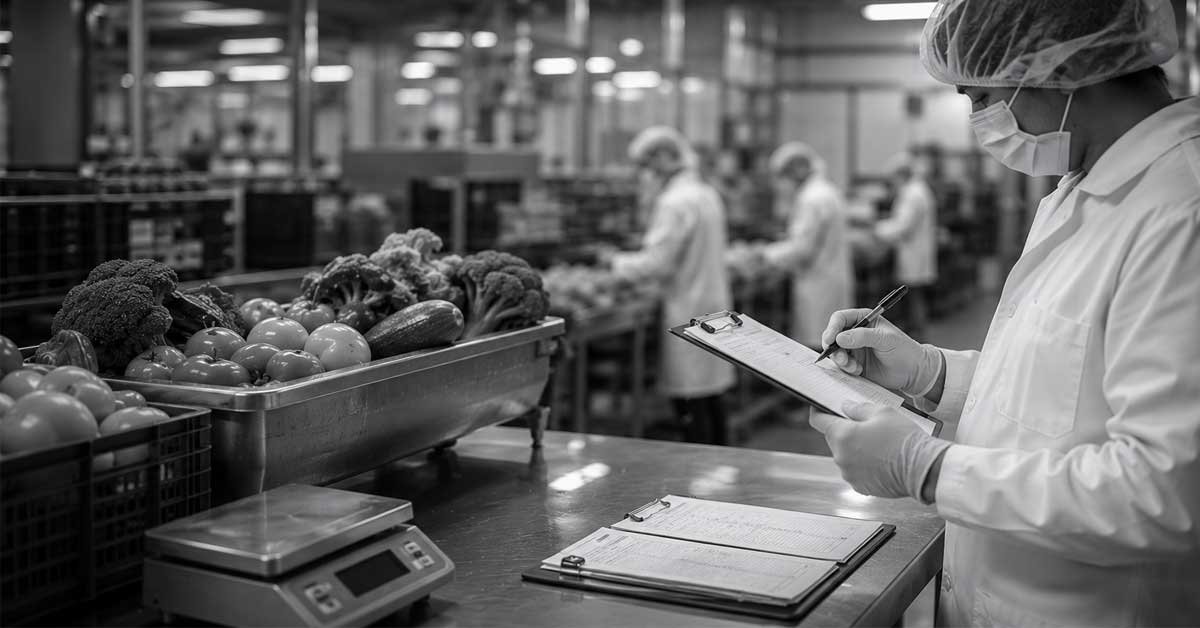
The implementation process for processing units seeking fruit and vegetable processing certification will take the following steps:
Gap Analysis – Assess the existing food safety procedures against the food safety requirements of FSSC 22000 for fruit and vegetable processing units.
Pre-requisite Programs Development – Develop the cleaning and sanitization, pest control, maintenance, allergen control, and supplier approval pre-requisite programs.
Hazard Analysis & HACCP plan – Determine all pre and post-harvest hazards and determine the appropriate controls, OPRPs, and CCPs.
Documentation and FSMS development – Prepare the food safety manual, SOPs, work instructions, forms and records needed for the standard.
Training of personnel – Train the food safety team and other concerned employees about the food safety standards according to FSSC 22000 and the role they play.
Internal audit and Management review – Perform a complete internal audit cycle and perform a management review before the stage one certification audit.
Certification Audit – Perform the certification audits from a FSSC 22000 approved certification body performing Stage 1 and Stage 2 audits.
Business Benefits of FSSC 22000 for Fruit and Vegetable Processing Units
Apart from being compliant with regulations, FSSC 22000 certification for fruit and vegetable processing plants also provides commercial benefits:
- Market Entry: Recognized by Walmart, Tesco, Metro, and others retailers that insist on GFSI-certified producers of their supplies.
- Customer Audit Cost Saving: Single FSSC 22000 certificate allows avoiding multiple customer audits and therefore saving considerable amount of time and money.
- Export Assistance: Recognized in EU, US, Middle Eastern countries’ imports as proof of good food safety management practices.
- Product Recall Minimization: Good traceability and corrective action procedures help to avoid product recalls and any associated financial consequences.
- Efficient Operations: Hazard Analysis of PRPs reveals unnecessary costs caused by waste and rework.
Key Takeaways
- Product Safety under FSSC 22000 includes the whole product safety chain from field preparation all the way to final product distribution.
- Pre-harvest risk management within the FSSC 22000 includes soil, water, pesticide, and hygiene risks.
- Post-harvest food safety control includes washing, cold chain, packaging, traceability, and allergen labeling.
- FSSC 22000 is an amalgamation of ISO 22000 + ISO/TS 22002-1 (Prerequisite Programs for Food Manufacturing) + additional FSSC specific requirements.
- FSSC 22000 certification is your entry ticket into international retail and food service buyers that require GFSI benchmarked standards from their suppliers.
Frequently Asked Questions
What are the FSSC 22000 requirements for fruit and vegetable processing units?
The FSSC 22000 requirements for fruit and vegetable processing units include ISO 22000, ISO/TS 22002-1 PRPs, a validated HACCP plan, supplier control, environmental monitoring, food fraud vulnerability assessment, and food defense planning.
What are the pre-harvest and post-harvest controls under FSSC 22000?
Pre-harvest and post-harvest controls under FSSC 22000 include soil and water management, pesticide usage, worker hygiene, receiving, washing and sanitizing of produce, cold chain management, packaging, and traceability—all linked to one hazard analysis.
What are the pre-harvest and post-harvest controls in FSSC 22000?
Pre-harvest controls in FSSC 22000 relate to farm-level hazards such as irrigation water quality, pesticide residues, and field worker hygiene, while post-harvest controls address process-level hazards such as microbial contamination during washing, cold chain failure, and package integrity.
How does FSSC 22000 apply to fruit and vegetable processing units?
FSSC 22000 is applicable to fruit and vegetable processing units belonging to Category C (Food Manufacturing), according to the ISO/TS 22002-1 sector standard PRPs, and requires food safety risk management throughout the unit’s supply chain.
Is FSSC 22000 or GlobalG.A.P. better for a produce processor?
FSSC 22000 serves the processing part of the supply chain, while GlobalG.A.P. focuses on the growing and farm production part. Therefore, many businesses use both standards for comprehensive supply chain coverage.
How long does it take to get fruit and vegetable processing certification under FSSC 22000?
The implementation phase typically takes 6–12 months, depending on the food safety maturity of the existing system, followed by a two-phase audit conducted by an accredited Certification Body.
Does FSSC 22000 require an environmental monitoring program for produce processors?
Yes. FSSC 22000 food safety standards require an environmental monitoring program where applicable based on risk, especially for ready-to-eat produce processors. This may involve testing for pathogens such as Listeria monocytogenes