
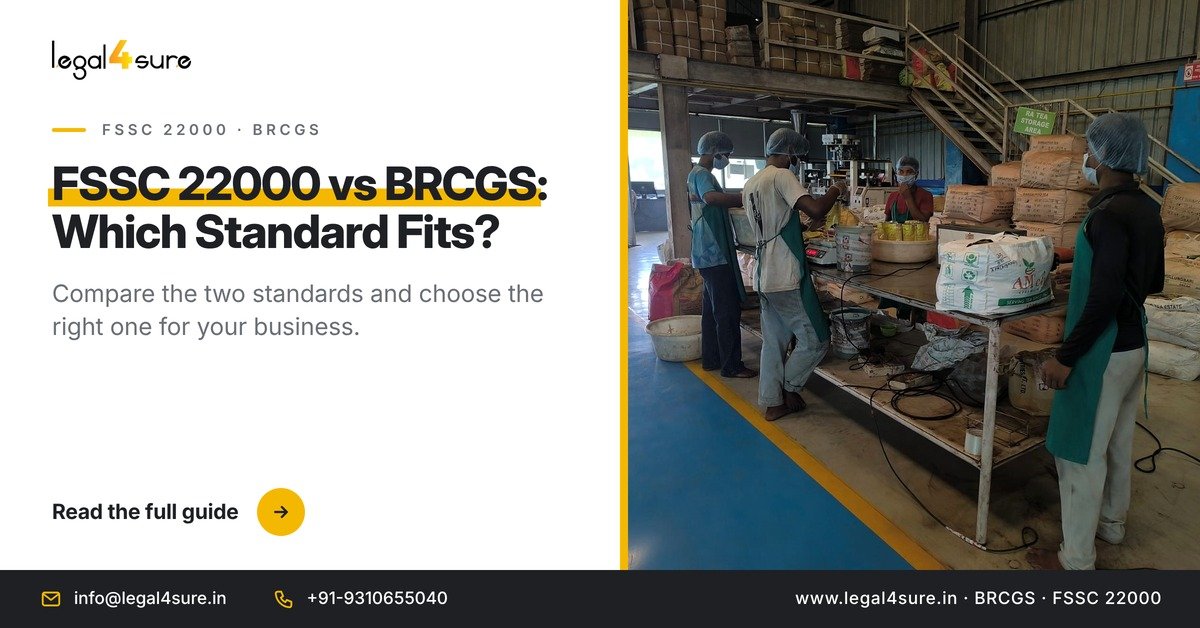
“We need a GFSI-recognised certificate before the next contract.” That’s often the whole instruction a supplier gets. Then someone in the plant asks the obvious question: FSSC 22000 or BRCGS?
Both are benchmarked by the Global Food Safety Initiative (GFSI). Both are respected. But they’re built differently, audited differently and preferred by different buyers. Picking the wrong one can mean paying for a second certification a year later.
This article answers FSSC 22000 vs BRCGS: which standard fits your business? It compares the schemes side by side and gives you a clear way to decide before you spend money.
Which Buyers Ask for Which Standard?
In practice, the buyer usually decides. UK retailers and many private-label programmes historically prefer BRCGS. Multinational brand owners, ingredient buyers and packaging customers often specify FSSC 22000. Many buyers accept any GFSI-recognised scheme, so always ask before choosing.
| Sub-sector and typical cluster | Scheme buyers often ask for | Why |
|---|---|---|
| Seafood exporters (Kochi, Visakhapatnam, Veraval) | BRCGS | UK and EU retail importers know its graded results |
| Spice processors (Unjha, Guntur) | BRCGS or FSSC 22000 | Private label tends towards BRCGS; ingredient buyers towards FSSC |
| Dairy and ingredients (Anand, Pune) | FSSC 22000 | Multinational FMCG brands run ISO-based supplier programmes |
| Food packaging (Daman, Vapi, Silvassa) | FSSC 22000 or BRCGS Packaging Materials | Depends on whether the customer is a brand owner or a UK retailer |
| Snacks and ready-to-eat (Hyderabad, NCR) | Either | Quick-service chains usually name their preferred scheme |
Scale gives useful context. According to BRCGS, it has issued over 38,000 certificates across more than 130 countries. Foundation FSSC’s website reports more than 37,000 certified organisations, and its 2025 update data showed a presence in 175 countries.
What Are BRCGS and FSSC 22000, Exactly?
BRCGS Food Safety is a single, prescriptive standard owned by BRCGS, part of LGC, that grades sites from AA to D. FSSC 22000 is a certification scheme owned by Foundation FSSC that combines ISO 22000, a sector prerequisite programme standard and FSSC additional requirements, with a pass or fail outcome.
Some clarifications help:
- Both are voluntary. No Indian law requires either, though buyers may make one a contract condition.
- Neither owner audits you. Accredited certification bodies carry out audits and issue certificates.
- ISO 22000 alone isn’t FSSC 22000. It lacks the PRP standard and additional requirements, and isn’t GFSI-recognised on its own.
- “BRC” and “BRCGS” are the same standard, under an older and newer name.
- A certificate isn’t a guarantee. It confirms your system met the requirements at audit, not that every batch is safe.
FSSC 22000 vs BRCGS: Which Standard Fits Your Business? A Side-by-Side Comparison
| Factor | BRCGS Food Safety | FSSC 22000 |
|---|---|---|
| Owner | BRCGS (part of LGC), UK | Foundation FSSC, Netherlands |
| Structure | One prescriptive standard, nine requirement sections | ISO 22000 + sector PRPs + FSSC additional requirements |
| Audit result | Graded AA to D, with “+” for unannounced audits | Certified or not certified, no grade |
| Audit frequency | Every 12 months, or six months for C and D grades | Three-year certificate with annual surveillance audits |
| Unannounced audits | At least one every three years under the announced protocol | At least one unannounced audit per three-year cycle |
| Writing style | Detailed “shall” clauses with fundamental requirements | Management-system approach that leaves more design to the site |
| Fits well with | Retail-led supply chains | Sites running ISO 9001 or other ISO systems |
Grading cuts both ways. A strong BRCGS grade such as AA+ can help in buyer discussions, but a C or D grade is visible to customers and brings six-monthly audits. FSSC 22000 avoids that pressure, though some retail buyers prefer the extra detail a grade gives them.
The biggest practical difference is style. BRCGS tells you what good looks like in detail, which some teams find easier. FSSC 22000 asks you to design controls through risk assessment, which suits sites with mature management systems.
How Do BRCGS Food Safety Requirements Differ in Practice?
- Fundamental clauses: BRCGS names fundamentals, such as HACCP, traceability and allergen management. A major against one blocks certification.
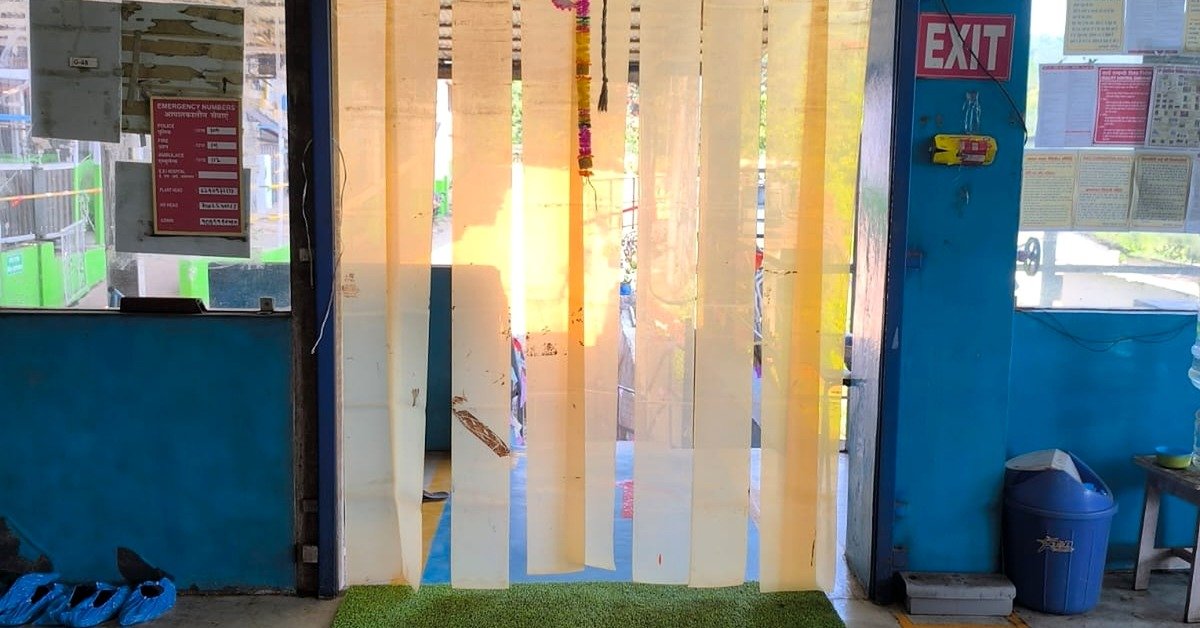
- Site standards: BRCGS is very specific about walls, doors, floors and equipment, which is where most of its findings appear.
- Production risk zones: BRCGS sets detailed high-risk and high-care rules. FSSC 22000 covers similar ground through ISO/TS 22002-1 and environmental monitoring.
- Culture: Both expect a food safety culture plan with measurable objectives.
Extra Checks for Higher-Risk Activities Under Either Scheme
- Ready-to-eat products: segregation, Listeria environmental monitoring and dedicated protective clothing.
- Low-moisture foods: Salmonella controls and validated microbial reduction for spices and flours.
- Shared allergen lines: validated cleaning and label checks at every changeover.
- Food-contact packaging: migration testing and glass and brittle plastic control.
Read our guide on BRCGS food safety audit checklist for manufacturers.
Requirements and Documents: What Overlaps and What Doesn’t?
Roughly speaking, the core documents overlap. Both schemes need a HACCP plan, prerequisite programmes, supplier approval, traceability, internal audits and corrective action records.
- Shared core: HACCP study, cleaning and pest control programmes, training records, recall tests, management review.
- BRCGS extras: detailed site standards evidence, label and pack checks, and compliance with BRCGS position statements.
- FSSC extras: FSMS scope, policy and objectives, OPRPs, food fraud and food defence assessments, and food loss and waste records.
So a site certified to one scheme can usually reuse much of its HACCP and prerequisite programme work for the other, which cuts the cost of switching later.
If you’re weighing both and want to see where your current documents stand, Legal4sure can map them against each scheme so you start from what you already have.
How to Choose and Get Certified, Step by Step
The BRCGS food safety process and the FSSC 22000 route share the same early steps. The scheme choice comes second.
- Ask your buyers. Get written confirmation of the schemes, grades and scope they accept.
- List your future customers. Consider export markets you’re targeting in the next two to three years.
- Run a gap assessment. Compare current practice against both schemes if the buyer accepts either.
- Choose the scheme. Pick the one that satisfies most buyers with the least duplication.
- Implement and record. Close gaps and run the system long enough to generate live records.
- Audit yourself. Complete internal audits, a mock recall and a management review.
- Book an accredited certification body. Check its approval for your chosen scheme and product category.
- Close findings. Both schemes generally expect major findings to be closed with evidence within 28 days.
Preparation Checklist Before You Commit
- Written buyer requirement on file
- Existing ISO certifications listed
- Site condition reviewed for BRCGS-style site standards
- Internal team capacity confirmed for a three-year or annual audit cycle
How Do Costs and Timelines Compare?
Neither scheme owner publishes a fixed price. Your cost depends on audit days, site condition and how much work your system needs. Ask certification bodies for written INR quotations for both schemes if your buyer accepts either.
| Cost component | What drives it | How to budget in INR |
|---|---|---|
| Audit fees | Audit days, set by site size, staff and HACCP studies; BRCGS audits every year, FSSC has a three-year cycle | Compare three-year INR totals, not first-year quotes |
| Scheme registration fees | Charged by BRCGS or Foundation FSSC, often through the certification body | Confirm whether quotes include them |
| Consultancy and training | Gap size and team experience | Fixed-scope INR quotes with deliverables |
| Site upgrades | Fabric, segregation and equipment gaps, often larger for BRCGS | Estimate after a gap assessment |
| Testing and validation | Environmental monitoring, lab tests, calibration | NABL-accredited lab quotations |
| Stage | Typical duration | Main factor that changes it |
|---|---|---|
| Gap assessment | 1 to 2 weeks | Number of products and lines |
| Implementation | Often 3 to 6 months | Existing ISO or HACCP maturity |
| Initial audit | BRCGS single audit; FSSC Stage 1 and Stage 2 | Scheme chosen and site size |
| Closure of major findings | Within 28 days | Number and type of findings |
What’s Changed Recently in Both Schemes?
Foundation FSSC published FSSC 22000 Version 7 on 1 May 2026. According to DNV, it applies from 1 May 2027 with a 12-month transition. On the BRCGS side, a position statement added protective footwear to clause 7.4.2 from 10 August 2026, and Issue 10 is in development.
Neither scheme replaces statutory compliance requirements. Your FSSAI licence under the Food Safety and Standards Act, 2006, and Schedule 4 hygiene conditions remain legal obligations, whichever scheme you choose.
Read our guide on FSSAI licence for food manufacturers.
Mistakes to Avoid When Choosing a Scheme
- Choosing on cost alone. A cheaper scheme your buyer doesn’t accept costs more.
- Assuming one scheme covers all buyers. Check every major customer, not just the newest.
- Ignoring site condition. BRCGS site standards can need capital work.
- Running two schemes by accident. Ask whether buyers will accept one GFSI certificate.
- Trusting guaranteed outcomes. Walk away from consultants who promise a grade or a certificate date.
A Quick Decision Framework
- BRCGS usually fits when your key buyers are UK retailers or private-label programmes, or a graded result helps you win business.
- FSSC 22000 usually fits when you already run ISO 9001, supply multinational brands, or make food packaging for brand owners.
- Either may work when buyers accept any GFSI-recognised scheme, so choose the one that fits your team’s working style.
- Neither may be necessary yet when you sell only domestically and buyers ask only for FSSAI compliance.
How Can a Consultant Help You Choose?
A good consultant compares your buyer requirements, runs a gap assessment against both schemes and builds a realistic plan. They can’t control the audit result, because the certification body is independent.
Questions to ask:
- Have you supported sites to both BRCGS and FSSC 22000?
- Will you recommend a scheme based on my buyers, not your preference?
- What does the INR fee include?
- Do you avoid promising grades or dates?
Legal4sure helps Indian manufacturers compare schemes, close gaps and prepare for audits, with a focus on systems your team can run after certification.
Read our guide on documents required for FSSC 22000 certification.
Key Takeaways
- Both schemes are GFSI-recognised and voluntary; your buyers usually decide
- BRCGS is prescriptive and graded; FSSC 22000 is ISO-based and pass or fail.
- BRCGS audits yearly, while FSSC 22000 runs on a three-year cycle.
- Compare three-year INR costs, not first-year quotes.
- Neither replaces your FSSAI licence or other legal obligations.
Conclusion
There’s no universal winner in FSSC 22000 vs BRCGS: which standard fits your business? depends on your buyers, your site and your existing systems. Get the buyer requirement in writing, then choose.
If you’d like help weighing the options, Legal4sure can review your buyer requirements and site readiness before your BRCGS certification or FSSC 22000 journey begins.
Choose the Right Food Safety Standard for Your Business
Not sure whether FSSC 22000 or BRCGS is right for your business? Legal4Sure helps you compare buyer requirements, assess your existing food safety system, identify compliance gaps and prepare for certification with a practical audit-readiness plan.
Frequently Asked Questions
What is BRCGS certification, and who needs BRCGS certification?
It’s a graded, GFSI-benchmarked food safety certificate, most often needed by suppliers to UK retailers and private-label programmes.
Does the answer to “FSSC 22000 vs BRCGS which standard fits your business? in India” differ from elsewhere?
The schemes are identical, but Indian exporters should check both destination-market buyers and domestic multinational customers.
What are the requirements for BRCGS certification compared with FSSC 22000?
BRCGS adds detailed site standards and fundamental clauses, while FSSC relies more on ISO 22000 risk-based design.
What documents are needed for BRCGS certification if we already hold FSSC 22000?
Most core documents carry over; expect extra work on site standards, label checks and BRCGS-specific procedures.
Where can I check “FSSC 22000 vs BRCGS which standard fits your business? requirements and documents” officially?
Read the BRCGS Food Safety Issue 9 standard and Foundation FSSC scheme documents on their official websites.
Is there a “FSSC 22000 vs BRCGS which standard fits your business? process step by step” for switching schemes?
Yes: run a gap assessment against the new scheme, close gaps, then book an initial audit.
How to prepare for “FSSC 22000 vs BRCGS which standard fits your business?” discussions with buyers?
List each buyer’s accepted schemes and minimum grades in one sheet before you talk to certification bodies.