
Imagine this scenario. The compliance team from a UK based retailer mails you on Monday asking for the latest SMETA audit report before the next purchase order is placed. While your HR manager has attendance sheets, your accounts team has payroll records, but neither of them matches with each other.
This is the very issue that the auditor looks out for. Here’s an easy-to-follow guide about labor standards in a SMETA audit – what to look for, the necessary documents required, and how to be prepared by Indian manufacturers.
Also included are membership details of Sedex, recent updates in SMETA and Indian labor laws, cost considerations, and when a SMETA audit may even not be required at all.
What Is a SMETA Audit, and Is Sedex a Certification?
The SMETA audit (Sedex Members Ethical Trade Audit) is one of the types of the social compliance audit process. The SMETA audit evaluates whether the working conditions and health and safety of the facility meet the requirements of the ETI Base Code and national legislation. The SMETA audit provides no certificate but only the report.
The Sedex membership website is the backbone of it. The Sedex membership allows the supplier to create an online profile, fill out a self-assessment questionnaire, and submit audits to several customers rather than performing duplicate tasks. Sedex claims that its membership extends to 180 countries, with 540,000 audits being performed on the site.
So, is Sedex a certification? No. Neither Sedex nor SMETA certifies your factory. Three points clear up most confusion:
- It is voluntary under the law, but it is expected in practice as one of the criteria for supplier ethical compliance and responsible sourcing initiatives.
- There is neither pass nor fail. The findings are classified into non-compliance items, observations, and good practices, and each buyer sets its own requirements.
- According to Sedex’s supplier handbook, the sites are audited according to both national legislation and ETI Base Code, so the more protective criteria for the workers is used.
A clean SMETA audit does not automatically mean an order from the buyer, and it is not a proof of the legal compliance. It reflects the information that has been seen during the visit to the site, supported with the documents and interviews.
A 2-pillar audit includes Labour Standards and Health & Safety, and a brief environmental audit. A 4-pillar audit includes extended environmental and business ethics auditing.
Do You Actually Need a SMETA Audit?
Not every supplier does, and not every buyer wants the same version. Use this quick check.
It usually makes sense when:
- this has been requested in writing by a buyer or importer
- you supply to UK/European retailers who are members of Sedex
- some customers continue to ask for their own audits
Small vendors begin with a Sedex self-assessment, followed by an audit, if allowed by their buyer.
This might not be necessary in the case where the buyer is okay with another kind of social compliance audit, or no client has demanded one.
Before you book anything, confirm with your buyer:
- whether they require 2-pillar or 4-pillar audits
- which auditing firms they will permit
- and their timelines for taking corrective actions. For instance, the Unilever audit requirements (May 2025) require compliance with non-compliance verifications within 90 days of the initial audit.
Labour Standards in a SMETA Audit: What to Check, Area by Area
Auditors work from the ETI Base Code, which is built on ILO conventions. These are the areas they usually test, and the documents they ask to see.
| Area | What the auditor checks | Typical evidence |
|---|---|---|
| Free choice of employment | No forced or bonded labour, no retained ID papers or deposits, no recruitment fees charged to workers | Appointment letters, labour supplier contracts, worker interviews |
| Child labour and young workers | Minimum age, age verification, limits on hazardous work for under-18s | Age proofs, young worker register, risk assessments |
| Wages and benefits | Legal minimum wages, on-time payment, lawful deductions, overtime premium, PF and ESIC contributions | Payroll, bank transfer proof, wage slips, challans |
| Working hours | Daily and weekly limits, weekly rest, voluntary overtime | Time records matched to payroll, overtime approvals |
| Association, discrimination, harassment | Worker representation, equal treatment, fair discipline, complaint handling | Committee minutes, grievance log, POSH Internal Committee records |
| Contracts, subcontracting, right to work | Direct versus agency workers, contractor licences, subcontractor and homeworker controls | Contractor agreements, licences, worker lists |
The SMETA process is also concerned with management systems, right to work and the use of sub-contractors and home workers. Essentially, the auditor would like to identify the owner of the requirement and how a potential violation will be flagged before the next audit.
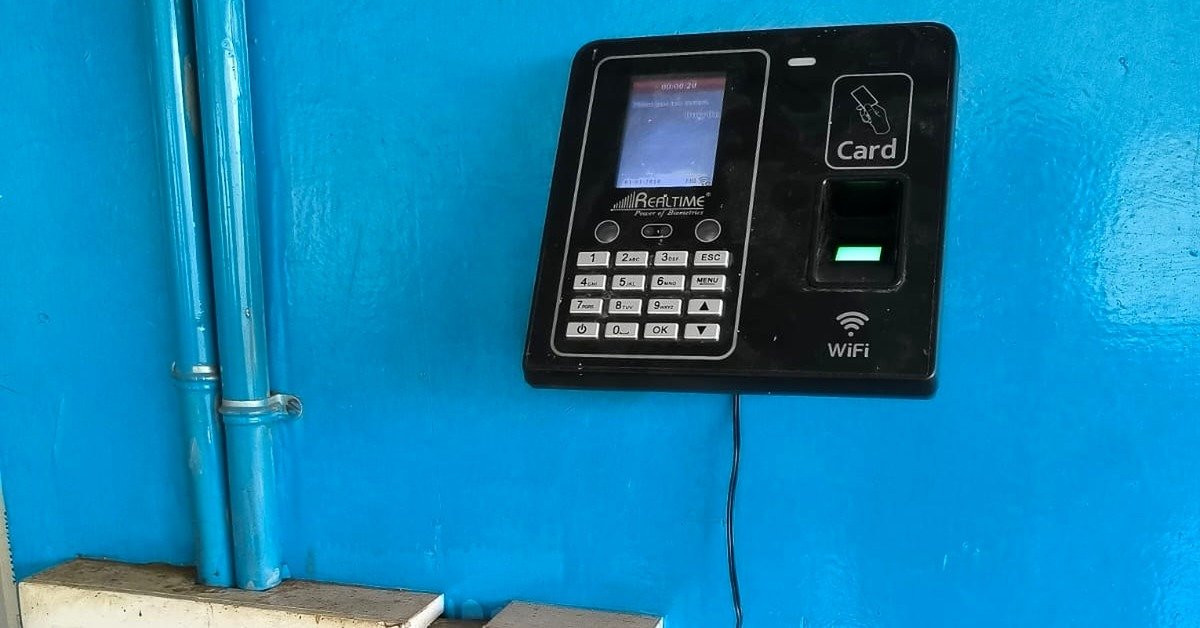
Documents are not the whole issue; auditors also conduct private interviews with workers, and paperwork that contradicts what workers say leads to most problems.
Extra Checks for Higher-Risk Sub-Sectors
- Apparel sector (Tiruppur, Ludhiana, NCR): subcontracting of stitching and/or embroidery, peak season overtime, hostels for migrant workers and recruitment system of young women workers.
- Leather and leather products (Kanpur, Agra): contractual labour in tanneries and restriction of under-18 workers in hazardous area.
- Chemical sector (Vapi, Ankleshwar): contractor labour on hazardous process, night shift and safety gears logbook.
- Automotive component manufacturing (Pune, Manesar, Chennai): apprenticeship and training program and proportion of agency workers engaged on the core process line.
- Food processing sector: seasonal and temporary workers, labour contractors and shift system in cold storage.
What Changed Recently: SMETA 7.0 and India’s Labour Codes
The Sedex publication of SMETA 7.0 on 10 September 2024, which replaced version 6.1 as detailed by DQS, featured the addition of “Collaborative Action Required” findings for problems that cannot be resolved independently by a supplier. DQS notes that these apply to four categories: living wages, responsible recruitment, child labour and discrimination.
In India, the four Labour Codes became applicable on 21 November 2025, merging together 29 central labour laws. Guidelines and state-specific provisions have been implemented gradually since then; verify your legal requirements from your labour lawyers.
Make the distinction. The law establishes the bare minimum you must achieve. SMETA checks if you comply with whichever standard is more stringent between law and Base Code and your procedures are enough to ensure compliance. Compliance with one does not guarantee the other. Some laws, such as on child and adolescent labour and sexual harassment at the workplace, are outside the four Labour Codes.
How to Prepare: A Step-by-Step Process
- Define the scope with your buyer: pillars, auditors and deadlines.
- Register yourself with Sedex and create your site profile, and then complete the self-assessment questionnaire.
- Perform the gap assessment of your records with the help of ETI Base Code and Indian laws.
- Address the gaps and record it, whether it is payroll issues or policy updates.
- Select an auditor firm approved by your buyer.
- Perform the audit: beginning meeting, documentation check, site inspection, worker interviews and ending meeting.
- Respond to the Corrective Action Plan Report, upload the evidence and share the report with your buyers through Sedex.
Most audits are announced in advance, though some buyers also use semi-announced or unannounced visits, so keep records current all year rather than only before a booking.
Before audit day, check that you can produce:
- Letters of appointment and age verification papers of all workers
- About one year’s adjusted payroll, attendance, and overtime papers
- Bank transfer papers, PF and ESIC challans
- Contractors’ agreements, licenses, and lists of agency workers
- Forced labor, child labor, discrimination, and harassment policies
- Grievances record book and workers’ committee minutes
Want a second pair of eyes on your records first? Legal4sure can talk you through readiness before you book the audit.
What Does a SMETA Audit Cost, and How Long Does It Take?
There’s no single official price. Costs depend on workforce size, pillars and location, so ask for written quotations in INR. Keep these components separate:
| Component | What drives it | INR context |
|---|---|---|
| Sedex membership | Sedex’s own fee tiers | Confirm current fees and currency on sedex.com |
| Audit fee | Auditor days, which rise with workforce size; a 4-pillar audit adds about 0.5 day | Indian audit firms usually quote per auditor day; ask for days stated |
| Preparation | Record gaps, HR time, physical fixes | Mostly internal time; safety fixes can cost more |
| Follow-up verification | Number and type of non-compliances | Quoted separately, so ask upfront |
| Consultant (optional) | Scope: gap review, training, mock audit | Request a fixed-scope quotation |
However, the real cost of an audit is normally remediation, which can take more time and cost more money than the audit itself. The correction of pay calculations, adding rest days, and regularizing contractors can take up more time than audit itself.
Timelines vary too, but ranges help:
- Preparation: typically several weeks to several months, depending on how many records or systems are lacking.
- Audit: typically one to several auditor days, depending on the size of the workforce.
- Report and remediation: the auditing firm will provide the report following their visit, while your buyer determines the deadlines for closing, so be sure to inquire early.
Common Mistakes Manufacturers Make
- Depending only on policies but not on practices. Provide documentation that proves that the policy is effective.
- Allowing contradictions between payroll and time records. Ensure reconciliation of these records every month.
- Ignoring contractors and agency employees. They are important, so maintain their documentation.
- Training employees on how to respond. Auditors can see through this, and any discrepancies can be corrected easily.
- Fudging findings through paperwork. Auditors might want to check whether corrections have been made, so ensure documentation such as photographs and receipts are available.
- Applying policies of one buyer to all buyers. Clarify the policies for each buyer.
How Can a Consultant Help, and How Do You Choose One?
The consultant may conduct a gap review, correct the documentation, train the supervisors and get the managers ready for the interview. They cannot do anything about the results the auditor will find. You should be very careful about people who assure you of approval and success.
Ask any consultant:
- Did you have dealings with factories in my industry and State?
- Would you compare the documents to the labor laws of India and the ETI Base code?
- Who conducts the job, and who participates in the audit day?
- What are the terms of reference, and is the quote in Indian Rupee?
- Would you not make any promise of the results?
Also ask for a sample gap-review format before signing, and agree who owns the documents you create together.
Legal4sure supports manufacturers with labour compliance and audit readiness, and we’re happy to answer these questions too. If you’re planning your first audit, start a conversation with Legal4sure about a readiness review.
Key Takeaways
- SMETA is an audit methodology while Sedex is a portal, which does not issue any certificate.
- Strictest of Indian Law and ETI Base code are followed by auditors.
- Payslips, time sheets, and interviewees should give the same information.
- Ensure the pillars, auditors and deadlines with your buyer before any financial commitment.
- Ask for quotations in INR in detail and stay away from people guaranteeing results.
Conclusion
Labour Standards Audit Using SMETA: It is all about proof of facts on paper in terms of legal wages, truthful work hours, correct age verification, controlled contractor, and open-mouthed workers. Take your customer’s specifications into account first, correct your documentation from the beginning, and approach the audit in a relaxed manner.
Strengthen Labour Compliance and Get Your Business Ready for SMETA Audits
Preparing for a SMETA audit and unsure whether your labour records meet buyer expectations? Legal4Sure supports manufacturers with labour compliance gap assessments, payroll and attendance record reviews, documentation, worker training and audit readiness. Identify compliance gaps, strengthen workplace practices and prepare your team for social compliance audits with confidence.
Frequently Asked Questions
What is a SMETA audit? What does a SMETA audit assess?
Labour Standards and Health & Safety always; Environment and Business Ethics in case of 4-pillar audit; plus any buyer additions.
What is Sedex membership? Is Sedex a certification?
Membership is access to the platform and not an approval; buyers make up their mind about your data and audits.
Labour standards in a SMETA audit: what to check in India, and does anything differ?
The procedure is universal, but auditors verify Indian laws concerning wages, working hours, PF and ESIC, so state requirements matter.
Labour standards in a SMETA audit: what to check requirements and documents, where should we start?
Payroll, attendance and contracts will be the starting point; auditors usually compare these three among themselves.
Labour standards in a SMETA audit: what to check process step by step, and who leads it?
The auditor company is responsible on-site; your HR and Payroll departments provide required data and then you are responsible for the correction plan.
How to prepare for labour standards in a SMETA audit: what to check, and how early should we start?
Often several weeks, longer if contractor or payroll fixes are needed. A mock review helps.
Can one SMETA report serve several buyers?
Often yes, since Sedex lets suppliers share one audit with many customers, but each buyer decides whether to accept it.