
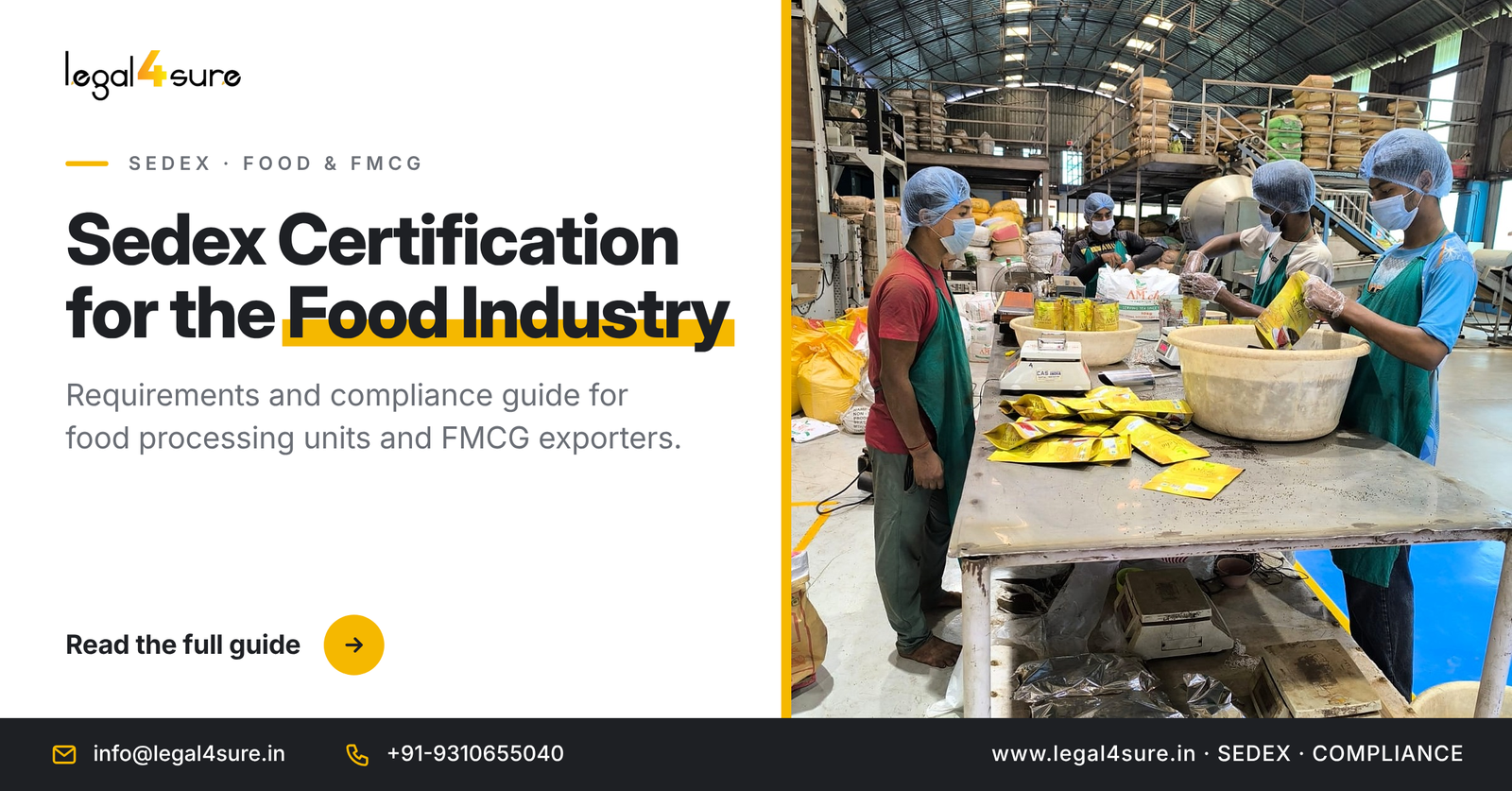
Certification of a Sedex for a food manufacturing facility is not actually a certification at all. It is a Sedex membership and a Sedex SMETA audit conducted independently by the auditor at your facility in order to assess labour conditions, health and safety, and in the case of the 4-Pillar audit, the environment and ethics of the business.
If you have a facility for manufacturing sauces, snacks, and spices, you may already have FSSAI certification and maybe even FSSC 22000 or BRCGS. These deal with food safety. But Sedex deals with how your employees are treated. Both are sought after by buyers and we at Legal4sure have seen food exporters unprepared for that.
This guide will tell you about the requirements that the Sedex certification makes on the food manufacturer, the aspects assessed by the auditor at the shop floor and how to prepare yourself without disrupting production.
Sedex Certification for Food Industry: What It Actually Means
Short answer: Sedex is a not-for-profit platform which allows suppliers to communicate information about ethical trading to buyers. The food company becomes a member of Sedex as a supplier, fills out a self-assessment questionnaire and schedules a SMETA audit.
Buyers refer to “Sedex certification” in a casual way, but you should know that what you deliver is membership in Sedex, self-assessment questionnaire and SMETA audit report containing corrective actions agreed between the parties.
Do Food Manufacturers Need a Sedex Audit?
Short answer: No, not by law. The Indian law does not mandate this. It becomes a necessity if the buyer – who is typically an export or modern retail client – insists that it be done as a condition precedent to procurement. Provided that your sales only go to local distributors, no one can ask you to do it.
However, food processing is a segment that buyers are always vigilant about. Hiring during season, contractual workers, long working hours, and working conditions are all scrutinized.
Sedex Requirements for Food Processing Companies in India
The core Sedex requirements for food processing companies in India fall into four steps. None of them involve a government filing.
- Sign up to Sedex as either B or AB member depending on whether you purchase from sub suppliers or not.
- Fill out Self-Assessment Questionnaire accurately and document the responses.
- Connect your business location to buyers who will be able to view your profile and reports.
- Get SMETA audit conducted by an independent auditor recognized by Sedex and resolve all findings.
Your buyer tells you whether they need a 2-Pillar audit or a 4-Pillar one. Ask before you book. Booking the wrong scope means paying twice.
Sedex requirements for FMCG exporters
The Sedex criteria that must be met by an FMCG exporter go through the same process as above, but they have a more varied buyer group. An exporter of packaged food could be supplying to a supermarket chain, a private label scheme, and a distributor all in one quarter.
What Does a SMETA Audit Check in a Food Processing Factory?
Short answer: The SMETA audit in relation to food processing is an inspection of working hours, salaries, employment terms, worker age, safety measures, and, where it’s a 4-Pillar audit, the environment and ethics. Auditors go through the facility, interview employees confidentially, and match the results with your files.
Labour standards
- Overtime when there is peak season, eg. during festive snack production or processing of tomatoes.
- Wages, minimum wage and deduction information.
- Contract, seasonal or migrant labor usage and recruitment.
- Age proof and no child or forced labor.
- Right to join trade unions or lodge grievances.
Health and safety
- Exits and fire extinguishers, fire drills.
- Guarding on mixers, friers, conveyors and packing equipment.
- Safety regarding boilers, pressure vessels and steam lines.
- Chemical storage and handling of cleaning chemicals.
- Cold rooms, PPE, first aid and drinking water.
- Canteens, toilets and any accommodation for the workers.
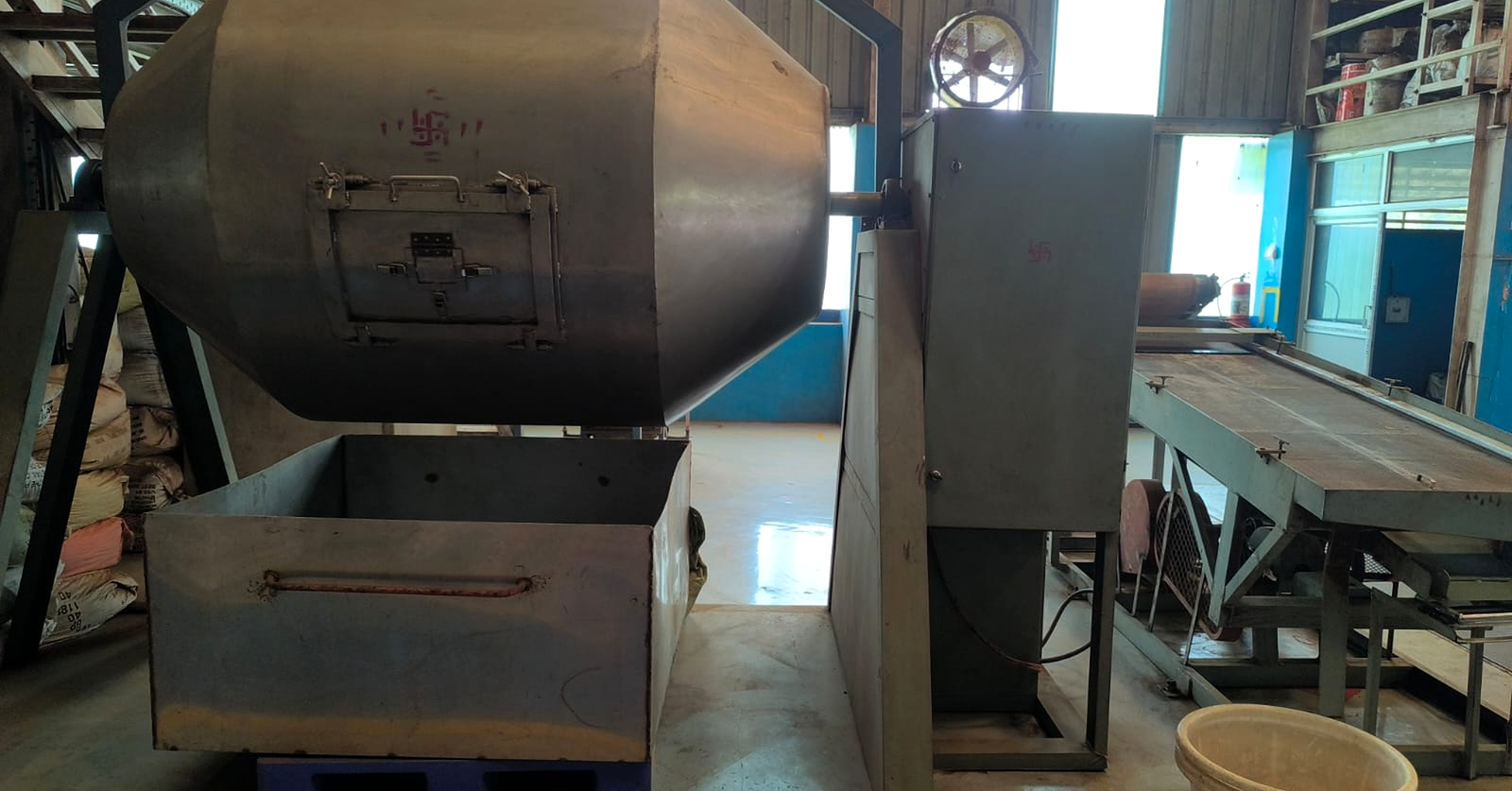
Environment and business ethics (4-Pillar)
When it comes to the environment, questions would focus on issues like wastewater or effluent treatment, solid or food waste management, energy consumption and statutory permits. As far as business ethics are concerned, audits would check on anti-bribery policies, integrity in record-keeping and reporting of misconducts.
SMETA Audit Checklist for Sauce and Snack Manufacturers
There is no food only specific SMETA available, but an SMETA checklist for sauce and snack manufacturers should cover areas where these manufacturing facilities tend to falter most often. This can be used as a walk-through before an audit.
| Area | What to have ready | Common gap in food plants |
|---|---|---|
| Working hours | Attendance, shift rosters, overtime approvals | Peak-season overtime beyond legal limits |
| Wages | Payroll, bank transfers, contractor payments | Contract workers paid less or later |
| Worker files | ID, age proof, contracts, appointment letters | Missing files for seasonal staff |
| Safety | Fire audit, machine guarding, boiler certificate | Unguarded fryers, packers or belts |
| Chemicals | Safety data sheets, labelled storage, training | Cleaning chemicals stored without labels |
| Effluent and waste | Consent to operate, treatment logs | Wastewater records not kept up |
| Ethics | Anti-bribery policy, grievance channel | Policy exists but workers don’t know it |
How Sedex Compliance for Food Exporters Differs from Food Safety Audits
In regard to Sedex certification for food exporters, it is usually confused with FSSAI, HACCP, FSSC 22000, and BRCGS. However, they address different issues, and passing the food safety audit does not prove anything to the buyer regarding your overtime records.
| Food safety standards | Sedex / SMETA | |
|---|---|---|
| Focus | Product safety and hygiene | Worker welfare, safety and ethics |
| Examples | FSSAI, FSSC 22000, BRCGS | SMETA 2-Pillar or 4-Pillar |
| Who it protects | Consumers | Workers, and buyer reputation |
| Output | Certificate | Audit report with corrective actions |
| Typical buyer ask | Before listing a product | Before approving a supplier |
For those companies who use a food safety management system, there is an advantage since some procedures can be easily transferred to the preparation process for SMETA.
Why Buyers Ask Food Suppliers for Sedex
Food supply chains are labor-intensive and usually seasonal. Brands and retailers are aware that a source problem at a particular processor can lead to a problem in the news for them. Common Sedex profiles help provide a consistent view of all suppliers for their procurement and compliance officers.
Due-diligence regulations in Europe make things harder. They require evidence from suppliers, and SMETA reports are a familiar format for them without developing their own forms.
Consider the example. A snack manufacturer located in north India gets a request from an importer in Europe. The importer likes the product and the FSSC 22000 certificate of the processor and then asks for a Sedex profile and a SMETA report. One unit that already has them answers within a week; another one that lacks them usually takes a quarter to get ready.
What Happens on Audit Day
A SMETA audit usually runs over one or more days, depending on headcount and scope. The auditor follows a predictable flow:
- Meetings with management to clarify the scope of work.
- A plant tour with an explanation of the processes involved.
- Interviews of employees in confidence without the presence of the management.
- Review of documentation on salaries, attendance, contracts, and safety.
- Meetings at the end of the process to summarize what was found.
The findings will be put in a report entitled Corrective Action Plan Report. All of these will be followed by a closing where evidence is provided within the agreed dates.
Is Sedex Worth It for a Food Unit? A Quick Decision Guide
It makes sense if:
- There has been a request from a customer for a Sedex profile/SMETA audit.
- You export, or wish to supply the organized retail and private label brands.
- You have several contractors/seasonal workers and want to tighten up your records.
Avoid if:
- Your sales are only in the domestic market and there is no buyer requesting.
- You have poor payroll and attendance records with lots of gaps. Correct that first.
On the cost side, there is a membership fee and audit fee. Plus management’s time. These depend on your size and audit scope. So request a quote based on your headcount.
Common Missteps Made By Food Manufacturers
- Believing food safety certificates cover Sedex certification.
- Not keeping contractor workers in record.
- Considering the questionnaire a form that can be answered hastily.
- Preparation of the production line and ignoring canteens/toilets/accommodation areas.
- Missing the deadlines for corrective actions after the audit.
All of these are preparation problems. The Sedex Registration Consultant can compare your records according to the audit scope before the auditor visits. This is how Legal4sure usually starts its engagements.
How to Prepare Without Slowing Production
- Ensure that the audit scope and your buyer’s requirements are understood.
- Sign up, answer the questions, and link your buyers.
- Perform an internal walkthrough based on the checklist above.
- Consolidate your payroll, attendance and contractors.
- Inform managers about the procedure of workers’ interviews.
- Organize your audit outside your most productive week, if you can.
- Document and rectify all findings with evidence.
Why Choose Legal4Sure for Sedex Benefits for Indian Exporters?
Legal4Sure helps Indian food manufacturers and FMCG exporters understand and achieve the Sedex benefits for Indian exporters through structured registration, compliance guidance, and SMETA audit preparation. Our team supports businesses in identifying workplace compliance gaps, preparing documentation, completing the Self-Assessment Questionnaire (SAQ), and addressing audit findings.
Whether you export sauces, snacks, spices, or packaged food products, we help align your workplace practices with international buyer expectations. With experience supporting 4,500+ businesses, conducting 6,000+ audits, and training 12,000+ workers, Legal4Sure helps exporters strengthen supply chain transparency, improve buyer confidence, and become better prepared to work with international retailers and sourcing partners. From Sedex registration to corrective action support, we guide businesses throughout their compliance journey.
Key Takeaways
- Being Sedex certified for your food manufacturing unit implies being a member of Sedex and having a SMETA audit report.
- It is not mandated by law but it is usually required by export and retail buyers.
- SMETA audits include labor conditions, health & safety, and optionally environment and ethics audits but not the food safety one.
- Seasonal employees, contractors, overtime and machine protection are the most common issues.
- Get your documents organized before scheduling the audit.
Conclusion
The Sedex certification in the food industry is awarded to those plants who maintain cleanliness of personnel records as much as production records. The buyer trusts your food safety procedures. The Sedex report along with the SMETA report shows everything else to the buyer.
When you have just been requested to provide Sedex, first do the audit scope and gap analysis of your records. Legal4sure assists food processing and FMCG exporting companies through this exact process.
Prepare Your Food Manufacturing Unit for Sedex & SMETA Audit
Meet international buyer expectations with expert support for Sedex registration, SAQ completion, SMETA audit preparation, worker documentation and corrective actions. Legal4Sure helps food processors and FMCG exporters strengthen workplace compliance and build buyer confidence.
Frequently Asked Questions
Do food manufacturers need a Sedex audit?
It is not required legally, but a buyer will request it before approving a supplier of food.
What are the Sedex requirements for food processing companies in India?
Join Sedex, fill out questionnaires, connect with buyers and get SMETA audited.
What does a SMETA audit check in a food processing factory?
Working time, wages, worker age, safety procedures and environment and ethics in case of a 4-Pillar audit.
Is there a SMETA audit checklist for sauce and snack manufacturers?
Yes. Consider working overtime, contract laborers, machine protection, chemical substances and effluents documents.
Is Sedex a certification?
It is not. It is a member portal where evidence is a SMETA audit report.
Does Sedex replace FSSC 22000, BRCGS or FSSAI?
No. They refer to food safety, and Sedex concerns about workers and ethics.
Should a food plant choose a 2-Pillar or 4-Pillar audit?
Follow the buyer’s demand. In case of 4-Pillar audit the environmental and business ethics are added.