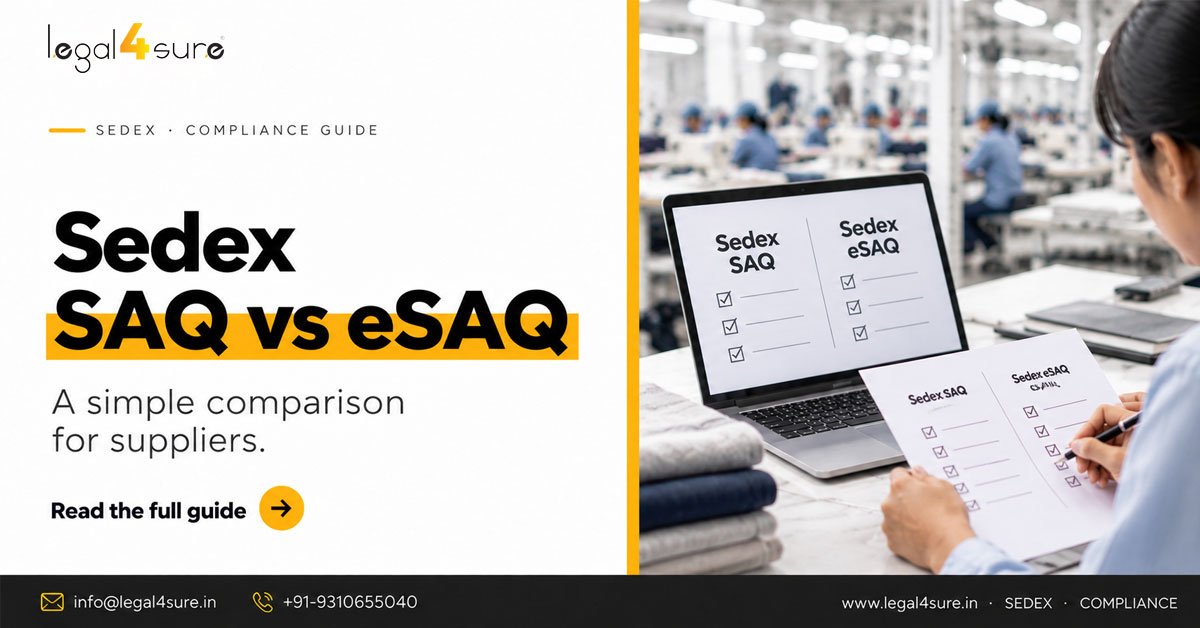
Demand for updates of the Sedex profiles comes from the side of buyers. And now many exporters do not know whether the answers in the previous SAQ are relevant. Below is a short comparison of Sedex SAQ and eSAQ. The latter also includes the same four pillars as SAQ, but is site-specific, verifies your answers and is closer in its requirements to SMETA. The main advantage is higher quality data for your buyer.
The Sedex (Supplier Ethical Data Exchange) is an online tool for collecting, sharing and managing the information concerning labor, health and safety, environment and business ethics. This guide describes the types of questionnaires, differences between them, the reasons for such changes by Sedex and what is required to fill the new eSAQ.
It consists mainly of informative material with comparisons and key notes for making your choice about the profile of Sedex.
What Is Sedex SAQ vs eSAQ, Exactly?
Both are self-assessment questionnaires which Sedex members use to provide an account of their facilities, personnel, practices, and policies. The former conducts the platform, while the latter provides suppliers with a form to be completed so that purchasers have a chance to look through their information prior to an external audit. The SAQ represents the original form which contained questions about company and site data, employment issues, as well as yes/no and descriptive questions concerning labour conditions, health and safety, environment, and business ethics. The eSAQ contains the same data but arranged by the type of the facility, industry, and answered questions.
Short answer: The SAQ is the original Sedex self-assessment questionnaire, whereas the eSAQ is the improved one that superseded it.
A few things worth knowing upfront:
- Sedex membership is popular among producers of food products, textiles, and agricultural products and among exporters where buyers need to gather some information about the factory or farm before placing an order.
- It is the first step for every supplier on the platform, hence Indian suppliers who export to Sedex users will be confronted with it very soon.
- It is a risk assessment instrument and the information is collected from the supplier so it is not a verification of compliance.
- It is not a certification; if you wonder what certification is good for exporters, note that neither form is a certification since both are questionnaires preceding the audit.
If you’d like to understand how these questionnaires fit alongside audits, our guide on SMETA vs other audits explains the overlap.
Why Buyers Prefer Suppliers With an Up-to-Date eSAQ
Buyers use Sedex to judge how responsibly their suppliers operate, so the quality of your questionnaire shapes their first impression.
1. It Provides Buyers with Standardized Information
All suppliers respond within the framework of the four-pillar structure. As a result, buyers, brands, and retailers are able to compare different websites on the same basis rather than reading all suppliers individually. For the buyers who have to deal with various suppliers within the framework of food, textile, and agricultural supply chain, this approach will be very helpful.
2. It Provides Better Validity
The validation process for eSAQ is much better compared to that of the form; therefore, there will not be any inconsistent data. Buyers can rely on the information while making an assessment of the risk. Reliable position will minimize the number of follow-up questions before an audit takes place.
3. It Sets the Stage for SMETA Audit
eSAQ matches well with the SMETA audit criteria. In this case, buyer sees a profile which is ready to pass further checks. It makes the transition from self-assessment to a third-party audit smooth.
4. It Proves Your Profile Is Up-to-Date
SAQ is now out of date for new submissions; all the new members are using only eSAQ.
The Core Benefits of the Sedex eSAQ
Here’s where the benefits actually show up, in practical terms.
Questions Fit Your Site
The eSAQ adapts its questions according to your site category, industry sector and previous responses. Suppliers do not have to go through irrelevant sections and their previous responses influence future questions.
Less Time Spent on Irrelevant Sections
The completion process becomes efficient because the questionnaire doesn’t ask irrelevant questions. The former SAQ questionnaire contained the same set of questions for all people regardless of their industry – manufacturing or services.
Improved Instructions
Contextual help text is available beside all questions. This will result in less misunderstanding of the question requirements, especially important since several respondents answer the questionnaire at one site.
Improved Data Validation
Data validation improves the quality of the information your buyer sees, making it consistent. Moreover, the improved validation system will give your team a chance to detect errors even before your buyer finds out.
eSAQ Preparation for SMETA Audit
As the questionnaire becomes more similar to the SMETA audit checklist, completing the eSAQ will also help in preparing for the SMETA audit.
One Questionnaire Format to Manage
With just one format of the questionnaire there won’t be any need to maintain data in two formats anymore.
Your Information Is Still Valuable
There’s nothing new regarding the four pillars. Everything you knew about your site is still valuable in the case of the eSAQ, except for the structure.
Sedex SAQ vs eSAQ: Quick Comparison
This table gives a Sedex difference explained at a glance.
| Aspect | Sedex SAQ (Legacy) | Sedex eSAQ (Current) |
|---|---|---|
| Question flow | Fixed, linear sequence for all members | Dynamic, adjusts to site type and prior answers |
| Relevance filtering | Limited; many sections applied regardless of fit | Skips questions that don’t apply to the site |
| Guidance provided | Minimal in-form guidance | Contextual help text alongside most questions |
| Data validation | Basic format checks | Stronger validation to reduce inconsistent entries |
| Link to SMETA audit | Indirect; separate audit checklist | Closely aligned with SMETA audit criteria |
| Availability | Retired for new submissions | Current standard questionnaire on the platform |
What Does It Take to Complete the Sedex eSAQ?
Filling out the questionnaire is quite routine. You will sign up on the Sedex system, sign up your facility, connect your buyer, fill out the questions and send it to your buyers requesting for it. You will update the profile depending on changing situations or if a buyer requests for it before conducting an audit.
- Company and facility information – including your company’s size, ownership structure and the type of products you manufacture
- Labour force information – employee-related data and the organizational structure of your labour force
- Labour practices – working hours, compensation, right to associate and protection against forced and child labour
- Occupational health and safety – occupational safety, emergency preparedness and employee wellbeing
- Environmental practices – efficient use of resources, waste management and environmental permits
- Business ethics – integrity and ethical business practices
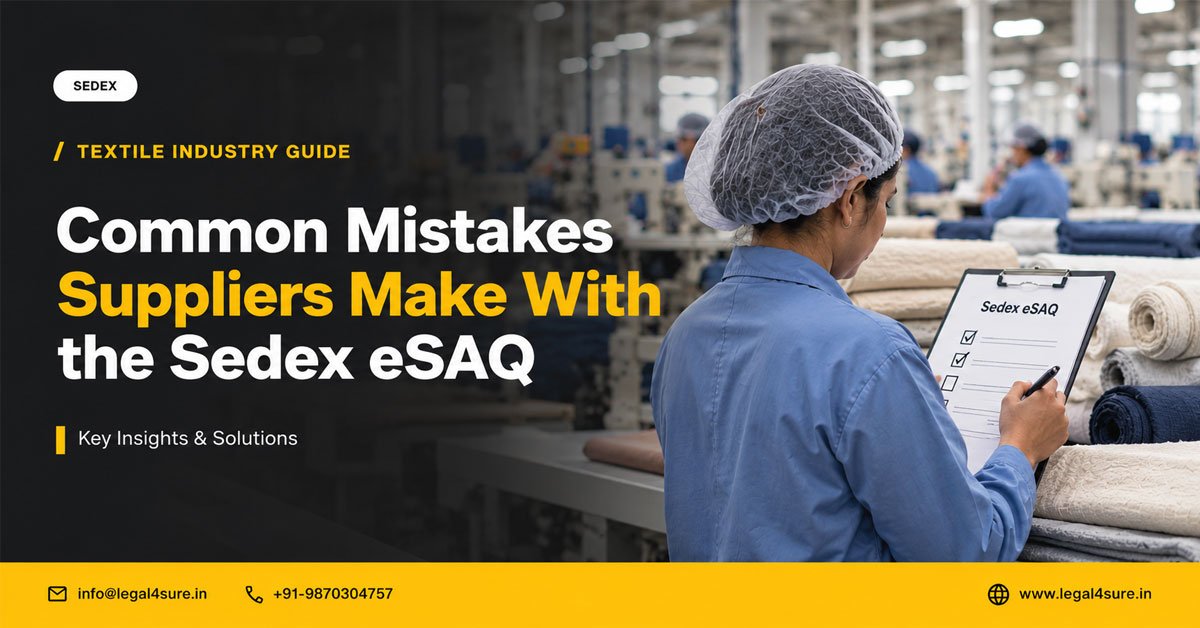
Common Mistakes Suppliers Make With the Sedex eSAQ
- Believing that old SAQ answers are obsolete. Because the four pillars haven’t shifted, much of what you previously know is still accurate, so bring it forward, don’t start from scratch. Review each answer to make sure it still describes your site accurately.
- Treating the eSAQ as evidence of compliance. This is a self-assessment conducted according to your own records, so prove every answer with documentation you can produce for an auditor. It is used by the buyer to assess risk, and the audit is the point where the practice is validated.
- Ignoring validation warnings. Inconsistencies reduce the buyer’s level of trust, so deal with every flag instead of finding ways to bypass it. A proper submission makes a good first impression.
- Allowing the profile to become out-of-date. Always update the profile when circumstances have changed, or at the buyer’s request prior to an audit.
- Considering the eSAQ and the SMETA audit as separate activities. They are closely related, so discrepancies between your answers and your practice will be discovered in the audit process.
When the Sedex eSAQ Makes the Most Sense
Not sure which audit to choose or whether the eSAQ is the right step? These situations make it a clear priority:
- You will register yourself as a new Sedex member because new members use eSAQ only.
- You will be a current member, but need to update your old answers into new format.
- Your buyer has requested your questionnaire prior to conducting an audit.
- You are preparing yourself for SMETA audit and would like to have your answers in accordance with audit criteria.
- You export food, textile or agriculture products to buyers who would require site information prior to purchasing.
Whatever approach you choose, begin with your site documentation. It is not really a problem if none of your customers are members of Sedex, but the Four Pillars Checklist may be a good starting point anyway. In any case, do not forget that if you are comparing social and food safety audits, the eSAQ falls under the social category.
Key Takeaways
- Sedex SAQ vs eSAQ is the comparison between the old assessment form and the new one that Sedex introduced in 2023.
- The structure of the SAQ was a fixed linear format, while eSAQ includes dynamic questions.
- Both of them include the same four pillars: labour standards, health and safety, environment, and business ethics.
- Sedex changed SAQ for improving data accuracy, avoiding irrelevant questions, and being closer to SMETA.
- For existing members, it was mandatory to migrate from previous answers, and new members should use only the eSAQ.
Conclusion
The Sedex SAQ to eSAQ transition did not affect the topics addressed by Sedex. Rather, the transition affected the relevance of the survey to your facility, the accuracy of the data, and the alignment with the SMETA audit. Buyers are now expecting that a current eSAQ will be available. Contact Legal4Sure for assistance in filling yours out.
Complete Your Sedex eSAQ and Strengthen Buyer Confidence
Need help transitioning from the old SAQ to the current eSAQ? Legal4Sure can support your business with questionnaire completion, site information updates, documentation review, validation checks, and SMETA audit preparation—helping you submit accurate information and improve supplier readiness.
Frequently Asked Questions
What is the difference between Sedex SAQ vs eSAQ?
SAQ is a static template; eSAQ changes according to your facilities, gives additional hints and validates answers better.
Is the Sedex eSAQ mandatory?
Yes, for the members of Sedex. The SAQ is no longer used for the submission, and all new members submit their eSAQs only.
Why did Sedex replace the SAQ with the eSAQ?
In order to increase the accuracy of data, exclude unimportant questions and match the self-assessment with SMETA audit better.
Can I reuse my old SAQ answers in the eSAQ?
Generally, yes. There is no change in the four pillars, although the members were forced to reformat their previous answers.
What are the four pillars covered by the eSAQ?
They are labour standards, health and safety, environment and business ethics. They have not changed from SAQ and SMETA.
Is the eSAQ the same as a SMETA audit?
No, it is different. While eSAQ is a supplier’s self-assessment, SMETA is the subsequent audit of the supplier’s practice on-site.
Who needs to complete the Sedex eSAQ?
Suppliers on Sedex, including exporters and food, textile and agricultural producers whose buyers ask for site information.