
Imagine this scenario. On Monday morning, your UK buyer emails saying, “Can you please verify if you are a member of Sedex, along with an updated SMETA audit report before we place the next PO?” Your merchandiser is under the impression that Sedex is a certification, while your compliance manager is not sure about the meaning of SMETA.
In case you are searching on Google about SEDEX vs SMETA audit: difference, you would be wanting to figure out what exactly does your buyer mean by the above statement, its costs involved and the time frame. This article attempts to answer your query.
SEDEX vs SMETA Audit: Key Differences in Plain Terms
Sedex is an association of members and a website that allows suppliers and purchasers to exchange information about ethical trade. SMETA is the methodology used by Sedex members to evaluate the labor, health and safety, environmental, and business ethics of a facility.
| Point | Sedex | SMETA |
|---|---|---|
| What it is | Membership body and data-sharing platform | Audit methodology (Sedex Members’ Ethical Trade Audit) |
| Who runs it | Sedex | Published by Sedex, carried out by independent audit companies |
| What you get | A site profile and self-assessment questionnaire | An audit report and corrective action plan |
| Pass or fail? | No | No, findings are shared rather than scored |
| Mandatory? | Voluntary, though buyers often ask for it | Voluntary, though buyer contracts can make it effectively required |
Is There Really a SEDEX Certification?
False. Sedex does not offer certificates. As per Sedex Supplier Member Manual, Sedex is not a certification body, and SMETA audit follows a continuous improvement process, rather than passing or failing.
When buyers say “SEDEX certified,” they mean you have a valid registration in the Sedex database and a recent SMETA audit report. Though it is often used terminology, please do not use it in tenders and brochures. There are guidelines regarding usage of the brand name and logo in Sedex.
Here’s why scale makes a difference for buyers. The Consumer Goods Forum says that the Sedex network includes more than 90,000 organizations and 115,000 workplace locations in 180 countries and 35 industry sectors.
“Voluntary” has its advantages. While Sedex membership is voluntary, the supplier code of conduct of your buyer may make it obligatory.
Moreover, your Sedex profile is not constant. Please keep your contact data, headcount and workplace information up-to-date since the buyer associated with you can see this data.
Finally, your SMETA report does not prove that your organization complies with laws and regulations, does not give an assurance of approval and future orders from the buyer.
Do You Need SEDEX, SMETA or Both?
Most suppliers have to do both, sequentially: become a member of Sedex, followed by an SMETA audit upon request from a buyer. But this is not always the case – some buyers are okay with alternative types of social audits (amfori BSCI or SA8000), while others will ask only for the Sedex self-assessment.
Here’s what to find out before spending any money:
- Which audit they accept, and whether existing report will suffice
- Two or four pillar audit scope
- Announced, semi-announced or unannounced schedule
- Which Sedex Affiliate Audit Company (AAC) will be acceptable
Put it in a short e-mail – written confirmation protects you if the scope changes in future, and makes sure you’re not getting ready for the wrong audit.
SMETA makes sense when:
- A buyer has specifically asked for it in writing
- Several Sedex-buyers can use the same report
- You need an independent assessment of your labor and safety risks
SMETA might be unnecessary when:
- Your buyer accepts other audit report that you already have
- You sell only to India to customers that don’t ask for social compliance
- The buyer asks only for the Sedex self-assessment
Don’t pay for an audit that hasn’t been requested.
What Does a SMETA Audit Actually Check?
SMETA assesses sites against the Ethical Trading Initiative (ETI) Base Code and local law. Members choose a two-pillar audit (labour standards, health and safety) or a four-pillar audit that adds environment and business ethics. Your buyer normally decides which.
| Area | What auditors look at | Typical evidence |
|---|---|---|
| Labour standards | Wages, working hours, child and forced labour, discrimination, freedom of association | Payroll, attendance records, age proofs, worker interviews |
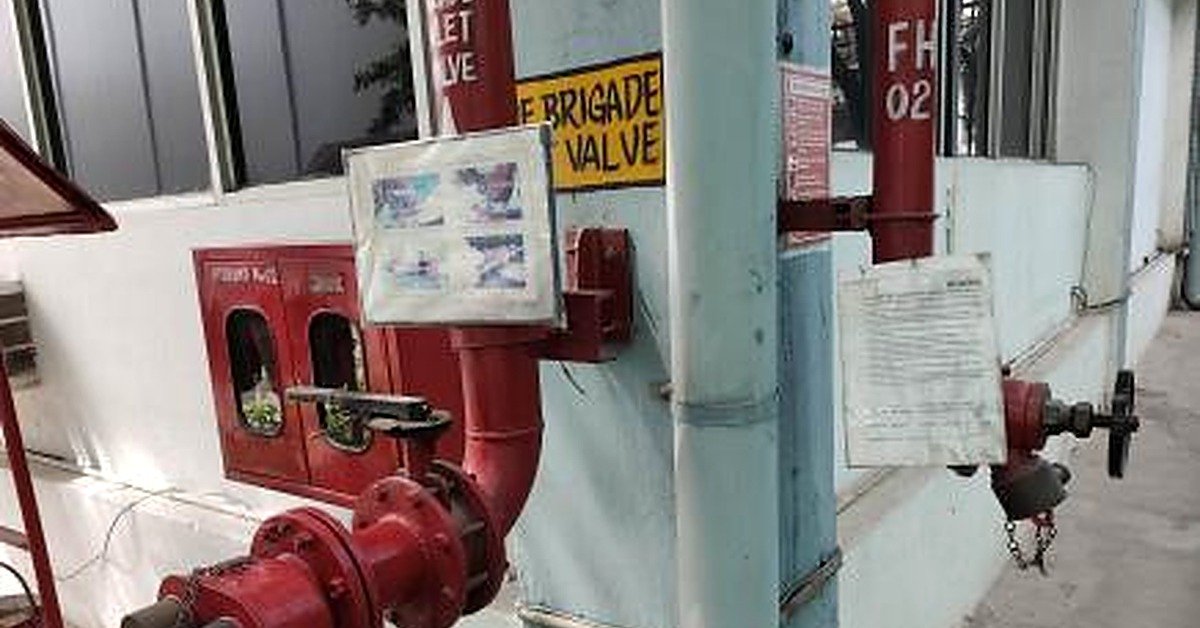
| Health and safety | Fire safety, machine guarding, chemical handling, first aid | Drill logs, maintenance records, PPE issue sheets |
| Environment (four-pillar) | Waste, effluent, emissions, permits | Pollution control board consents, waste records |
| Business ethics (four-pillar) | Bribery, transparency, subcontracting | Anti-bribery policy, subcontractor list |
| Management systems | Policies, responsibilities, training, grievance handling | Policy documents, training records |
What happens on audit day?
Audits begin with an initial meeting, followed by a walkabout on the facility, document reviews, and confidential employee interviews. The final step is the exit meeting, where the auditor discusses his preliminary observations.
There are various ways to schedule your audit depending on your buyer’s preference. Announced audits provide you with a fixed date, semi-announced audits will give you a date range, while unannounced audits do not give any notice.
Which Industries Face the Toughest Questions?
Where there is physical risk, migrant or contractual labour, or use of chemicals, auditors go into more detail. Such issues arise in:
- Garment and textile industries (Tiruppur, Ludhiana, Panipat, Noida): overtime, piece rate payment system, subcontract stitching and migrant worker accommodations.
- Leather and tannery industries (Kanpur, Unnao, Ambur): use of chrome chemicals, effluent treatment, and safety devices.
- Food processing industries: hygienic conditions, cold storage, and seasonal migrant laborers.
- Engineering, foundry and forge industries: machine guarding, heat, noise, and presses.
The textile industries in Surat, metal handicraft manufacturers in Moradabad, and the chemical zones of Vapi and Ankleshwar frequently confront similar situations.
Extra checks for higher-risk activities
- Chemical inventories, safety data sheets, labeling and response to chemical spills
- Treatment facility logs and environmental permits
- Boiler and pressure vessel certification of inspection
- Fire escape plans and drills
- Labour records for contractors/subcontractors and workers’ living conditions
What’s New in SMETA 7.0 and Indian Labour Law?
SMETA 7.0 was introduced by Sedex in September 2024 to replace SMETA 6.1. SMETA 7.0 contains workplace expectations and management systems assessment. In addition, Sedex has confirmed that SMETA 7.0 has been recognized by the Consumer Goods Forum as part of the Sustainable Supply Chain Initiative benchmarking. You can ask your AAC what version will be used for your audit.
In the meantime, India’s Ministry of Labour and Employment enacted four labour codes on 21 November 2025 to subsume 29 pre-existing laws. Central rules came out in May 2026.
Why does it matter? SMETA is a buyer-driven scheme, while the labour codes are statutory provisions. Both will be assessed during an audit and when there is a difference between the two, the more stringent provision will be followed. However, a clean SMETA audit does not guarantee compliance with the labour law, and you should get it checked with an expert.
How Do You Prepare for a SMETA Audit, Step by Step?
- Ask your purchaser the type of audit, pillars, and scheduling that they need.
- Sign up for Sedex and fill out your site details and self-assessment form.
- Conduct a gap analysis based on the ETI Base Code and national laws.
- Start fixing your important gaps like wages, working hours, fire safety, and permits.
- Choose an AAC and decide on your scope, days, and dates of auditing in writing.
- Tell managers and workers what will happen but do not give them answers beforehand.
- Complete the audit and develop a plan for your findings before deadlines.
Keep these documents ready:
| Document | Why auditors ask for it |
|---|---|
| Payroll, attendance and overtime records | To verify wages and hours against law |
| Age and identity proofs | To rule out underage employment |
| Factory licence, pollution consents, fire clearance | To confirm legal operation |
| Contracts and subcontractor list | To check labour sourcing |
| Training, drill and grievance records | To show management systems in practice |
| Provident fund and ESI payment proofs | To confirm statutory contributions |
Not sure where your gaps are? Legal4sure can run a gap assessment with your team before your buyer’s audit date.
What Does a SMETA Audit Cost in India, and How Long Does It Take?
Sedex doesn’t publish one audit price. The audit fee comes from the AAC you choose, so request written quotations in INR, with GST shown separately.
What drives the cost
- Sedex membership fees: varies depending on membership tier, contact Sedex or ask for a quote.
- Audit fee: daily rate of the AAC multiplied by number of auditor days, influenced by number of workers, number of facilities, and two pillar vs. four pillar audit scope.
- Travel: Auditor travel expenses if your facility is not located in the home city of the AAC.
- Remediation: addressing audit issues, such as fire equipment or payroll corrections, can be the most costly part of audit.
- Follow up Audit: if your buyer requires it.
Because remediation varies so widely, a gap assessment before the audit helps you budget realistically.
How long each stage takes
| Stage | Typical range | Main factor |
|---|---|---|
| Sedex registration | A few days | How ready your site data is |
| Gap assessment and fixes | About 4–12 weeks, in our experience | Size of the gaps |
| On-site audit | One to several days | Worker headcount and scope |
| Report and action plan | Set by your AAC | Severity of findings |
Which Mistakes Do Manufacturers Make Most Often?
- Inclusion of “SEDEX certification” in tenders, which is not provided by Sedex.
- Making of records a week prior to the audit. The inconsistencies come out in the workers’ interview.
- Training of workers, which brings discredit.
- Overlooking the sub-contractors and workers’ accommodation.
- Taking the findings as a failure and not as a plan of action.
Good practices simplify the auditing process:
- Maintaining monthly records instead of records at every auditing cycle.
- Comparing quotations from AAC regarding the scope and auditor days, not just cost.
- Including the night shift, temporary and migrant workers in your preparation.
How Can a Consultant Help, and How Do You Choose One?
The consultant should perform a gap analysis, organize your paperwork, and conduct a mock audit. The consultant is not authorized to audit you, since the AAC is the only one who can do that, and he cannot assume your management responsibilities. Do not deal with people who claim approval or fast-track services, because there is no pass or fail in SMETA.
Request referrals you can confirm and inquire if the consultant is also selling audits, because there is always a potential conflict of interest.
Inquire from the consultant:
- Are you familiar with preparing the sites in my industry?
- Do you avoid coaching employees?
- Is your price and scope of work written in INR?
- Can you explain the connection between SMETA observations and non-compliance?
- Who will visit my site in person?
Legal4sure assists the manufacturers with preparation for the SMETA audit, including compliance documentation, gap analysis, and audit preparation, so that you would know what questions to expect from the auditor. If you need some help preparing for the audit, contact Legal4sure.
Key Takeaways
- Sedex is the platform. SMETA is the audit technique.
- There is no SEDEX certification. SMETA audits do not have any pass/fail criteria.
- The buyer will determine the audit, pillars and schedule.
- SMETA 7.0 and India’s labour laws both apply, but only the labour laws are enforceable.
- Plan budgets for membership cost, audit fee, travel and remediation.
Conclusion
SEDEX audit vs. SMETA audit: the main difference lies in one principle – “Sedex shares data, SMETA gathers it”. Make sure to clarify the situation with your buyer, to address existing shortcomings and maintain accurate documentation. This strategy will work better for you than the non-existent certificate.
Understand SEDEX vs SMETA and Prepare Your Business for Buyer Compliance
Confused about SEDEX membership and SMETA audits? Legal4Sure helps Indian manufacturers with Sedex registration, SAQ documentation, compliance gap analysis, audit preparation and corrective action support to meet international buyer requirements.
Frequently Asked Questions
Is SEDEX certification mandatory for Indian exporters?
There is no Indian law that makes it so. It is the buyer’s requirement; hence, please verify the same from each individual buyer.
Can I show a SEDEX certification logo on my products?
The organization does not issue any certificate; hence, please verify its logo and brand usage policy.
How often will I need a SMETA audit?
It is decided by the buyer; many of them prefer an audit on an annual basis or on every one or two-year period.
Can one SMETA report go to several buyers?
Yes, in most cases. The organization allows you to send reports to connected buyers provided each of them accepts the type of audit conducted.
Does SMETA replace SA8000 or amfori BSCI?
No, they are different organizations; moreover, some buyers accept multiple certifications.
Who can carry out a SMETA audit?
It can be done only by auditors from a Sedex Affiliate Audit Company and not by your consultant or internal auditors.
What happens if the audit finds non-compliances?
You receive a corrective action plan with deadlines. Your buyer then decides next steps.