
The exporter from Tiruppur believes he is well-prepared for the upcoming SMETA audit. However, when the auditor requests six months of attendance records, payroll does not agree with attendance sheets. Nobody hid anything. Nobody had compared the two.
That is how SMETA audits go wrong in most cases. It happens because of poor records management, lack of clarity on ownership and rushed preparation period after the date has been set by a UK/EU buyer, not because of any malice.
This guide will help you understand what mistakes Indian manufacturers commit again and again, resulting in SMETA audit non-conformities, and how to avoid SMETA audit issues that can be avoided. For the beginners, take a look at our guide SMETA Audit India.
What Is a SMETA Audit, and What Doesn’t It Guarantee?
A SMETA audit is an ethical trade audit conducted using the Sedex Members Ethical Trade Audit approach. An independent auditor evaluates your site in respect to labour standards, health and safety, environment, and business ethics in a 4-pillar audit, and generates a report and a corrective action plan but no pass mark or certificate.
Terminology is important. SMETA audits are voluntary and driven by buyers. Sedex is a platform for members, not an authority that certifies factories. If you have had a SMETA audit done, indicate the date and scope, as buyers are attentive to this information, not “certification” in SMETA.
According to SMETA 7.0 version of Sedex’s Auditor Manual glossary of terms, there are four types of findings – non-conformances, non-compliances, collaborative action required findings and good examples. LRQA describes SMETA 7.0 in its overview, noting that a management systems assessment now stands for the previous “observations.”
This audit is particularly important for Indian exporters because buyers have access to the audit data published via Sedex, meaning the same audit is accessed by several buyers at once. A poor first audit will affect your further negotiations, thus making preparation crucial.
Which SMETA Audit Mistakes Lead to Common Findings?
These common SMETA audit findings tend to repeat in Indian factories, and each traces back to a specific mistake.
| Area | Typical mistake | Easier fix |
|---|---|---|
| Working hours | Time records, payroll and gate logs disagree | Reconcile all three monthly |
| Wages | Overtime calculated inconsistently; payslips incomplete | Standardise payslips and test-check samples |
| Recruitment | Missing age proof in personnel files | Keep verified ID in every file, contract workers included |
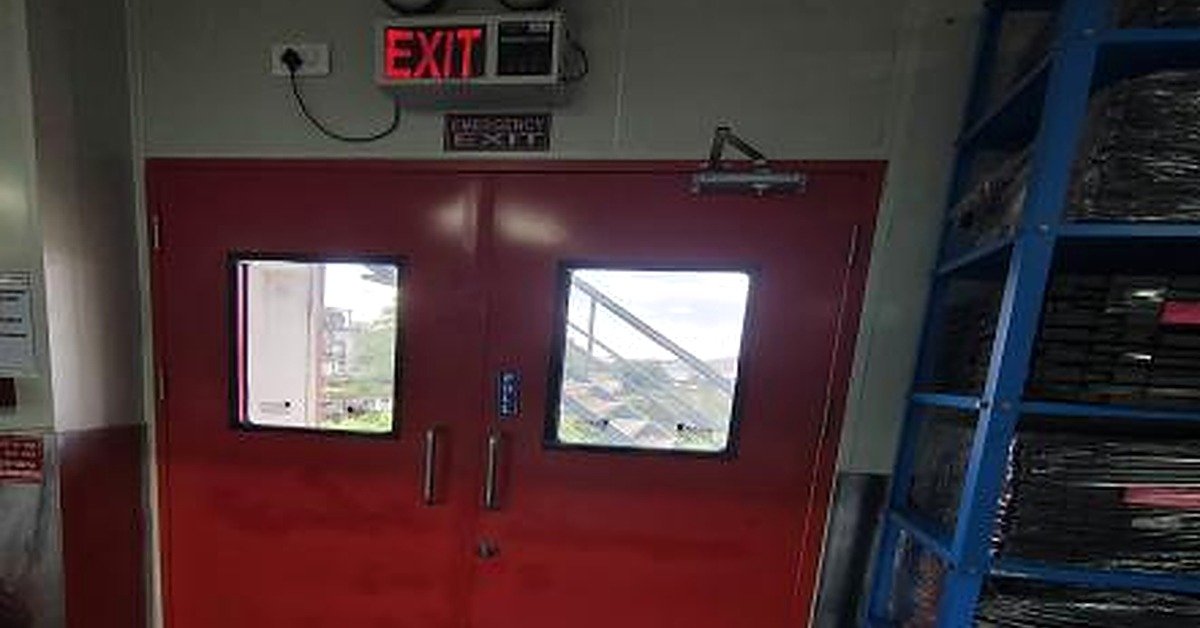
| Fire safety | Blocked exits, expired extinguishers, no drill log | Walk the floor weekly; log drills with attendance |
| Machines and chemicals | Missing guards, unlabelled containers | Guard checks and labelled storage with safety data sheets |
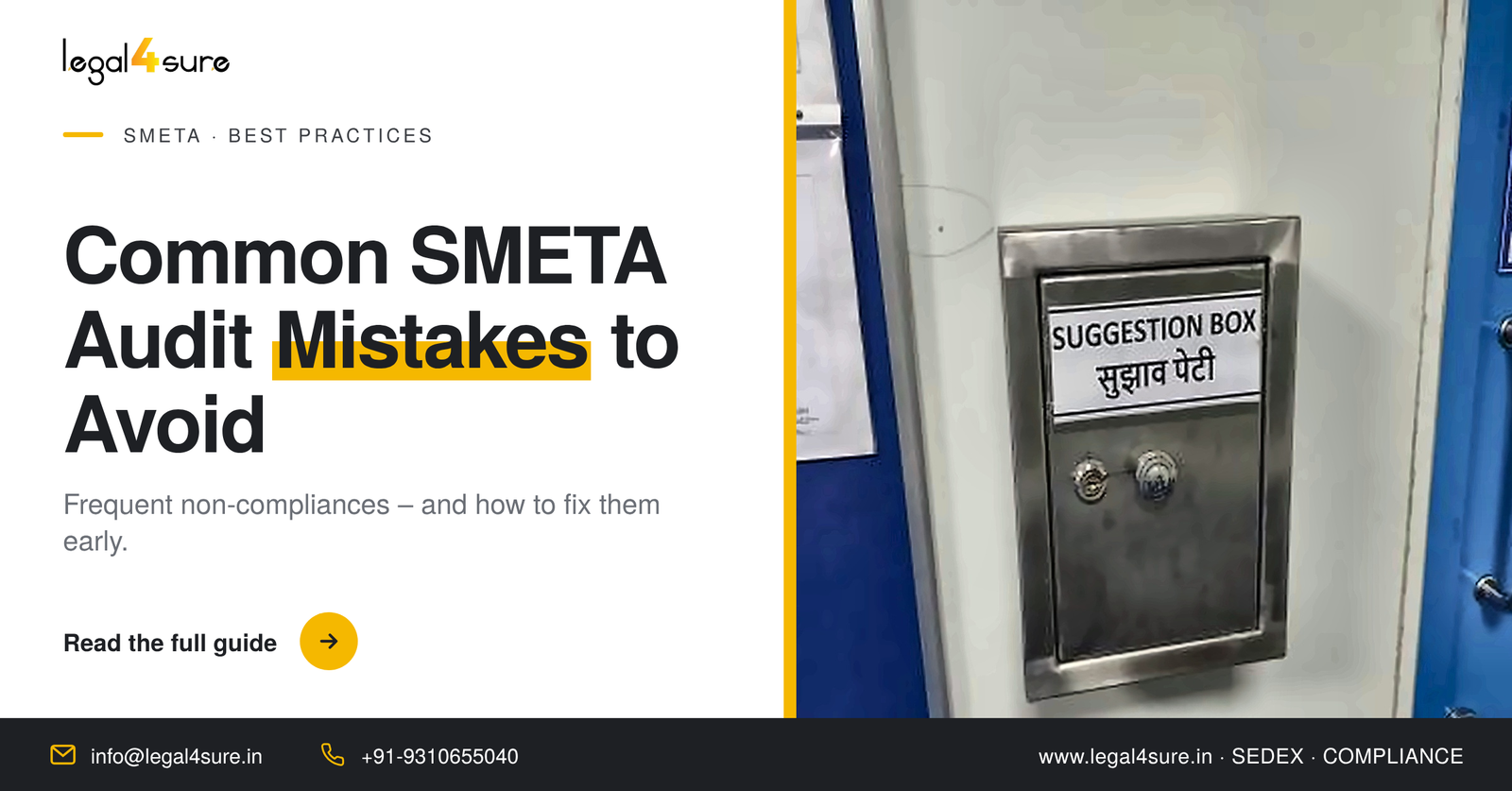
| Worker voice | Grievance box exists but nobody reads it | Record complaints, replies and closure dates |
| Contractors | Agency workers sit outside the policy | Apply the same checks to every worker category |
| Environment | Expired consents, patchy waste records | Calendar every permit renewal |
Auditors sample from documents and interview employees, which means a simple mistake does not stand by itself. If there is a discrepancy that crops up for a number of months, or a number of employees, the auditor knows that your system, not the employee, has a problem.
Six SMETA Audit Mistakes and the Best Practices That Prevent Them
- Paperwork mentality: the auditor also conducts interviews with employees and observes the floor, so do not make procedures out of paperwork only.
- Training workers: rehearsed answers will never be consistent with the records. Explain to the employees the reason for the audit and allow them to speak freely.
- Agency workforce: include contractors and temporary workers in the same procedure because the records are usually managed by someone else.
- Assuming the scope: verify the pillar and the audit with your buyer in writing.
- Treating the symptoms: repainting an exit sign does not justify why it was blocked in the first place.
- Late corrective action planning: plan the corrective actions immediately after the closing meeting.
Do Different Sub-Sectors Face Different Checks?
Yes. The same audit scope lands differently depending on what you make.
- Textiles and garments (Tiruppur, Ludhiana, Noida): overtime surge, hostels, sub-contractors/homeworkers, fire exits.
- Chemicals/pharma (Gujarat, Maharashtra): chemical storage, safety data sheets, emergency procedures, effluent disposal.
- Food processing: slippery floors, seasonal/migrant labour, hygiene-related safety and health issues.
- Auto components (Gurugram-Manesar, Chennai): press and machine guards, contract labour, noise.
Now imagine that you run a chemical unit in Gujarat. Your safety documentation is impeccable, but two drums in your yard are unlabelled. This will not be seen as an administrative error by your auditor. This implies that labelling is not part of your everyday activity, and this is how one drum results in a H&S finding.
Additional inspections for riskier activities:
- Chemical handling: label, segregate, training and documentation.
- Dangerous contractor work: induction and PPE documentation for all contractors.
- Worker accommodation: fire safety, sanitation and space if you accommodate them.
Should You Choose a 2-Pillar or 4-Pillar Audit?
The buyer makes that choice most of the time. The Sedex SMETA 7.0 glossary defines a 2-Pillar audit as an audit involving labour standards, health and safety, and reduced environment. A 4-Pillar audit involves extended environment and business ethics in addition to the above. In its supplier manual, Sedex says the extended assessments take an additional 0.5 days on-site. If the buyer has not indicated what pillar is required, always enquire which pillar your sourcing policy needs rather than doing the 2-Pillar one because it takes less time. For more detailed information please read out article on Sedex 2-Pillar vs 4-Pillar.
How Do You Build a SMETA Corrective Action Plan That Closes?
A CAP in the SMETA format contains the following elements – the findings, the causes, the fixes, the owners, and deadlines. CAPR template by Sedex presents a plan which an auditor and a site manager find acceptable in terms of bringing about conformity.
- Identify the cause of the issue, not its symptom.
- Assign one owner for each finding.
- Set realistic timelines. CAPR template offers options from immediate to 365 days, along with desktop or onsite follow-up.
- Collect dated evidence – photos, receipts, changed policies, sign-in sheets for training sessions.
- Identify patterns. The Sedex glossary defines the 10% failure rate for non-sampling issues, when an auditor performs additional investigation and the issue becomes systemic.
It all depends on the finding, evidence, and follow-up method – some findings can be verified by means of a desktop review, and others require an onsite visit. Don’t make any promises to your customer about the dates of verification before making sure it is physically and financially feasible.
Not sure what findings will your factory generate? Legal4sure can perform a gap analysis before your audit date is fixed.
What Are the Steps to Prepare, and What Should You Have Ready?
- Confirm audit scope with the buyer: pillar, site and type of audit. Request the same in writing.
- Conduct a gap analysis using the SMETA code areas.
- Address gaps in order of priority starting from safety and working hours.
- Take necessary actions to address the gaps and amend relevant policies.
- Inform management about the preparation process and inform workers about the audit and right to speak freely.
- Conduct the final walk through the floor just prior to conducting the audit.
- Following the closing meeting, establish and monitor the corrective action plan.
Audit preparation checklist:
- Six months’ time records
- Payroll records
- Gate records
- Personnel file with age proof and identification
- Fire drill log and fire safety equipment inspection record
- Permits, consents, waste records
- Grievance records, training records
- Contractor agreement and list of workers
What Does a SMETA Audit Cost, and How Long Does It Take?
Audit firms generally price by auditor day, so ask for an itemised quotation in INR, and confirm whether GST and travel are included.
| Component | What drives it | Range or key factor |
|---|---|---|
| Audit fee | Headcount, site size, pillar | Auditor days; 4-pillar adds 0.5 day on site |
| Sedex membership | Membership category | Check current fees at sedex.com |
| Gap analysis or consultant | Site size, number of gaps | Quotation based on scope |
| Remediation | Fire safety, guarding, wage corrections | Itemise from your gap list |
| Follow-up | Number and severity of findings | Desktop review or onsite audit |
| On-site time | Employee numbers | Commonly one to four days, per SAI Assurance |
| Preparation | Gaps found | Several weeks is realistic for a first audit |
Costs rise when gaps are large, the site is big, or the audit needs more auditor days. They fall when records are already clean. Compare quotations on scope, not just on the headline figure.
What Has Changed Recently?
The concept of management system assessment and collaborative action finding was brought by the SMETA 7.0 version. The four Labour Codes were implemented in India from 21 November 2025 and the Central Rules were announced by the Ministry of Labour and Employment on 8 May 2026. However, state rules may differ, please refer to yours.
The programme and law are not interchangeable. The SMETA programme uses the local laws and the ETI Base Code as the basis. The statutory compliance is the minimum requirement, the buyer’s code could demand more, and an audit finding is not the same as a legal sanction.
Is a SMETA Audit Right for Your Factory?
- This makes sense when UK/EU buyer asks for it or when a single audit done via Sedex can serve multiple customers.
- This may not be required when your buyer has accepted another form of social audit or when your customers do not ask for it. Do not allocate time or budget assuming.
- First check: which pillar, announced/unannounced, deadlines, and whether the previous report is acceptable.
How Can a Consultant Help, and How Do You Choose One?
The consultant performs the gap analysis, rectifies record keeping, prepares managers and develops corrective action. Not even the best consultant can guarantee the result. Be cautious if somebody promises a clear audit and quick certification, because the result depends on the day the auditor finds the factory, and nobody else can influence that.
The choice is important because the auditor and consultant have different responsibilities. The auditing company makes its assessment of you independently. The consultant works for you, making sure that he/she explains the result of the audit, not assures.
Ask yourself the following questions:
- Are you familiar with my sub-sector?
- Who is going to visit my factory?
- How do you prepare my workers without coaching them?
- What does your INR quotation cover?
- Do you support closure of corrective actions?
Legal4sure offers the support of manufacturers in gap analysis, audit preparation, corrective actions plan development and re-audit support.
Key Takeaways
- A SMETA audit is a methodology-based social audit and not a certification process; it results in a corrective action plan.
- Common avoidable SMETA audit errors include inconsistent records, ignoring of contract labor, and lack of preparation.
- Verify 2-Pillar/4-Pillar scope with your buyer before scheduling the audit.
- An effective corrective action plan specifies root causes, owners, timelines and supporting documentation.
- The cost and time required vary widely; hence, get INR quotation and estimate preparation time.
Conclusion
Mistakes in the SMETA audit process can be addressed because most of them lie within your own records and processes. Make sure that you reconcile payroll and time records, include all worker categories, prepare corrective actions in advance, and verify scope with your buyer. Take the corrective action plan seriously as an ongoing process, and not as just another document to be submitted. Hence, findings will become doable tasks, and the next audit process becomes simpler.
If you would like a second opinion in advance, contact Legal4sure.
Avoid SMETA Audit Mistakes & Stay Ready for Buyer Requirements
Prevent common SMETA audit non-compliances with expert guidance from Legal4Sure. Get support with compliance gap assessments, documentation, audit preparation and corrective action plans to help your factory stay audit-ready.
Frequently Asked Questions
What are the most common SMETA audit non-compliances?
Non-compliance issues of working hour and wage, blocked fire escape route, machine guarding missing, age document incomplete and contractor issue seem common.
How can a factory avoid non-compliances in a SMETA audit?
The factory should perform gap analysis prior to audit, reconcile the time and payroll sheet, and cover the contractor worker.
Why do Indian factories repeat the same mistakes?
The common mistakes or non-compliance of SMETA audit in India are mainly due to record mismatch, contractor issue and poor preparation.
Where do I start if I want to know how to avoid SMETA audit findings and prepare corrective actions?
Start with the gap analysis, followed by ranking the gaps by risks, and preparing the actions with owner, timeline and proof.
Can a factory fail a SMETA audit?
There is no pass or fail for the SMETA audit. The finding will be in the audit report but the buyer has their criteria of acceptability.
How long do I have to close SMETA findings?
This varies according to the finding itself. Sedex’s CAPR provides timelines from immediately to 365 days depending on negotiation with the auditor.
Should workers know about the audit in advance?
Yes. Explain its purpose and their right to speak freely, but never script their answers.