
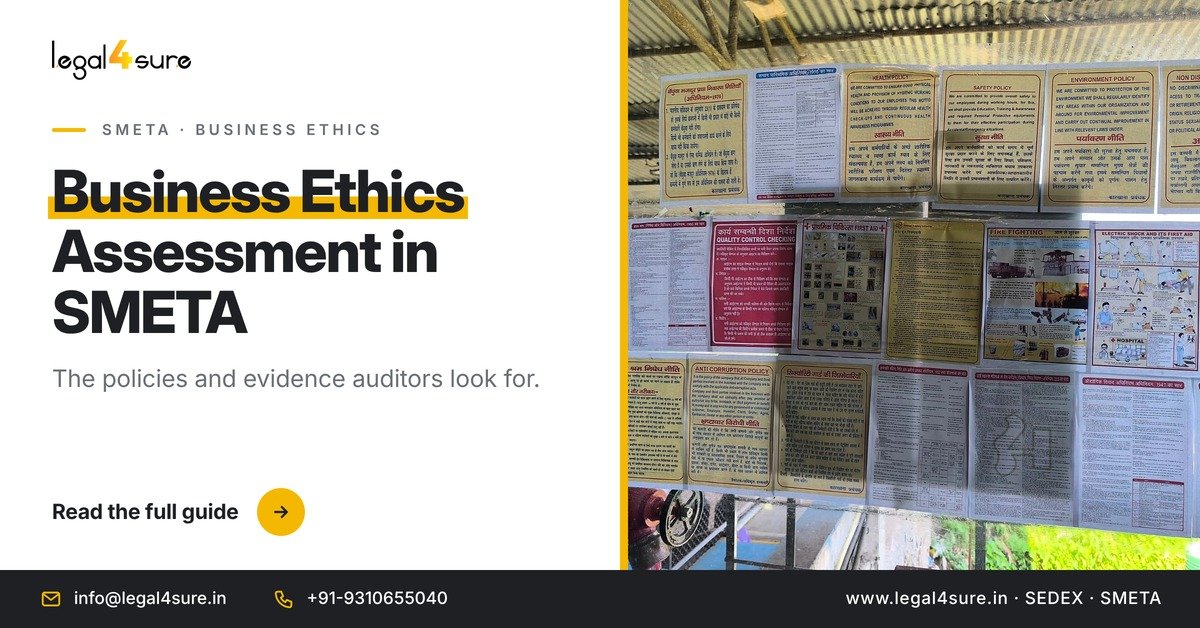
All vendors do some preparation before SMETA auditing, including improving the factory floor – proper fire exits, machine guards, payrolls. After this, the auditor poses another question. Where is your anti-bribery policy, and who knows about it?
This scene is typical in situations where the buyer has raised the level of his requirements to a 4-pillar format, thus adding an assessment of business ethics. This article deals with business ethics assessment in SMETA, including the policies and evidence. The latter means what auditors want to see on paper and what will prove those policies. It also discusses Sedex membership and SMETA audit preparation.
Is the business ethics assessment mandatory for every SMETA audit?
No. This applies only to the 4-pillar audit format. The 2-pillar audit includes labour standards, health and safety and basic environmental assessment, while the 4-pillar audit includes an extensive environment assessment and business ethics. The decision on the format rests upon your buyer.
The business ethics code area is 10C in the Sedex Supplier Manual for SMETA 7.0. Buyers can also ask for additional assessment beyond the methodology, which should be reflected in the separate document from the auditor.
These two facts will help you avoid disputes in future. Sedex is a membership platform and SMETA is an audit methodology. Both on its website Sedex emphasizes that it is not a certification and there is neither pass nor fail. You get the report and action plan and the interpretation belongs to your buyer.
That is why, any claims about “SMETA certification” are doubtful. Even LRQA – the Sedex audit partner – notes that more than 60,000 companies around the world rely on SMETA audits, so buyers often ask for them, but still, this program does not guarantee your order.
When does it make sense, and when may it not?
- This approach is justified where the buyer requests in writing, when you provide brands with supplier ethics compliance programs, and when your staff works frequently with government officials, customs officers or labor subcontractors.
- This may not be required when no customer asks for it, or when the buyer accepts the 2-Pillars Report or other program.
- It is important to clarify with the buyer: format of submission, whether an existing report will be accepted, type of audit, companies who conduct audits and additional requirements beyond SMETA.
What’s changed recently, and how does it differ from Indian law?
DQS highlights that Sedex has rolled out SMETA 7.0 on 10 September 2024, succeeding SMETA 6.1. According to LRQA, SMETA 7.0 introduces a Management Systems Assessment and stricter scrutiny of business ethics in the 4-pillar audit.
The Indian law takes a separate route. According to the Prevention of Corruption Act, 1988 (Amended in 2018), a commercial entity can be held liable where any individual associated with the entity gives bribe to a public servant for gaining or retaining business. Adequate processes will help as a defense; however, this would vary based on the circumstances.
Do not confuse the two. Law is obligatory and is enforced by law enforcement agencies, while SMETA is voluntary and buyer driven. Hence, a good SMETA report is no guarantee of legal compliance. Some entities like listed entities need to have a vigil mechanism in place as per Section 177 of the Companies Act, 2013. However, several private suppliers are exempt from it.
Business ethics assessment in SMETA: policies and evidence the auditor expects
Auditors look for three things: a policy, proof that people know it, and proof it works. A policy alone rarely satisfies them.
| Topic | Policy expected | Evidence that supports it |
|---|---|---|
| Anti-bribery and corruption | Written policy on gifts, facilitation payments and agents | Signed acknowledgements, gifts register, third-party declarations |
| Conflicts of interest | Disclosure rules for owners, managers and purchase staff | Declaration forms, supplier selection records |
| Whistleblowing and grievance | Confidential, accessible channel with a non-retaliation promise | Complaint log, investigation notes, closure records |
| Legal compliance | Commitment to applicable law | Licence register, inspection records, statutory filings |
| Training and awareness | Annual plan covering managers, purchase, finance and liaison staff | Attendance sheets, induction records, test results |
| Review and improvement | Periodic management review | Dated minutes, corrective action tracker |
This is the assessment on business ethics under SMETA: the policies and documentation required. According to DQS, anti-bribery and corruption policies and conflict of interest fall under the scope of this pillar, and more may be added by your buyer.
Auditors are known to conduct sampling. They can ask a couple of managers how they will act if a supplier gives them a gift and then compare their responses to your policies.
What counts as good evidence?
Evidence should be dated, signed and traceable to a real event.
- Interviews confirm that training is in place, where employees describe the policy in their own words.
- The gifts and hospitality register which is regularly used despite having limited entries.
- The complaints log to demonstrate how the reports are processed and resolved while preserving confidentiality.
- On-boarding forms for agents, transporters, and labour contractors.
- Minutes of management review that include the subject of ethics.
How do ethics risks differ in textile, chemical and food units?
Risk follows contact with officials and intermediaries, so the extra checks depend on your sub-sector.
- Textile & clothing exporters: (Tiruppur, Ludhiana, Panipat, Surat): custom and freight forwarders, labour providers and buyer agent fees.
- Chemical/intermediate producers: (Ankleshwar, Vapi): waste disposers, approvals from pollution control boards where facilitation payments can be made.
- Food processing companies: (food safety approvals, inspections for exports and suppliers of raw materials).
- Engineering units: (sales through tenders and conflicts of interest on purchases).
More risky business should undergo additional scrutiny. Obtain a receipt for all official payments made; conduct agent screening before hiring and document who participated in inspections. An auditor might question how you prevent your staff from paying “speed money”.
The contractors require further investigation due to the possibility of combining ethics and labor issues. Maintain a separate set of contractor files for both cases.
Business ethics assessment in SMETA: policies and evidence process step by step
- Clarify the format, type of audit and acceptable audit organization with your customer.
- Join Sedex, create your site profile and fill in the Self-Assessment Questionnaire.
- Identify your risks: who will interact with government officials, agents, contractors and suppliers.
- Draft or revise your policy documents in simple terms in your workers’ languages and get signed off by management.
- Train your employees and maintain your registers for a couple of weeks to ensure that there is content.
- Conduct an internal test audit and rectify deficiencies.
- Conduct the audit, agree on corrective measures and document resolution.
Quick readiness checklist
- Signature on anti-bribery policy by company’s top management
- Conflict of interest declarations available
- Process through which grievances could be filed by staff members
- Records of training in each concerned department
- Forms for screening agents/contractors
- Minutes of latest management review
Unsure whether your policies would survive an auditor’s questions? Legal4sure can review your ethics policies and supporting records before you fix an audit date.
What does preparation cost, and how long does it take?
Preparation for ethics is more about time and paperwork than about equipment, but there are still several cost components. Ask for written quotes. The Indian audit companies will usually give their quotes in INR and GST. Inquire about whether travel is included in each quote.
| Cost component | What drives it | INR context |
|---|---|---|
| Sedex membership | Membership category and number of sites | Set by Sedex; check its current fee page and convert at the day’s rate |
| SMETA 4-pillar audit fee | Workforce size, sites, auditor days; the 4-pillar format may add time | INR quotation from the audit company, plus GST |
| Policy and system set-up | Existing documents and site complexity | Internal time or a consultant’s quotation |
| Training | Headcount, shifts and languages | Internal time or trainer fees per session |
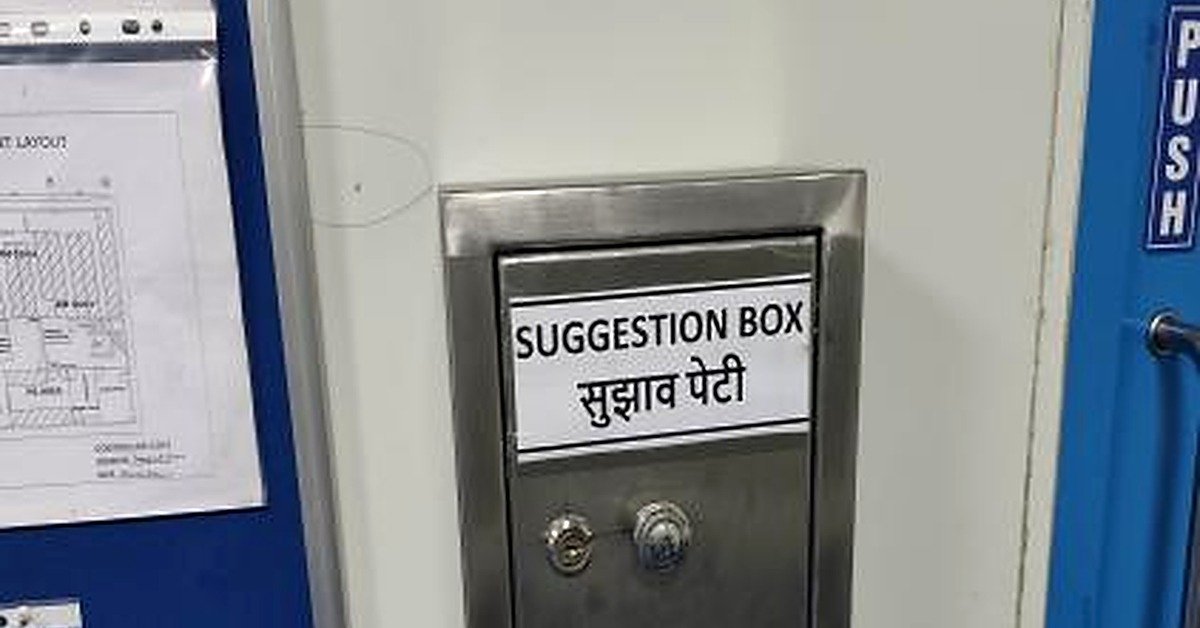
| Grievance channel | A locked box and log versus an outsourced hotline | Ranges from minimal to vendor-quoted |
| Follow-up audit | Number and severity of findings | Audit company quotation |
Timelines vary too. Sites starting from scratch often allow six to ten weeks, though that’s a rule of thumb, not a promise.
- Registration and Questionnaire: days to weeks depending on the rate of collecting information.
- Policy Development and Approval: usually one to three weeks, but depends mostly on the time taken by management to approve it.
- Training: days to weeks depending on the shift and number of people.
- Development of Records: a few weeks before the audit is conducted.
- On-Site Audit: days to several days depending on the number of employees
Which mistakes trip up manufacturers, and how do you avoid them?
- Use an internet policy as a base for your own. Customize it according to the specifics of your website.
- Providing policies in English only. Make translations for your workers.
- Maintaining a suspicious complaint box. Protect anonymity and demonstrate closure.
- Not using registers at all. Begin earlier to ensure that the audit will see real work done.
- Ignoring your agents and contractors. Check their background and inform them about the policy.
- Signing agreements and making promises. Walk away from such people.
How can a consultant help, and what should you ask before hiring one?
A consultant cannot carry out your SMETA audit, since that is done only by Sedex-certified audit companies. An adviser will assist in writing policies, creating registers, training the team, and preparing for the necessary actions. A good adviser will also advise the interviewees, because the interviews are as important as the documents. Sedex’s guidelines regarding the persons qualified to provide SMETA services are very clear, so consult the latest version thereof.
Legal4sure helps manufacturers prepare themselves for buyers’ audits in terms of compliance with necessary policies, records, and corrective actions planning. We do not guarantee results, since that depends upon the auditor and your buyer. Ask any adviser:
- Are you an approved auditor with Sedex, and do you make that clear?
- How do you plan to customize policies to fit my facility instead of using templates?
- Could you provide an anonymized sample gap report?
- What is included in the quotation, and what isn’t included?
- Who will be working with us, and what relevant sector experience do they have?
- Do you give any guarantees of approval or of quick turnarounds? (If yes, walk away.)
If you’d like to talk through your site before a buyer deadline, Legal4sure can help you scope the work.
Key Takeaways
- This business ethics evaluation will be valid for 4-pillar audits only, thus it is important to verify the buyer’s format first.
- The Sedex and SMETA audit is not certification; it is a report and corrective actions without passing or failing.
- It is required to provide policy, evidence that people know about it and it is working.
- SMETA is voluntary and buyer initiated whereas Indian anti-corruption law is mandatory.
- Get a written quotation and avoid consultants promising success.
Conclusion
Ethical business assessment in SMETA: policies and evidence is simply demonstrating that you have a policy, it’s communicated to everyone and documented in practice. Ensure you discuss the documentation format with your buyer, customize your policies according to the risk and allow time for register entries to happen prior to auditing. This process will help ensure ethical business compliance by suppliers and better understanding by buyers.
Get Your Business Ethics Policies Ready for SMETA Audit
Prepare for the 4-pillar SMETA assessment with expert support for anti-bribery policies, conflict of interest declarations, grievance procedures, employee training records and third-party screening. Strengthen your documentation and demonstrate ethical practices with confidence.
Frequently Asked Questions
What is Sedex membership?
It is a Sedex’s platform registration where the site profile, questionnaires, and audit reports can be made available to buyers selected by you.
Is Sedex a certification?
No. Sedex is a data exchange platform and does not issue any certificate; thus, you need to find out from each buyer what evidence they will accept.
What is a SMETA audit?
It is a methodology based audit related to social compliance carried out at your facility by an approved auditor without giving a pass or fail.
What does a SMETA audit assess?
Labor standards, health and safety, environment and business ethics in a 4-pillar format.
How to prepare for business ethics assessment in smeta: policies and evidence if time is short?
One needs to begin from the anti-bribery policy, training and complaint handling system and then move further according to the business ethics assessment in smeta: policies and evidence guidelines.
Does business ethics assessment in smeta: policies and evidence in India differ from other countries?
In addition to SMETA criteria, Indian facilities need to take into account Prevention of Corruption Act and Companies Act responsibilities.
Which business ethics assessment in smeta: policies and evidence requirements and documents matter most?
Signed policies, training records, a grievance log and third-party screening forms usually come first, depending on your activity.