
It generally begins with a one-line e-mail. A UK-based retailer needs the Sedex ID and latest SMETA audit from a Tiruppur knitwear exporter before committing to orders for the next season. Or the importer informs the Kochi seafood processor that he needs to have his social audit on record in the coming weeks.
No one at the factory level has done anything like this, and hence, the owner begins a search for Sedex consultants in India to find consultants who seem similar. This is an attempt to describe what Sedex consultants do, what they cannot do, what their rates are, and how to choose one who does not promise the world.
The intent here is mixed. You’re probably still learning how Sedex works while also shortlisting help, so the article educates first and gets to selection after.
What Does a Sedex Consultant Do?
A Sedex consultant prepares your factory for a SMETA audit. That means setting up your Sedex account, running a gap assessment, fixing records and practices, and training managers. Consultants don’t conduct the audit and can’t approve or reject it.
The terms used while searching for Sedex certification service providers are misleading:
- Sedex is a global platform where suppliers provide information regarding their sourcing practices to the buyers.
- SMETA (Sedex Members Ethical Trade Audit) is the audit methodology. Sedex calls it a continuous improvement methodology and not a certification. Hence, no certificate is provided.
- Sedex-approved Affiliate Audit Companies (AACs), who are all APSCA members, conduct SMETA audits. Sedex itself does not audit.
- It is voluntary in terms of law. No Indian regulation demands it; it is your buyer that does.
According to the SMETA page on Sedex, 67,000 SMETA audits have been done in 2025, and more than 120,000 sites were registered on its platform in 2026. Request from buyers such as yours are quite common. There is nothing special about your factory. Checks on responsible sourcing practices have become very common in supplier registration processes.
Need help with account setup first? Learn how a [Sedex Registration Consultant] handles it.
Do You Need a Consultant or Can Your Team Handle It?
An external audit can be considered if your team lacks auditing experience, there is a tight deadline set by the buyer, or more than one unit maintains inconsistent records. You might not require one if an existing SMETA audit report meets your buyer’s requirements, or your HR & safety team has conducted this audit earlier.
Before spending any money, make sure that your buyer is okay with the following:
- Scope: 2-pillar (labour standards and health and safety) or 4-pillar (adds environment and business ethics to the 2-pillars). According to Sedex, around 70% of SMETA audits today are 4-pillar audits.
- Whether an existing report suffices or a new audit is required.
- Type of audit: announced, semi-announced or unannounced.
- AAC (Approved Assessment Company), if any preferred, and the reporting deadline.
If your buyer is only interested in the first-time supplier questionnaire, you might not need an audit at all yet. Make sure you ask about it. It is also noted by Sedex that the same audit data could be used by more than one buyer, thereby reducing repetition of the audit.
What Do SMETA Auditors Check in Indian Factories?
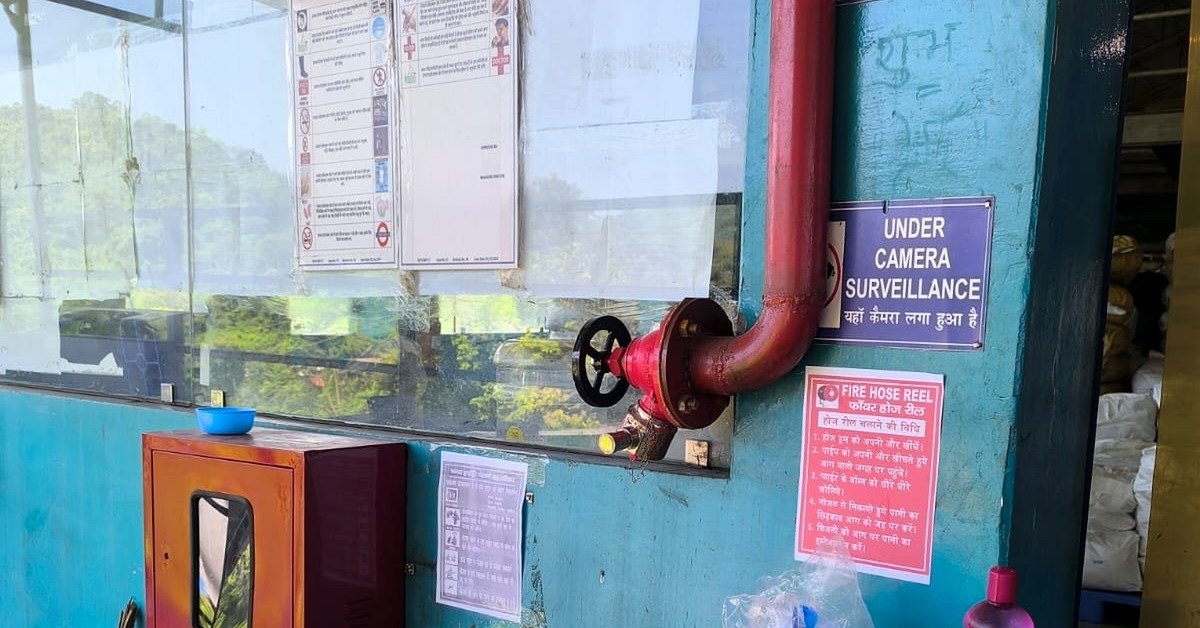
According to Sedex, SMETA measures a site against the ETI Base Code, ILO Conventions and local law. Auditors read records, walk the floor and interview workers.
| Area | What auditors typically check | Common Indian gap |
|---|---|---|
| Labour standards | Age proof, contracts, wages, overtime, deductions, grievance channels, contractor workers | Wage registers that don’t match attendance logs |
| Health and safety | Fire exits, extinguishers, electrical safety, machine guarding, chemical storage, dormitories | Blocked exits on stitching floors |
| Environment (4-pillar) | Waste, effluent, water, energy, permits | Expired Consent to Operate from the State Pollution Control Board |
| Business ethics (4-pillar) | Anti-bribery policy, record integrity, conflicts of interest | No written policy on gifts to officials |
Which Sub-Sectors Face Extra Checks?
- Clothing & Knitwear (Tiruppur, Noida, Gurugram): Overtime management, subcontracting, homeworkers & accommodation for migrant workers.
- Textile Processing & Dyeing (Surat, Ludhiana): Chemical management, effluent treatment, boiler inspection & heat-related hazards.
- Food Processing (Kochi seafood & spices, Punjab & Haryana rice mills): Seasonal employment, ammonia in cold storage, slippery floors, night shifts and dormitories.
Riskier operations warrant greater scrutiny. The auditor may request that you provide chemical training for dye houses, ammonia leak procedures in cold storage areas, boiler inspection certificates and records of your approach to night shifts and accommodation.
One point causes problems for food processors. FSSAI licenses and certification programs such as BRCGS address product safety issues. SMETA addresses worker issues.
How Does the Sedex and SMETA Process Work, Step by Step?
Register on Sedex first, then assess gaps, fix them, book an AAC, complete the audit and close the Corrective Action Plan. In order:
- Check the scope of work, type of audit, and deadlines with your buyer.
- Enroll your organization and facility in the Sedex system. According to Sedex, only Sedex members are allowed to upload a SMETA audit.
- Perform gap assessment of your organization in accordance with SMETA and local legislation.
- Identify the gaps in record-keeping, policy, safety procedures, and communication with workers.
- Schedule an AAC audit and agree on the dates.
- Host the audit: document review, site inspection, worker interviews.
- Get the audit report, address the nonconformities in the Corrective Action Plan.
Buyers determine how often the audits will be done, and it is usually annually or biannually as TÜV SÜD states, so don’t delay.
| Checklist area | Keep ready |
|---|---|
| Employment | Appointment letters, ID and age proof, contractor agreements |
| Wages and hours | Wage registers, payslips, overtime and attendance records, EPF and ESI proof |
| Safety | Fire NOC, drill records, electrical test reports, first-aid logs |
| Environment | Pollution control consents, waste disposal records |
| Policies | Grievance, anti-discrimination, anti-bribery and recruitment policies |
Unsure which scope fits your factory? Talk to Legal4sure for a short scoping conversation before you book an audit slot.
What Changed Recently: SMETA 7 and India’s Labour Codes?
SMETA 7 was introduced by Sedex in 2024, which has been termed as its most significant change yet. The supplier notice by Unilever says that audits scheduled after 10 September 2024 were conducted using the revised methodology. As per LRQA, it also involves a Management Systems Assessment and CAR findings with no fixed closure dates. In case you conducted an audit using an earlier version, then the revision would be more inclined to examine how your management systems function.
Regarding India, the Ministry of Labour and Employment enacted four labour codes on 21 November 2025, amalgamating 29 central acts. State rules were still being finalized in December 2025, so confirm your state’s position.
Both of them are not one and the same thing. A SMETA report is not a certificate of legality, it is determined by inspectors and laws.
What Does Sedex Audit Preparation Cost in India?
Cost has five parts, and only one has a public figure. Sedex states a fee of £199 per SMETA audit from 1 July 2026, charged to the audit company. Auditors and consultants quote in INR, so ask whether it’s included.
| Cost component | What drives it | How to get a number |
|---|---|---|
| Sedex membership | Membership option and number of sites | Quote from Sedex |
| AAC audit fee | Headcount, pillars, audit days, location, travel | Written INR quotes from two or three AACs |
| Sedex per-audit fee | Fixed by Sedex at £199 for SMETA | Ask if the AAC’s quote includes it |
| Consultant fees | Units, gap assessment days, training, documents | Fixed-scope INR quotation |
| Remediation | Fire systems, electrical work, guards, effluent plant | Gap assessment estimate; often the largest line |
| Stage | Typical range | Main factor |
|---|---|---|
| Sedex registration | Days to two weeks | How ready your documents are |
| Gap assessment | 1 to 3 days on site | Site size and number of units |
| Remediation | 4 to 12 weeks, longer with capital work | Fire, electrical or effluent upgrades |
| On-site audit | 1 to 2 days for many sites | Workforce size and pillars |
| Report and closure | Report within days, per QIMA | Severity of findings |
Consider these numbers as mere estimates, not Sedex regulations. Remediating is when money runs thin, because installing a fire alarm system or improving effluent treatment will cost you more than redrafting your policies. A gap analysis will let you know what category you belong to before you decide on an audit date.
In comparing quotations, ensure that each one covers the same scope: days for auditing, travel, report delivery and any subsequent audit. If not, the quotation that appears cheaper might just be narrower.
Which Mistakes Cost Factories the Most?
- Employing consultants that give a guarantee of a favorable report or a quick audit process. The results will be determined by the auditor’s findings.
- Tampering with documents at the last minute. Auditors verify salaries, attendance, and interviews with workers.
- Amending documentation but not practices.
- Ignoring subcontractors and agency workers.
- Considering the report as a pass certificate.
- Telling workers what to say. Auditors conduct interviews with workers individually, and the rehearsed responses can easily be seen.
- Choosing an incorrect pillar scope and then auditing a second time.
There is a better way to do it. Conduct a gap assessment, resolve the underlying problems, update wages and attendance documentation throughout the year, and brief managers on the audit purpose. The companies that make SMETA a routine annual activity and not just a single occasion experience less surprises.
How Do You Choose Among Sedex Compliance Consultants in India?
A search for Sedex compliance consultants India or SMETA audit consultants India yields both solo practitioners and multi-city consultants. There is no official ranking; assess based on facts. Professional Sedex audit preparation consultants will address these issues without equivocation:
- Do you recognize SMETA as not being a certification and results cannot be guaranteed?
- What industries and cluster have you worked with?
- Who will come to my factory and how many years of SMETA 7 experience do they have?
- Will you leave AAC selection to me?
- What does your INR quotation include and not include?
- Would you ever recommend changing documents before audit?
- Do you assist in closing the Corrective Action Plan after audit?
Beware of consultants promising assured success, special connection with the auditor or guaranteed spot in the queue. The findings depend on the auditor seeing at the factory, which is out of any consultant’s control.
Legal4sure helps manufacturers with Sedex registration, SMETA audit preparation and workplace compliance, from gap assessment through corrective action planning. We work together with your HR and Safety teams, inform about restrictions upfront and never guarantee any audit result. This is the standard to look for in any consultant. For more details please read our Sedex Audit Complete Guide.
Key Takeaways
- SMETA is a voluntary and buyer-led process and not a certification process.
- Sedex-approved Accredited Audit Centers only carry out these audits, while consultants will prepare you for it.
- Make sure you clarify your pillars, type of audit and the due date from your buyer first.
- Remediation is typically the most expensive part, so get your INR quote soon.
- Do not deal with anyone who promises results.
Conclusion
Indian Sedex consultants can take weeks of guesswork off your plate, but they will never audit, certify, or give a guarantee to any company. Begin by understanding what your customer is demanding, make a realistic gap analysis and pick a partner who is open about his limitations.Whether you export garments from Tiruppur or process seafood in Kochi, the same logic holds: understand the requirement, fix the real issues and keep the evidence ready.
Choose the Right Sedex Consultant & Get Audit-Ready with Confidence
Prepare your manufacturing business for international buyer requirements with expert Sedex guidance. Legal4Sure supports Sedex registration, SMETA audit preparation, compliance gap assessments, documentation and corrective action planning across multiple industries.
Frequently Asked Questions
What does a Sedex consultant do?
Apart from preparation, a good one helps in closing the Corrective Action Plan observations and ensures that your files remain audit ready in between visits.
How do I choose a Sedex consultant in India?
Look for referrals in the respective sector, INR quotation and what all they will not do.
How to choose the right Sedex consultant for a manufacturing factory in India that runs several units?
Select one who is capable of assessing the individual units, because SMETA audits are site specific with varying staff strength and risks.
What makes the best Sedex compliance consultant for food and textile manufacturers in India?
Practical knowledge of risks involved in your sub-sector like cold storage in food or effluent in textiles.
Is Sedex certification mandatory for Indian exporters?
It is not mandatory by any law in India, but it depends upon the supplier code of your buyer.
How early should we start preparing?
In an ideal situation weeks before your scheduled audit. Upgrades for fire or effluent may require more time.
Does a SMETA report prove we follow Indian labour law?
No. It benchmarks your site, but it isn’t cleared from any government authority.