
An exporter of spices based in Kochi finds a mail from the UK based food retailer on Monday morning asking for the inclusion of the web site on Sedex and also for the SMETA audit report prior to confirming the next order.
This is typically how Sedex for food processors and food supply chains come into the picture – through buyer requests rather than planned actions. This guide talks about Sedex membership, SMETA audits, the kind of documentation required by the auditor, potential costs in rupees, and if it is worth considering at all.
Is Sedex a certification? What food businesses should know first
No. Sedex is a nonprofit membership body that operates a web-based system where suppliers disclose their ethical sourcing information to the buyer. Sedex does not define itself as a standards setting body, code of conduct or certification body. The audit requested by buyers is the SMETA audit, which results in a report rather than a certificate.
Membership is voluntary as per the law, but it becomes mandatory in a commercial sense when a buyer requires it as a prerequisite of supplying. As per the official website of Sedex, there are 100,000 members in 180 countries who have performed over 540,000 audits through its platform.
| Term | What it is | What it isn’t |
|---|---|---|
| Sedex | A membership organisation and data platform | A regulator, standard or certifying body |
| Sedex membership | An annual account where each site holds a profile, completes a self-assessment and shares audit reports | Proof of good practice on its own |
| SMETA | An audit methodology based on the ETI Base Code and local law | A pass or fail certificate |
Which food businesses get asked for Sedex, and who may not need it?
The requests will generally originate from UK and European retailers, importers, and brands who have supplier ethical compliance programs in place. Labor-intensive, seasonal and export-oriented food production facilities will often receive such requests before others do. The more people hired on contract, the greater the likelihood that such a request will be made.
How does this look across food sub-sectors?
| Sub-sector | Common pressure points | Extra checks to expect |
|---|---|---|
| Seafood and shrimp processing | Night shifts, migrant workers, recruiters, wet floors | Recruitment fees, worker housing, ammonia refrigeration safety |
| Spices, tea and coffee | Seasonal and contract labour, dust, harvest-time hours | Labour contractor records, wage compliance, dust and fire risk |
| Rice, flour and pulse mills | Long hours, heavy machinery | Machine guarding, overtime records, fire exits |
| Dairy, bakery and packaged foods | Shift work, sanitising chemicals | Chemical storage, evacuation drills, grievance channels |
| Fresh produce and dry fruit packhouses | Casual workers, subcontracted packing | Age verification, subcontractor and homeworking visibility |
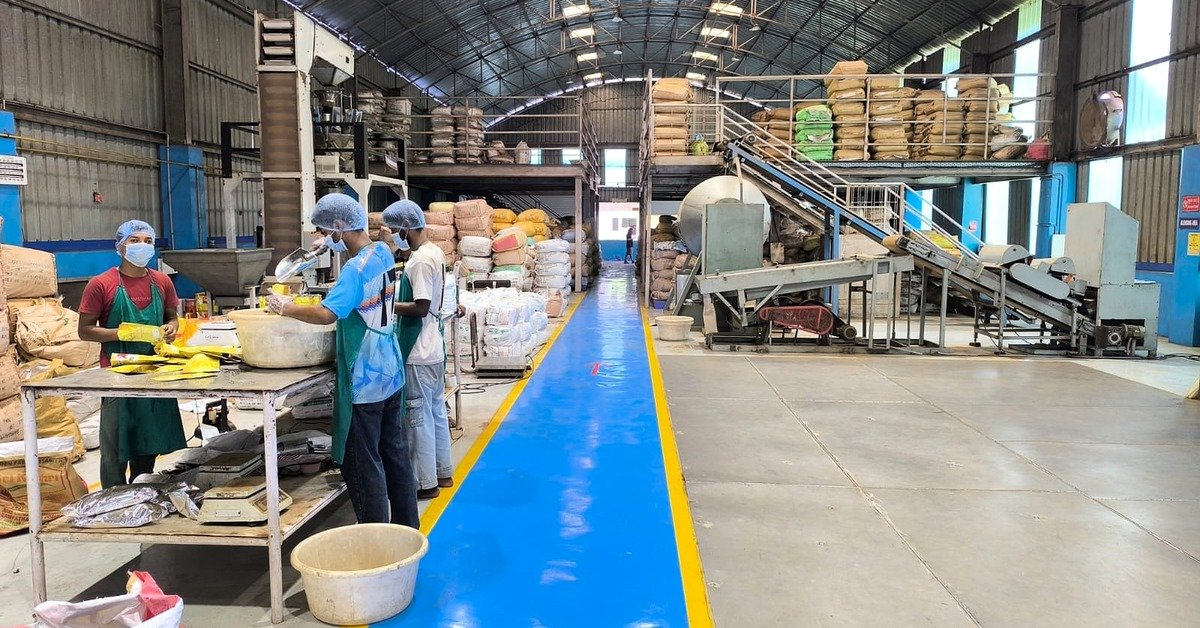
Location shapes the answers. Seafood and spice sites around Kochi and Visakhapatnam may involve migrant workers and recruiters, while chilli processors near Guntur, Punjab and Haryana rice mills and Nashik packhouses often rely on seasonal contract labour.
Do you actually need it? A quick decision framework
- It is probably worth the effort when the buyer asks for it in writing, you ship products to the United Kingdom or European Union, or multiple customers ask for proof of social audit.
- It is probably not necessary when you trade within the country without a buyer request, or the buyer is fine with receiving other social audit reports.
Before spending any money on this, verify these things with your buyer:
- What kind of social audit do they require (2-pillar or 4-pillar)?
- Is the auditor from the pre-approved list required by the buyer?
- What is their deadline, and do they have an existing report they can use?
What does a SMETA audit assess?
A SMETA audit is the process of evaluating the working conditions at the factory and its operational management. A two-pillar audit evaluates labour and health and safety. The four pillars evaluate labour, health and safety, environment and business ethics. The auditor evaluates the factory using the ETI Base code, applicable laws, and additional Sedex criteria.
The additional criteria include management systems, entitlement to work, and subcontracting and homeworking. An auditor will examine the factory, examine documents, conduct interviews with the workforce and managers, and produce an audit and CAPR report.
It is important to note that a SMETA audit is not a food safety audit. The FSSAI licence, HACCP system and BRCGS certificate are separate from SMETA audits.
Which records and documents will auditors ask for?
Auditors sample recent records, often up to 12 months, so consistency matters more than volume.
| Area | What auditors typically want to see | Food-sector example |
|---|---|---|
| Employment and right to work | Appointment letters, age and ID proof, worker registers | Seasonal and contract workers listed as carefully as permanent staff |
| Wages and hours | Payroll, attendance, overtime, PF and ESI contributions, pay slips | Peak-season overtime on processing lines |
| Health and safety | Fire safety, drills, first aid, PPE, machine guarding, chemical inventory, incident log | Cold rooms, ammonia systems, sanitiser storage |
| Management systems and worker voice | Policies, training records, a working grievance process | Policies explained in the languages workers speak |
| Environment | Effluent and waste records, water use, state pollution control consents | Wastewater from washing and processing |
| Business ethics | Anti-bribery policy, record integrity, supplier declarations | Procurement from farms and traders |
Higher-risk food activities attract extra checks:
- Agents of labour: employment agency agreements and proof of no recruitment fees paid by workers.
- Accommodation of workers: accommodation facilities, sanitation and fire exits for places providing accommodation.
- Cold stores: logbooks for ammonia maintenance, response to leaks and staff training.
- Night shifts/peak season: days off, transportation and hours records.
Sedex for food businesses and food supply chains: the process step by step
What is Sedex membership?
Sedex membership is a paid annual account on the Sedex platform. Suppliers create company and site profiles, complete a self-assessment questionnaire (SAQ), and share audit reports with linked buyers. Membership alone doesn’t prove good practice. The audit evidence behind it does.
- Confirm the buyer’s requirements with regard to the pillars, type of the audit, deadline, and approved audit company.
- Become a member of Sedex as a supplier and register all the sites to be audited.
- Respond to the SAQ accurately. Someone representing the site has to complete it because the answers will be consistent with those identified by the auditors.
- Conduct an internal gap assessment according to the SMETA workplace requirements and address the visible gaps.
- Hire an audit company affiliated with Sedex and set the scope, pillars, and tentative schedule.
- Undertake the audit process that includes the documentation review, on-site assessment, and worker interviews.
- Get the final report and the CAPR and discuss necessary actions to be taken.
Preparation checklist
- Twelve months of records on payrolls, attendance, and overtime in one single document.
- Full list of employees, which include contractors and seasonal employees.
- Fire safety documentation along with electricity and structural safety documentation with proper dates.
- Documentation on training along with documented grievance processes known to workers.
- Owner identified for internal audit.
Want a second opinion before an auditor sets foot on site? Legal4sure can talk through your records and help you spot gaps early.
What does it cost in India, and how long does it take?
Costs fall into separate buckets, and Sedex sets only some of them.
| Cost component | What drives it | INR context |
|---|---|---|
| Sedex supplier membership | Number of sites and plan type | Sedex lists the Standard plan at £17.50 per site per month, billed annually: roughly ₹23,000 to ₹25,000 a year at recent exchange rates. |
| Sedex audit upload fee | Charged per SMETA audit | Sedex lists £185 per audit from 1 July 2025, roughly ₹20,000. Ask whether your quote includes it. |
| Audit company fee | Headcount, sites, pillars, auditor days, travel | No reliable benchmark. Request written quotations. |
| Corrective actions | Findings on fire safety, machinery, housing or records | Ranges from almost nothing to major capital spend. |
| Consultant and internal time | Gap assessment, training, follow-up | Quotation-based. |
Corrective actions surprise people most. A missing register costs time. A missing fire exit costs money. These timelines are indicative, not official:
| Stage | Typical range | Main factor |
|---|---|---|
| SAQ and gap check | 1 to 4 weeks | Record quality and staff availability |
| Audit scheduling | 2 to 6 weeks | Audit company availability and buyer deadline |
| On-site audit | 1 to 3 auditor days for many mid-sized sites | Headcount and pillars |
| Corrective actions | Weeks for paperwork, months for infrastructure | Nature of the findings |
What has changed recently?
SMETA 7.0 is the most recent methodology. Sedex released it in September 2024, and audits have been performed according to SMETA 7.0 since 1 January 2025. A new determination called Collaborative Action Required was made to identify matters needing actions beyond the site.
According to Sedex’s consultation summary in June 2025, updated guidance will state that semi-announced and unannounced audits should be performed unless the visit is necessary to be announced because of some logistical considerations. You will not be allowed much discretion regarding the exact dates.
In India, four labour codes came into effect on 21 November 2025. They repealed 29 central laws and included the Occupational Safety, Health and Working Conditions Code. Since state laws are still being developed, you should find out about the applicable ones in your state.
The two schemes intersect, but neither replaces the other. The SMETA report does not prove the compliance with law, and vice versa, and compliance with law does not mean satisfaction of the buyer’s requirements. In case both the ETI Base Code and the local law cover the same matter, the stricter protections are applied.
What mistakes do food manufacturers make, and what works better?
- Hurrying SAQ. Double check each answer with your records first.
- Tracking only permanent employees. Track contract and seasonal employees from Day One.
- Organizing records the night before. Interviews highlight gaps in records, which must be updated monthly.
- Ignoring subcontractors. Be aware of who is packing, transporting, and processing your products.
- Keeping corrective actions open-ended. Assign ownership and timelines, with documentation.
Sites that handle this well name one owner, review records quarterly and train supervisors.
When does a consultant help, and how do you choose one?
A consultant can conduct a gap analysis, implement record keeping systems, train your supervisors and help with CAPR closure. A consultant cannot perform an audit on your behalf, represent Sedex or ensure a particular result. Be careful about those who promise you a guaranteed pass, a quick result, or a Sedex certificate because there is none.
Consider these points before hiring:
- Do they make it clear to you that Sedex is not a certification?
- Have they helped food companies before like yours?
- Are they able to say no to backdating and record changing?
- What is included in their offer and what is not?
- What is offered to you once the audit report is out?
Legal4sure assists manufacturers with meeting all compliance and certification needs. This includes the following when it comes to Sedex: understanding the buyer’s request, conducting honest records review and audit planning.
Key Takeaways
- Sedex is a membership organization, not a certification. SMETA does not issue a certificate, only an audit report.
- First check with your buyer: pillars, audit organization and deadline.
- The auditors sample records; therefore, having accurate information about workers becomes important.
- Plan for membership cost, audit cost, and corrective actions. Ask for written quotes for the audit.
- SMETA and Indian legislation have similarities, but they are not the same. They do not substitute each other.
Conclusion
For food companies and food supply chains, Sedex is all about preparation. Understand what your customer needs, keep accurate accounts, and use the audit as part of the continuous improvement process. Before reviewing your preparedness, consult Legal4sure before you hire an auditing firm.
Strengthen Food Supply Chain Compliance and Build Buyer Trust
Preparing for a Sedex or SMETA audit? Legal4Sure helps food manufacturers, processors and exporters with buyer requirement reviews, Sedex guidance, compliance gap assessments, documentation, audit planning and corrective action support. Get your records audit-ready, strengthen supplier ethical compliance and demonstrate your commitment to responsible sourcing across your food supply chain.
Frequently Asked Questions
What is Sedex membership?
An annual membership site level in Sedex to share self-assessment and audit report to your buyer.
Is Sedex a certification?
No. Although buyers can consider a clean SMETA report as a valuable document, the decision lies with the buyer.
What is a SMETA audit?
Social audit conducted by an external audit company based on Sedex methodology, culminating into a findings report.
What does a SMETA audit assess?
Labour standards, health and safety standards along with environment and ethics in 4 pillar audit.
What are the sedex for food businesses and food supply chains requirements and documents for a small processor?
Labour records, payroll, safety documents and policies are primarily required. Your buyer and scope of audit determine the requirement.
How to prepare for sedex for food businesses and food supply chains?
Follow the process of sedex for food businesses and food supply chains as discussed above, from records review onwards.
Does sedex for food businesses and food supply chains in India apply to small units?
Possibly, if your buyer requires. Membership can be availed by any size of business and the buyer defines the audit requirements.