
Your European customer requests your SMETA 4-Pillar report, and now social compliance becomes a prerequisite for doing the order and not its additional component. What does the audit really require? Requirements for SMETA 4-Pillar audit include labor standards, health and safety, extended environmental reporting and business ethics, as well as 12-months’ records on a consistent basis. It is best to treat the audit as the continuous management system, not as the one-day procedure.
Sedex SMETA is an audit proving that the facility runs according to internationally accepted standards of social and environmental sustainability, while 4-Pillar Sedex SMETA audit differs from 2-Pillar by environmental and ethical governance assessment. The guide provides information about what is to be considered during the audit, documentation and records required, common mistakes of the manufacturers and how to get ready for the audit.
The guide is informative, containing a checklist, comparison and key points to make an estimate of your factory’s readiness.
What Is the SMETA 4-Pillar Audit, Exactly?
The SMETA 4-pillar audit is an audit covering all aspects of working conditions in a factory, safety, environmental footprint, and conduct of business practices. The audit is for manufacturers whose buyers demand assurance of social and environmental compliance.
Short Answer: The SMETA 4-pillar audit is a Sedex audit which involves assessment of labour practices, health and safety, environment (expanded), and business ethics, with documentation proving each of them.
A few things you should know in advance:
- The audit exceeds the minimum standards required by the 2-pillar audit with additional environmental and ethical governance assessment.
- Manufacturers believe Sedex audit to be a review of HR documents only. In reality, the 4-pillar approach covers all operational aspects of a factory.
- For Indian manufacturers, the demands usually come from European buyers seeking assurance of ethical business practice in addition to product quality.
- Export contract signing delays are often because of nonexistence of SMETA documents.
Why Buyers Prefer Suppliers With Strong SMETA Records
Buyers use SMETA results to judge whether your factory is safe, ethical and reliable.
1. It Reduces Risks for the Buyer
The 4-pillars audit report gives the buyer a clear understanding of working conditions, safety measures, and waste emissions. This is much more comforting than a mere promise made during a sales call.
2. It Indicates That the Company Has a Good Management System
Audits check documentation along with your management system, grievance mechanisms and internal audits. A successful audit proves that the system works in real-life situations.
3. It Establishes Sustained Confidence
Good documentation in SMETA 4-pillars builds confidence that lasts long between buyers and your company. Buyers that trust your documentation will continue to order from you.
4. It Speeds Up the Procurement Process
A lack of SMETA documents slows down the process of exporting orders. Providing such documents eliminates the problem.
The Core Benefits of Meeting SMETA 4-Pillar Requirements
Here’s where the benefits actually show up, in practical terms.
Faster Contract Signing
With the document preparation done, you won’t have to rush to meet the buyer’s demands. Thus, the export contract will not be put on hold.
Less Critical Non-Conformities
When the logs of production, gate entry, and payroll are synchronized, there is less chance for discrepancies that can be noted as Critical Non-Conformities by the auditors.
Reduced Audit Pressure in the Long Run
Compliance management systems work continuously, whereas preparation results in big risks.
European Customers’ Readiness
The 4-pillar report satisfies the kind of request which is made by European clients. Being in possession of the report gives you an edge over suppliers who are still figuring out what needs to be done.
Repetition of Export Orders
Plants that use SMETA as a management approach get repetition of their export orders. This means that compliance becomes one of your regular activities rather than annual effort.
Accurate Data and Elimination of Human Error
By switching from manual registers to automated attendance and payroll records, you can eliminate human error and ensure accurate historical data, making each successive audit easier.
More Robust Supplier Evaluation
The more advanced version of 4-pillar compliance requires you to evaluate your own raw material suppliers according to the most basic labor and environmental criteria.
SMETA 4-Pillar Audit Benefits: Quick Comparison
This table compares a supplier who prepares once with one who runs ongoing compliance.
| Benefit | Supplier Without Ongoing Compliance | Supplier With a 4-Pillar Management System |
|---|---|---|
| Records | Prepared in a rush before the audit | 12 months of payroll, attendance and policy records kept |
| Data consistency | Gate logs, registers and wages may not match | Production logs, gate entries and payroll in sync |
| Extended pillars | Environment and ethics often neglected | Waste, carbon and anti-bribery documentation ready |
| Worker readiness | Workers unsure how to answer interviews | Mock interviews done; workers know their rights |
| Audit pressure | Critical non-conformities are a real risk | Reduced audit pressure through ongoing systems |
| Export contracts | Signing can be delayed by missing documents | Documents ready when the buyer asks |
What Does It Take to Meet SMETA 4-Pillar Audit Requirements?
The SMETA 4-pillar audit checklist breaks down into seven audit areas, each with records auditors expect to see.
- Labour laws – Employees’ identity and age verification, Employment contracts, Attendance record for 12 months, Overtime records, Wage record and Leave records.
- Health and Safety – Fire NOC, Fire Drill Report, PPE distribution record, Machine Safety Inspection report, First Aid Training record, Accident and Incident Register, and Emergency Exit Plan.
- Labour Rights and Welfare – Employee Training Records, Induction Training record, Internal Complaints Register, POSH Policy if any, and Employee Interview record.
- Environment – Waste Disposal Record, Hazardous Chemical Register, Water Consumption Record, Electricity Consumption Record and Pollution Control Licenses/Consents.
- Ethics – Anti-Bribery Policy, Code of Conduct, Whistleblower Policy, Ethics Training Records, and Data Protection Policy.
- Operations and Traceability – Production Logs, Maintenance Record, Shift Schedule, Contractor Record, and Internal Compliance/Audit Reports.
- Legal Compliance – Factory License, Labour Law Registrations, ESI & PF record, Minimum Wage Compliance, and Contractor’s License if any.
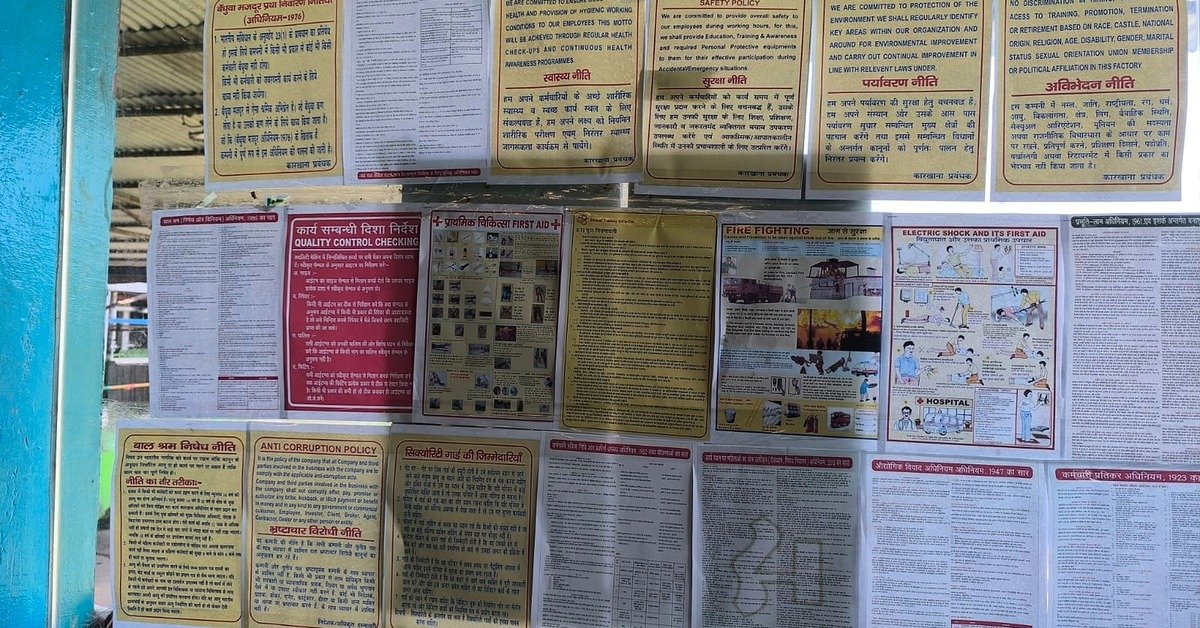
Some crosscutting issues need to be considered in all areas. It is essential that digital gate logs, physical attendance registers, and banking payroll transactions should align perfectly. The disposal of hazardous wastes needs to comply with legal requirements using the company’s environmental policy and its documentation. Business ethics calls for a whistleblower hotline, anti-bribery training for managers, and documentation of data privacy processes. There must be an implementation of plan-do-check-act process ensuring compliance even after the audit period.
Common Mistakes Indian Manufacturers Make When Pursuing SMETA 4-Pillar Audits
- Approaching the audit as a one-day activity. Auditors require 12 months of payroll, attendance, and training data, so develop a practice of keeping these records throughout the year.
- Disregarding the extended pillars. Many manufacturing facilities plan for HR and safety compliance but neglect business ethics that include anti-bribery policy and extended environment, which requires detailed recordkeeping on waste and carbon emission.
- Lacking management systems. The auditors will look at the documents along with the process, so establish official mechanisms for grievances and review processes.
- Making records incompatible. Gate entry logs, attendance records, and salary payment must be consistent, otherwise such inconsistency might be considered a critical non-conformity.
- Failing to train the workers. Conduct mock interviews so that the employees are able to talk about their rights, workplace safety, and whistleblower hotline.
When the SMETA 4-Pillar Audit Makes the Most Sense
- Your client from Europe wants you to prepare a SMETA 4-Pillar audit report.
- An export deal is stuck due to lack of documentation from the audit.
- The buyer expects environmental policy and ethics policy as evidence of commitment to sustainability.
- You want to change from doing audits seasonally to continuous auditing.
- You want to secure future export deals by having safe and ethical business operations.
- You do not want any critical non-conformity arising out of discrepancies in your documentation.
If no buyer is asking for it yet, the audit matters less right now, but getting your records and policies in order early still pays off.
Key Takeaways
- SMETA audit requires four main pillars of labour, health and safety, environment (extended) and business ethics.
- Audits require at least 12 months of consistent records for payroll, attendance, and policies.
- Production logs, gate access and payroll should tally; otherwise, non-conformity will arise in the auditing process.
- Most factories lose because they take the audit to be a one-day activity, thereby ignoring the extended pillars.
- Management systems and their policies are audited together with documentations.
- Those factories that regard SMETA as a management system get continuous export orders.
Conclusion
The SMETA 4 Pillars audit checklist favors factories maintaining records throughout the year, addressing extended environment and ethics pillars, and operating compliance as a management system. The force from European buyers is increasing, and what was once an optional thing is becoming a must-do. If you already have a request for such an audit on your table, contact us at Legal4sure to develop accurate documentation and perform a pre-audit gap analysis.
Prepare Your Factory for SMETA 4-Pillar Audit and Meet Global Buyer Expectations
Need expert support to meet SMETA 4-Pillar audit requirements? Legal4Sure helps manufacturers with pre-audit gap analysis, labour compliance, health and safety documentation, environmental policies, business ethics records and audit preparation. Maintain accurate 12-month records, address compliance gaps and build a stronger management system to meet international buyer expectations.
Frequently Asked Questions
What are the SMETA 4-pillar audit requirements?
It includes labor standards, health and safety, extended environmental assessment and business ethics, along with one year of payroll records, attendance records and policies.
What are the SMETA 4-pillar audit requirements in India?
In addition to the above four pillars, Indian manufacturers should maintain local records like Fire NOC, factory license, ESI/PF records and pollution control consent.
Why do buyers want a SMETA 4-pillar report?
They analyze the information to know if a particular factory is safe, ethical and credible.
Is Sedex mandatory for export?
No, it is not mandatory but it can be made a condition by the buyers. In fact, European buyers usually demand a SMETA 4-Pillar report.
What documents are needed for a SMETA checklist?
It includes documents for labor, safety, environment, ethics, operations and compliance, such as contract, wage register, fire drill, waste disposal and whistle blower policy.
How does the 4-pillar audit differ from the 2-pillar audit?
SMETA 4 pillar audit includes environmental and ethical governance audits apart from the basic SMETA 2 pillars audit.
Can a Sedex audit consultant in India help?
Yes. Legal4sure helps manufacturers create precise documentation, run pre-audit gap assessments and build the systems buyers expect.