
One knitwear exporter in Tiruppur became a member of Sedex on Friday; he completed the forms on Saturday and Sunday and sent an email to the buyer on Monday. After two weeks, the sourcing team of the buyer could still not find any information about it. It seems that there was a mismatch between the site name and the name of the supplier recorded in the buyer’s database and no link request was ever approved.
This is the most usual type of mistake during the registration process, and this is easy to fix. This guide will show you all necessary steps and typical problems in sedex supplier registration.
Sedex in one minute: a membership, not a certificate
Registration on Sedex implies that you create a paid company account on Sedex, add your workplaces as sites, complete Self-Assessment Questionnaire (SAQ) and link to the buyers requesting it. This is an optional procedure, it is operated by the membership organization based in the UK and it does not certify you.
After your registration, Sedex provides company reference (ZC code) and site reference (ZS code) for all your registered sites. Buyers will use these references to search for you. There is nothing on the website that can say “approved” or “certified.” Your information will be held on the platform together with future SMETA audit reports.
As the Sedex website states, there are 180 countries represented in its membership and there were more than 540,000 audits on the platform. That is why many retailers in the UK and EU use it as the default system for responsible sourcing data.
What do you need before you open the registration form?
Registration stops halfway more often because of missing information than because of anything technical. Collect the following before you start.
| Item | Why it matters | Common slip |
|---|---|---|
| Legal entity name and address | Must match the buyer’s vendor records | Using a brand or trade name instead |
| GSTIN, IEC and factory licence details | Proves which legal entity runs each site | Head office details entered for a factory |
| Full address of every production site | Each site gets its own ZS code | Combining two units under one site |
| Headcount by gender, permanent and contract | Feeds the site profile and SAQ | Leaving out agency or contractor workers |
| Buyer’s ZC code or Sedex account name | Lets you send the link request correctly | Linking to a regional office, not the right entity |
| Card or bank transfer details | Membership is paid per site, per year | Payment failing on cards with low foreign limits |
| Two working email IDs | Account owner and backup user | Using one person’s personal Gmail |
Sedex’s “Join Sedex as a supplier” page also has an official registration checklist.
Sedex supplier registration: steps and common issues at each stage
- Confirm the ask. Verify whether the customer wants membership, SAQ, or SAQ and SMETA audit with whom you have to link.
- Start your membership registration process from sedex.com by choosing supplier membership and providing company details same as GST/export papers.
- Set your password at once. As per supplier registration guidance from Sedex, the password link gets auto-emailed within 24 hours.
- Create individual entries for all sites separately and use formal address and name, not nicknames.
- Pay the membership fee of all the sites where you will register.
- Link to your buyer by searching for ZC or account name and sending or accepting connection requests and asking the buyer whether they want a direct/indirect link.
- Complete your SAQ for all sites up to 100% and submit it.
- Check visibility. Confirm from the buyer whether they can see your company, sites and SAQ.
- Schedule your audit process. Schedule only when buyer asks for the audit and only after internal gap assessment.
- Remember to diary the renewal date. Membership is valid for 12 months and requires renewal every year.
Common issues and fixes:
| Issue | What you’ll notice | Fix |
|---|---|---|
| Duplicate company accounts | Buyer finds two ZC codes for you | Contact Sedex support to merge; never register again |
| Expired activation link | Can’t set a password | Request a new link from the login page |
| Link request not accepted | Buyer sees nothing | Ask the buyer’s responsible sourcing contact to approve it |
| SAQ “in progress,” not submitted | Buyer reports a missing SAQ | Answer every section, then finalise |
| Membership lapsed | Profile goes quiet for buyers | Renew before expiry; set two reminders |
Read our guide on Sedex membership: registration, benefits and maintenance for what happens after year one.
Problem with a duplicate account or rejected link? Legal4sure will verify your Sedex registration against what your buyer has asked for before the deadline for your order.
Why does the SAQ hold up so many registrations?
The SAQ is a standardized survey related to employees, pay, hours, health & safety, environmental, and management systems. According to Sedex, it is customized for your industry, organization’s size and location; hence, it might be lengthy in the case of multi-site manufacturing.
In addition, some buyers have extra requirements. For instance, the guidelines for suppliers in Asda include the requirement for low-risk suppliers to submit a 100% filled-out SAQ via Sedex twice a year. This way, “submitting once” might not be sufficient for your buyer.
Answer objectively. You will do yourself no good by indicating that there is no overtime and being found to work over the weekend in the attendance records. Separate HR, EHS, and accounting into their own categories, and have one person check the entire SAQ before submitting it.
Where does the SMETA audit fit after registration?
A SMETA (Sedex Members Ethical Trade Audit) is an audit of social compliance by an independent and approved auditing firm. This audit reviews labor standards and health and safety for each audit, and environment and business ethics in case of the 4-Pillar version of the audit. SMETA audit is done according to ETI Base Code and relevant laws.
Registration does not automatically lead to an audit. It is up to your buyer to decide if you need one and the format of that audit. The results of the audit are put on the Sedex platform as findings and a corrective action plan. Registration itself is not a certification.
Sector notes for knitwear, food and chemical exporters
Registration is identical across sectors; SAQ answers and audit hot spots aren’t.
- Knitting mills, clothing units in Tiruppur and Ludhiana may be caught out by issues with contract labor and piece-rate workers not included in the count, and peak-season overtime.
- Basmati rice milling units in Karnal and spice processing units in Kochi or Guntur normally have seasonal labor, so SAQ questions regarding contract labor, housing and drinking water must be addressed carefully.
- Specialty chemicals units in Dahej and Ankleshwar may frequently receive a request for a 4-Pillar Audit, so environmental clearances and waste data become relevant from the start.
Extra checks for higher-risk activities:
- Labor contractors: maintain monthly evidence of minimum wage payments, PF and ESI for all agency laborers.
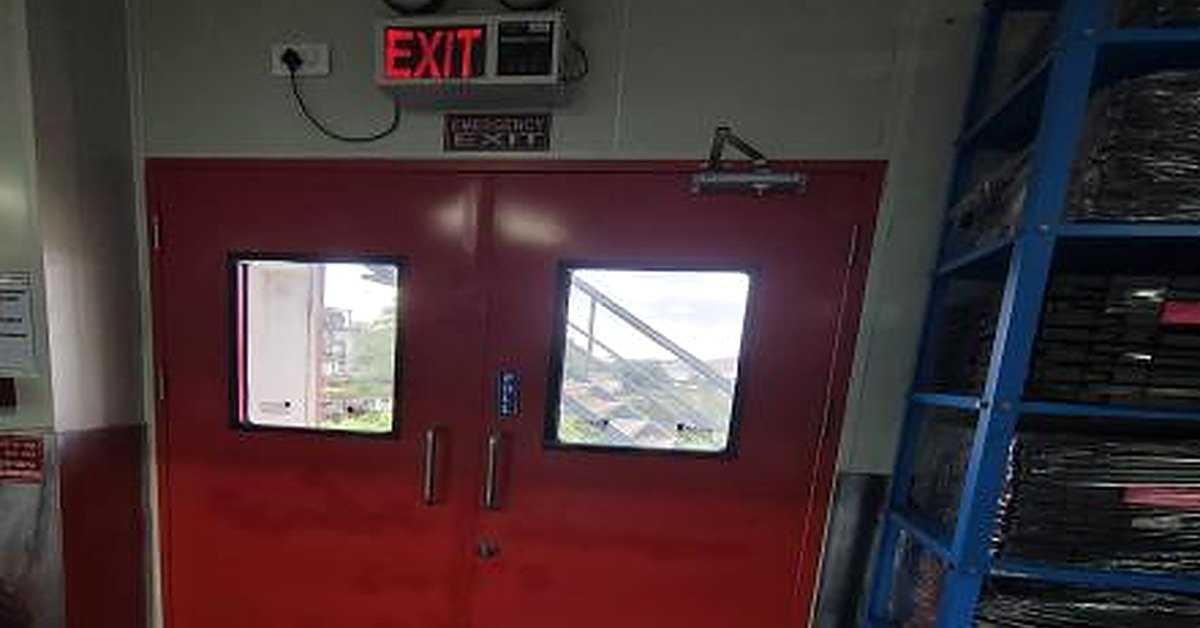
- Worker hostels: ensure fire exits, maximum capacity, and freedom of movement of workers.
- Hazardous substances: maintain MSDS at the point of use, segregation of stock and training of handlers.
- Grain/spice fumigation: maintain documents and controls by a licensed operator.
What will registration and the first audit cost?
Only the membership fee is set by Sedex.
| Cost component | What drives it | INR context |
|---|---|---|
| Supplier membership | Number of sites, billed per site per year in GBP | Sedex has listed this at £195 per site, around ₹20,000 to ₹25,000 at recent exchange rates. Confirm the live price on its supplier page. |
| Supplier Plus (optional) | Extra directory visibility and training discounts | Charged per site on top of standard membership; check Sedex for the current rate |
| SMETA audit | Headcount, 2- or 4-Pillar format, location, audit firm | Request at least two written quotations |
| Internal fixes and paperwork | Size of gaps in wages, fire safety and records | Small admin costs for minor gaps; capex for fire or structural work |
Typical timeline:
| Stage | Typical time | What changes it |
|---|---|---|
| Registration and payment | 1 to 3 days | Card limits and correct legal details |
| Buyer linking | 1 to 10 days | How quickly the buyer approves the request |
| SAQ completion | 1 to 3 weeks | Number of sites and quality of HR data |
| Audit, if required | 3 to 8 weeks after SAQ | Auditor availability and gap fixing |
Two recent changes worth knowing
Firstly, Sedex launched SMETA 7.0 on 10 September 2024, which replaces SMETA 6.1. Now, there is the Management System Assessment in all audits. Therefore, an auditor evaluates the effectiveness of your policies and practices in ensuring compliance over time rather than on the day of the audit.
Secondly, India’s Ministry of Labour and Employment implemented four labour codes on 21 November 2025, which consolidate 29 central labour laws. Central rules are now notified, whereas State rules continue to apply.
Do not get confused. These labour codes are the laws, which are enforced by the Government of India. Sedex membership and SMETA audit are voluntary tools used by buyers to assess your compliance with the above laws and the ETI Base Code. An Indian factory can be in compliance with the above laws, but still get findings from the audit. Read about the SMETA 7.0 changes for suppliers here.
Should you register now or wait for the buyer?
Register immediately if any of your current or prospective buyers have requested registration in Sedex, if you are supplying to UK/EU retail chains, or if the buyer has provided you with the ZC code.
There may be time to wait if the buyers accept any other system, for example, amfori BSCI, or if you only sell within your country without request.
Before making the payment, check with the buyer three things: what they want to link to, if an SAQ is sufficient, and the type of audit they would accept.
When outside help makes sense, and what to avoid
Most single-site exporters can register on their own. Help is useful when you run several units, rely heavily on contract labour or face an audit within weeks.
Questions to ask a consultant:
- Do you have Sedex profiles and SAQs established for my industry?
- Are you going to verify my SAQ responses from real documentation?
- Do you conduct simulated audits with interviews of employees?
- What does your price cover?
- Do you offer me a “Sedex certificate” or guaranteed outcome? If yes, go elsewhere.
Legal4sure helps manufacturers with this groundwork: setting up accounts correctly, checking SAQ answers against statutory records, and preparing sites before an audit firm visits. No one can guarantee a buyer’s decision or an audit outcome.
Key Takeaways
- The Sedex registration process results in a data sharing profile and is not a certification.
- Use the legal names and full site address details as given on official documents.
- The profile becomes useful only after the buyer accepts the link and SAQ is fully completed.
- Site membership fees are annual per site, but audit and rectification costs are usually higher.
- Both SMETA 7.0 and Indian labor laws encourage consistent record keeping over ad hoc corrections.
Conclusion
The process of sedex supplier registration – things that need to be done properly are all about precision and compliance. Correct legal information, one account, a valid connection and a completed SAQ. Manage all these points properly and auditing will become much easier.
Once the buyer sends you their Sedex code, our team can do an assessment on your system and records to make sure that your first submission is valid.
Simplify Your SEDEX Supplier Registration Process
Get expert support with SEDEX account setup, site registration, buyer linking, SAQ completion and documentation. Avoid common registration errors, resolve account issues and prepare your suppliers for SMETA audits.
Frequently Asked Questions
What is Sedex membership?
A yearly, per-site subscription where suppliers can share ethical sourcing information with their buyers via one platform.
What is a SMETA audit?
An audit method performed by third parties using Sedex methodology, the findings of which get uploaded on the platform.
Is Sedex a certification?
No. In case there is mention of “Sedem certificate” in an invoice or a proposal, you need to inquire about the exact document.
What does a SMETA audit assess?
Labour, health and safety, management systems, along with environment and business ethics being included in the 4-Pillar audit.
Is sedex supplier registration: steps and common issues in India any different?
The platform is the same, but you should ensure that GST, PF, ESI, and factory license details are available when filling out your profile.
What are the sedex supplier registration: steps and common issues requirements and documents, and the sedex supplier registration: steps and common issues process step by step?
Legal entity information, address of sites, number of employees, and then proceed with registration, payment, adding sites, linking the buyer and submitting the SAQ.
How to prepare for sedex supplier registration: steps and common issues if I have several units?
Map every unit and its legal owner first, so each site sits under the right company account from day one.