
Your UK/European purchaser has asked for a SMETA audit report, and you wonder what it includes before taking any actions. A brief answer would be that SMETA audit certification is an independent review of the way you work concerning labour, safety, environment and ethics, and its main advantage is the possibility to provide one audit report to several purchasers instead of auditing repeatedly for every single one.
SMETA means Sedex Members Ethical Trade Audit. It is a social audit created and maintained by Sedex, the Supplier Ethical Data Exchange, in order to verify if a supplier meets ethical business standards. The following guide provides information on the pillars of audit, the whole process of certification, the destination of the report and the points to clarify its validity.
This guide is mainly informational; it includes a checklist, a comparison table and the main features for decision making on the usefulness of the audit for your company.
What Is SMETA Audit Certification, Exactly?
SMETA audit certification is an independent review of a supplier’s adherence to the principles of ethical trading, conducted by Sedex. It is relevant for exporters and manufacturers operating with foreign customers, and it is not a license issued by any government body.
Short Answer: SMETA audit certification is a Sedex-administered ethical audit conducted by an authorized auditor on the basis of labor, health and safety, environmental and business ethics criteria.
A few things worth knowing upfront:
- Joining comes first. Membership in Sedex is required. The suppliers will join as an AB member (trading with other members of Sedex) or B member (only selling to Sedex registered buyers).
- The two formats are there. In the 2-pillar audit, it includes Labour and Health & Safety. However, in the SMETA 4-pillar audit, it includes Environment and Business Ethics. International buyers generally require the 4-pillar format.
- Indian suppliers are under pressure. The buyers from the UK, Europe and North America require a proof of ethical trade compliance and therefore the demand for SMETA audit in India is increasing in textile, garments, handicrafts, food and engineering industries.
- This is because many international retail chains take on board the supplier only if they have a SMETA audit report.
If you’d like to understand how the audit connects with membership and registration, our guide on Sedex certification breaks down the overlap.
Why International Buyers Prefer SMETA-Audited Suppliers
Buyers prefer suppliers with a SMETA audit report because it gives them independent proof of ethical practices before an order is placed.
1. It Lowers Risks for the Buyer
The audited body looks into your documents, talks to employees and management, and physically audits your facility. The buyer has an independent confirmation of how your facility really works without just trusting what you say.
2. It Enables the Buyer to Onboard You
Many international buyers will onboard you only based on your SMETA audit report. With the report, you clear one barrier during the onboarding process, which allows moving on to discuss price and delivery terms.
3. It Serves as a Timesaver for the Buyer
Once your buyer connects with you on Sedex, he will be able to see your audit report and the answers you provide to the SAQ questions. This will mean that there is no need for him to audit you independently, thus reducing back-and-forth paper exchanges.
4. It Makes Your Business Look Professional
Filling out the SAQ, preparing the documents, and holding confidential interviews with workers prove that your business is professional and open for auditing, which enhances your credibility and gives access to premium export markets.
The Core Benefits of SMETA Audit Certification
Here’s where the benefits actually show up, in practical terms.
One Report, Multiple Buyers
The SMETA audit report can be submitted to several buyers via the Sedex portal. This will save you from audit fatigue, as you no longer have to conduct a series of audits and fill out documentation for each one of them.
Reduced Number of Repeat Audits and Unexpected Issues
The SAQ, a voluntary gap analysis and the corrective action stage make sure that you can tackle issues in a systematic manner. The non-conformities are assessed on the criteria of Critical, Major or Minor non-conformities, allowing you to prioritize which ones need immediate attention. This significantly reduces stress in the corrective action stage.
Supply Chain Resilience
Now that you have gone through due diligence verification processes, you reduce the risk of supply chain disruptions caused by gaps in compliance. The orders will not get held up over missing documentation or questions from your buyers.
UK, European and North American Buyers’ Access
These buyers require proof of compliance with the standards of ethical trade. The SMETA report proves it and will open doors to top retailers and premium export markets.
Increased Buyer Confidence
A separate ethical trade audit is a source of credibility. As linked buyers will have access to your report on Sedex, your compliance becomes apparent to them without any additional efforts from you. This kind of trust usually promotes more durable collaboration.
Cost Savings in the Long Run
One audit report is accessible by an unlimited number of buyers, so there is no need to pay for several audits. The process itself shows internal inefficiencies, and compliance is a way to save money on supply chain disruptions.
A Competitive Edge in Vendor Onboarding
In case the retailer only onboards suppliers that provide SMETA reports, being in possession of such a report puts you ahead of those who haven’t started yet. You are always ready for requests for evidence.
SMETA Audit Certification Benefits: Quick Comparison
| Benefit | Supplier Without a SMETA Report | Supplier With a SMETA Report |
|---|---|---|
| Buyer onboarding | May be turned away by retailers that need a report | Meets the requirement of retailers that onboard only audited suppliers |
| Audit workload | Separate audits for each buyer | One report shared with multiple buyers on Sedex |
| Proof of ethical trade | Claims without independent evidence | Third-party report from an approved audit body |
| Internal gaps | Found only when a buyer or auditor raises them | Found early through the SAQ, gap assessment and CAPR |
| Supply chain continuity | Higher exposure to disruption | Already compliant with due diligence checks |
| Market access | Harder to reach premium export markets | Opens doors to premium export markets |
What Does It Take to Meet SMETA Audit Requirements?
Meeting SMETA requirements takes more than paperwork: the SMETA certification process runs from Sedex registration to a shared report, and auditors want evidence at every stage.
- SAQ – register your facility on the Sedex portal and fill out the Self-Assessment Questionnaire regarding labor, health and safety, environment and business ethics.
- Link request and audit body – your buyer provides a link request on Sedex, while Bureau Veritas, SGS, Intertek, and ELEVATE conduct the audit as an approved body.
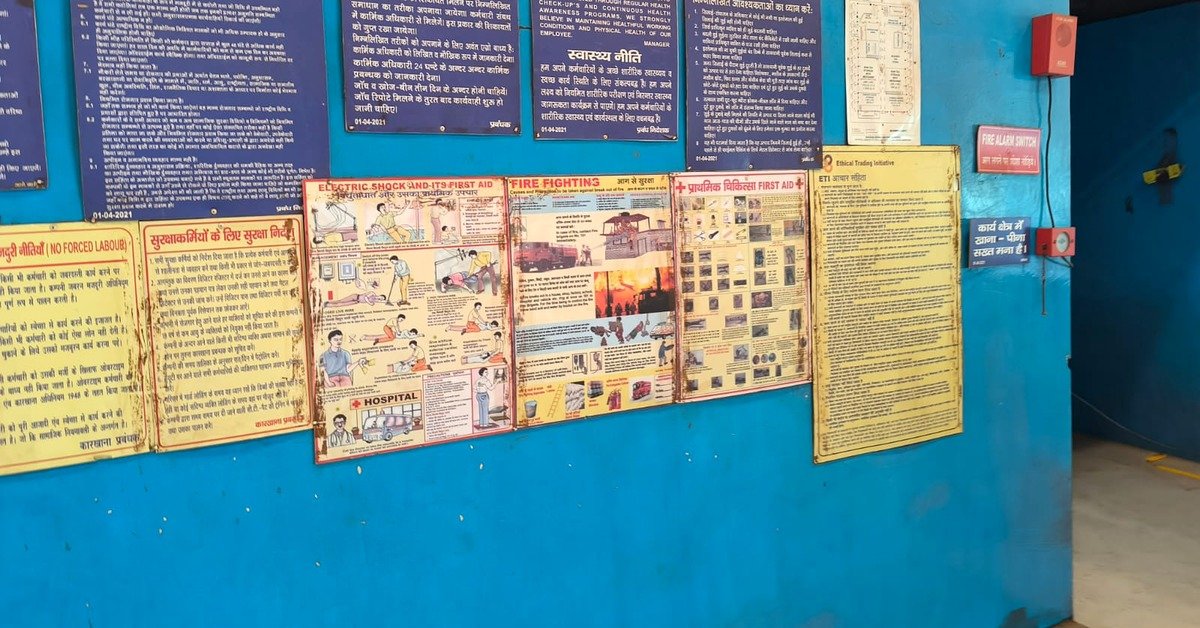
- Labor and safety information – contracts of all employees, payslips that correspond to the state minimum wage, timesheets (up to 60 hours a week), proof of age, valid factory license, fire drill logs, first aid boxes, machine guarding and evacuation procedures.
- Environment and ethics information – Pollution Control Board permit, effluent treatment plant logs, hazardous waste logs, energy and water usage, anti-bribery policy, supplier code of conduct and a grievance mechanism.
- Audit preparation on-site – the audit will take one-two days and will include document check, confidential employee interviews, management interviews and facility inspection.
- Corrective actions and audit report – the auditor provides a Corrective Action Plan Report (CAPR) with Critical, Major and Minor non-conformities, and the final SMETA audit report is available on Sedex after resolution of all issues.
Common Mistakes Indian Exporters Make When Pursuing SMETA Audit Certification
- Preparing the documents at the last moment. Wage registers, attendance logs, contracts, fire drill logs, environmental licenses and waste disposal logs have to be prepared in advance since this is where most suppliers get it wrong.
- Not performing a gap assessment. It is advisable to do a gap assessment prior to an audit since this gives you an indication on what needs to be improved before it’s too late. Even a brief assessment of wage records, safety records and licenses will indicate gaps.
- Trying to affect the worker interviews. The workers are interviewed confidentially and this process cannot be influenced, therefore concentrate on improving practices.
- Downplaying the issue of child labor and forced labor. In case of any occurrence, this will fail your audit, therefore ensure that you keep your age verification documents and contract records up to date.
- Taking the CAPR for granted. Issues raised must be solved in a given period of time and your audit report will only be made available to buyers once all the issues are sorted out.
When SMETA Audit Certification Makes the Most Sense
- Buyer located in the UK, Europe, and North America requires you to provide a SMETA audit report prior to onboarding.
- You have multiple buyers, but you need just one consolidated report and not multiple audits.
- Your company exports either textiles, clothing, handicrafts, food, or engineering goods to retail companies worldwide.
- You want to establish yourself in premium markets and require proof of ethical trading compliance.
- You seek a systematic approach to identify inefficiencies within labour, safety, environmental, and ethics management areas.
It matters less if you sell only in the domestic market or no buyer has asked for ethical trade evidence yet, but preparing your documents and SAQ early is still worthwhile so you are ready when a buyer does ask.
Key Takeaways
- SMETA certification audit is a third-party ethical trade audit conducted via Sedex; it is not a governmental license.
- The SMETA 4-pillar audit encompasses labor standards, health and safety, environmental, and business ethics issues.
- The procedure starts with the Sedex membership and SAQ, then goes through an approved audit body, site visit, CAPR, and Sedex reporting.
- If child labor or forced labor is involved, then the audit will be unsuccessful, and all nonconformities must be resolved within a certain time period.
- An SMETA audit report can be shared with several buyers at once, and its validity must be verified with your buyer and audit body.
Conclusion
SMETA audit certification helps Indian suppliers get one audit report, greater access to UK, Europe, and North America buyers, and also provides them a chance to avoid multiple audits. As more and more global retail companies have started signing up only those suppliers who have an audit report, it has become a mandatory thing for ethical trading. Connect with Legal4Sure for preparing yourself for Sedex audit and registration.
Get SMETA Audit Ready and Build Trust with Global Buyers
Preparing for a SMETA audit? Legal4Sure helps Indian manufacturers and exporters with Sedex registration, SAQ documentation, compliance gap analysis, 2-pillar and 4-pillar SMETA audit preparation, and corrective action support. Simplify your audit process, strengthen ethical compliance and get ready to work with international buyers.
Frequently Asked Questions
What are the main benefits of SMETA audit certification?
Independent verification of ethical trade compliance, access to international buyers, and a single report which can be shared across several buyers. Also, it helps identify internal inefficiencies.
How does a SMETA audit help Indian suppliers?
Ethical trade credentials are becoming increasingly important for buyers in the UK, Europe, and North America. This makes SMETA audit in India important to board exporters onto retailers and premium export markets.
Why do buyers prefer suppliers with a SMETA audit report?
This report is independent evidence issued by an approved audit body and accessible to linked buyers through Sedex without undergoing an audit themselves.
Is SMETA audit certification mandatory for exporters in India?
No. But most international retailers board only those suppliers who present SMETA audit reports and hence buyers may make it mandatory.
Can a company hold SMETA audit certification directly, and how long is the report valid?
A supplier gets registered on Sedex and is audited by an approved body and then the report is shared with linked buyers. Clarify the validity of this report from your buyer and audit body.
How is the SMETA audit different from Sedex membership?
Sedex is the platform where you register, complete the SAQ and share results. The SMETA audit is the ethical trade audit itself, done by an approved body, in a 2-pillar or SMETA 4-pillar format.
Does a SMETA audit reduce costs?
Yes, over time. One report can be shared with an unlimited number of buyers, which avoids multiple audits, and the process helps you spot inefficiencies and avoid disruptions.