
Today, in the face of a highly competitive global clothing manufacturing industry, ethical production practices are not a luxury but a necessity. One of the best-known compliance programs used by manufacturers around the world is WRAP, or Worldwide Responsible Accredited Production. Regardless of whether it is your first time undergoing a WRAP audit or if you wish to improve your current compliance processes, the following guidelines will surely prove useful.
This list features 8 WRAP audit strategies, tested and proven effective for factory expansion in a safe and efficient manner, as well as compliance with the needs of a WRAP audit, buyers, and foreign markets.
Strategy 1: Build a Robust Wrap Audit Internal Checklist Before the Audit Begins
The most prevalent cause why factories have difficulty with their WRAP audits is because they lack preparation. Among the many things factories can do, one of the most important steps is to create an internal WRAP audit checklist for the on process.
This internal checklist must consider all 12 WRAP Principles, such as compliance with the law, prohibition of forced labor, child labor policy, occupational safety, freedom of association, and best practices for environmental care. By using the internal WRAP audit checklist, factory management will be able to determine areas that need improvement weeks or even months before conducting the actual WRAP audit.
An organized WRAP audit checklist for garment factories should have documentation needs per section, responsibilities per department, and deadline goals. This will ensure that your factory will not have any difficulty performing in the actual WRAP certification audit.
Strategy 2: Align All Documentation with Wrap Audit Requirements
Among the most essential criteria for conducting a WRAP audit is the maintenance of accurate and well-organized records. The auditor will inspect various types of records, including payrolls, working hours, fire safety inspection reports, and chemical usage records.
For successful WRAP audits, it is vital for all departments in a company, including Human Resources, production, safety, and compliance, to keep consistent records. These include:
- Employment contracts and proof of age
- Payroll reports proving the payment of the minimum wage
- Health and safety training records
- Environmental compliance certifications
- Building safety and fire drills records
A factory that views record keeping as an everyday task rather than a last-minute preparation exercise before a WRAP audit is bound to pass all WRAP audit requirements with ease.
>Helpful Guide:- What is WRAP? WRAP Full Form, Meaning & Importance in Global Business
Strategy 3: Conduct Regular Mock Wrap Audits to Identify Gaps
How to get past the WRAP certification audit with flying colors the first time? The answer is simple: Practice. By conducting mock audits, factories prepare themselves for the real audit by replicating the WRAP audit environment and allowing managers and supervisors to answer auditor queries and present evidence.
It is recommended that a mock WRAP audit be conducted twice each year: once before the actual audit and once midway through to detect compliance drift. Conducting a mock WRAP audit involves:
- Testing all departments on their understanding of WRAP audit procedures
- Checking for any missing or obsolete records
- Conducting worker interviews (which form an integral part of the actual audit process)
- Assessing how supervisors handle compliance queries
Facilities that regularly conduct mock WRAP audits enjoy higher first-time pass rates and easier certification renewals.
Strategy 4: Invest in Employee Training Aligned with Wrap Audit Guidelines
The workforce is often the first thing that comes into view during a WRAP audit. It is common practice for auditors to do confidential interviews with the workers to determine whether the workplace practices at the factory are in accordance with the information available in documentation. The fact that the workers are unaware of their rights, lack knowledge about the grievance system, and cannot confirm safety practices, even if the documentation shows perfect scores, is a cause for concern.
For WRAP audit compliance, the following types of training must occur:
- Rights and responsibilities according to WRAP standards
- Grievance system and anti-harassment policies
- Evacuation plans and fire safety practices
- Use of personal protective equipment (PPE)
Training records must be maintained by companies and should be modified to reflect any changes in the requirements of a WRAP audit. Factories located in India and other big exporting nations benefit from incorporating training in their induction process.
Strategy 5: Understand the Cost of Wrap Audit Certification and Plan Accordingly
Most factory owners put off getting WRAP certification due to confusion regarding the costs. In India, the cost of WRAPping audit certification generally varies between INR 1.5 lakh and INR 4 lakh, depending upon various parameters like factory size, number of days of auditing and requirement of consultancy before the audit process. Cost of audit includes WRAP application charges, third party audit charges, and related consultancy charges if any.
Dividing these costs over an entire year will make it easier on factory budgets, especially compared to the advantages offered by WRAP audits in export orders. Certified factories get access to better buyers, negotiate better prices, and avoid costly audits from buyers’ side.
Start planning your budget towards WRAP certification in the beginning of the financial year.
Strategy 6: Use Technology to Track Wrap Audit Compliance Requirements Year-Round
Safe scaling requires that you cannot possibly keep track of the compliance of the WRAP audit manually across shifts, departments, and locations. It is safe to say that technology from compliance management software to online document management will help you become more compliant throughout the year.
Digitization allows factories to:
- Check expiration dates of their safety certificates and get renewed ahead of time
- Keep track of working hours and overtime work in real-time to avoid any violations
- Automatically generate compliance reports based on categories in the WRAP audit checklists
- Retrieve documents instantly when auditing
Factories which are dealing with the compliance of their WRAP audit requirements in multiple production plants and partner factories need to consider digitization as a non-negotiable step.
Strategy 7: Leverage the Benefits of Wrap Audit for Export Contracts
Getting certified by WRAP offers numerous advantages. Large international buyers, especially those from the US, European Union, and Australia, now prefer working with WRAP-certified factories before forming any supply agreements. This indicates that you have met international standards concerning ethics and workplace safety.
Some advantages of getting a WRAP audit when seeking export orders are:
- Becoming an approved vendor for top clothing brands around the world
- Less frequent social audits conducted by the buyers
- Quick integration into the buyer’s business operations
- Enhanced brand image among international buyers
- Eligibility for government subsidies when exporting products to other nations
Factories that prominently highlight their WRAP certification in all their sales and marketing campaigns tend to secure more export orders.
Strategy 8: Create a Continuous Improvement Culture Around Wrap Audit Compliance
Those with the highest levels of operational maturity do not see a WRAP audit as a final endpoint; instead, they regard it as a never-ending process. The conditions required to be in compliance with a WRAP audit change, and buyers’ expectations and labor laws can get updated. As such, a company with a culture of continuous improvement will always be better prepared compared to one that just prepares for the WRAP audit itself.
Continuous improvement of compliance with respect to WRAP audits would involve:
- Conducting monthly internal reviews on compliance with all the departments
- Ensuring employees have open reporting channels for raising issues without being penalized
- An annual review of the policies, taking into account any updates made to the guidelines of the WRAP audit
- Benchmarking with competitors in the industry
- Celebrating compliance successes and rewarding good performance
Compliance that is embedded within the corporate culture will make scaling much easier, safer, and sustainable.
What Documents Are Required for Wrap Audit
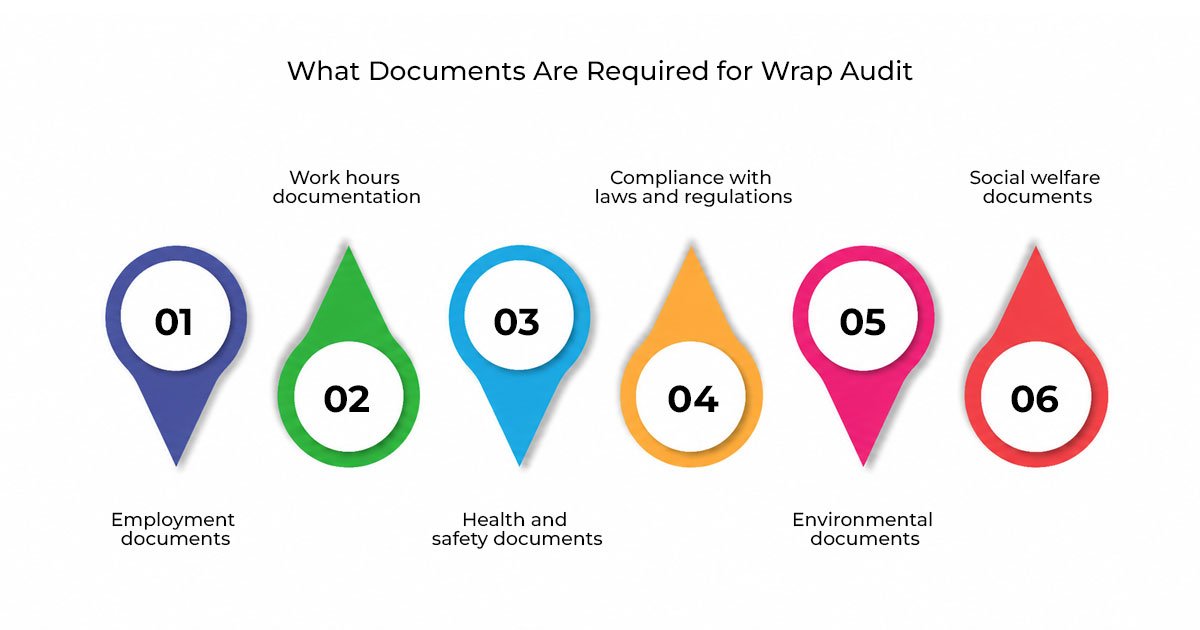
It is important to know which documents are needed for WRAP audit if you are applying for WRAP certification for the first time. The list of required documents for the WRAP audit includes:
- Employment documents: Employment contracts, age verification, salary, and benefits documents
- Work hours documentation: Documents confirming the compliance with labor law restrictions on working hours
- Health and safety documents: Fire drills, personal protective equipment, first aid, and machine maintenance
- Compliance with laws and regulations: Business license, tax registration, and local labor law compliance documents
- Environmental documents: Documents on waste management, chemicals used in production processes, and environmental management certificates
- Social welfare documents: Documentation of the employee grievance process and antiharassment policy
Preparation of such document groups prior to the WRAP certification audit can help you greatly relieve stress during the audit process.
Key Takeaways
- A comprehensive WRAP internal audit checklist is key to a successful WRAP certification audit.
- Proper documentation can greatly enhance your audit performance.
- WRAP certification will provide you with international export deals.
- Companies that train their employees on WRAP will have much better chances of passing audit examinations.
- Conformity to WRAP audit is continuous.
Frequently Asked Questions
Why is WRAP certification important for garment factories?
WRAP certification gives garment factories global credibility by demonstrating compliance with ethical manufacturing standards, which many international buyers now require before approving suppliers.
What documents are required for WRAP audit?
Documents required for a WRAP audit include employee contracts, wage records, attendance and working hour registers, health and safety training reports, environmental compliance records, and grievance handling procedures.
How much does WRAP certification cost in India?
The cost of WRAP certification in India generally ranges between ₹1.5 lakh and ₹4 lakh depending on factory size, audit scope, and consultancy support requirements.
Is WRAP audit mandatory for garment exports?
WRAP audit is not legally mandatory for garment exports, but many international brands and retailers require it as part of their supplier approval and compliance process.
What is a WRAP audit checklist for garment factories?
A WRAP audit checklist covers compliance with all 12 WRAP principles, including labor practices, workplace safety, environmental standards, legal compliance, wages, working hours, and ethical business conduct.
How to pass WRAP audit on the first attempt?
To pass a WRAP audit on the first attempt, factories should conduct internal mock audits, maintain updated compliance documentation, train employees properly, and correct any compliance gaps before the official audit.
What are the benefits of WRAP audit for export contracts?
WRAP audit benefits include becoming a preferred supplier for international brands, reducing repeated buyer audits, speeding up client onboarding, and improving access to premium export markets.