
By 2026, things have changed dramatically in the realm of food safety audits. With the introduction of the mandate for implementing FSSC 22000 Version 6, food companies now have to operate under increased scrutiny than any other time before.
The game is not anymore about passing site inspections. The focus is rather placed on ensuring that a company is able to demonstrate its commitment to a deeply established Food Safety and Quality Culture while dealing with new criteria, such as Food Loss and Waste and Equipment Management. Regardless whether it is about preparing for the first internal audit for the year or getting ready for an unannounced surveillance audit, a localized checklist will prove invaluable.
This paper presents a step-by-step guide to a 2026 FSSC 22000 Audit Checklist specific to the food industry and designed to help your company progress from being simply compliant to audit-ready.
Understanding FSSC 22000 Certification
FSSC 22000 is a certification program recognized by GFSI (Global Food Safety Initiative). This program is derived from the currently available ISO 22000 system and comprises extra criteria to meet the demands of international buyers/manufacturers.
This certification can be considered as a packaged product consisting of the following three components:
- ISO 22000: Basic structure for managing food safety.
- Sector Specific PRPs: Pre-Requisite Programmes (like ISO/TS 22002-1 for food production) emphasizing the hygiene and environmental aspects of the organization.
- Specific Requirements: Special regulations developed by the FSSC Foundation related to food fraud mitigation, food defense, and allergen control.
>Helpful Guide:- Think You Don’t Need FSSC 22000? Think Again
What is the Purpose of FSSC 22000 Certification
The aims of the FSSC are to provide a reliable and scientifically sound food safety certification program that can be independently verified. The aims of the FSSC are:
- Harmonizing food safety management systems across the entire supply chain.
- Preventing duplication of audits from purchasers and retailers.
- Incorporating food fraud and food defense into the FSMS.
What are the Benefits of FSSC 22000 Certification
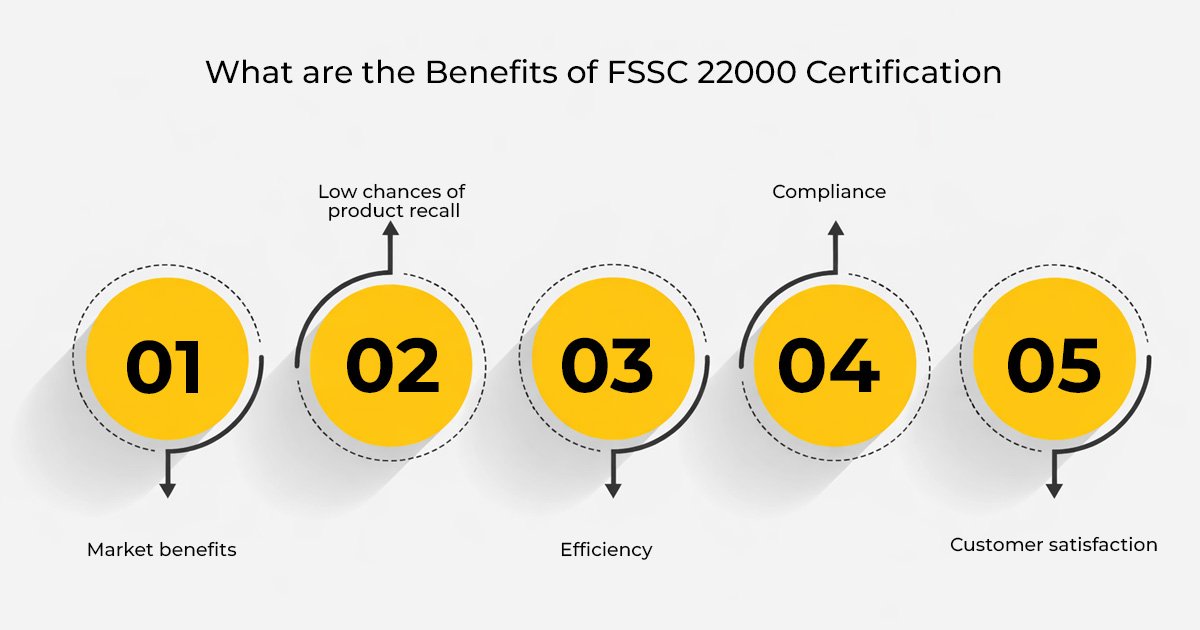
Some of the practical benefits that the food manufacturers in India seeking FSSC 22000 certification may realize include:
- Market benefits: This certification helps enter new markets since foreign buyers need certification.
- Low chances of product recall: The comprehensive FSMS system reduces the probability of contamination and product recall.
- Efficiency: Effective processes and regular audit procedures minimize redundancy and wastage.
- Compliance: FSSC 22000 certification is compatible with Indian FSSAI certification and standards.
- Customer satisfaction: It builds a strong brand image in the premium market both in India and globally.
>Helpful Guide:- FSSC 22000 Certification Documents Required: Complete Checklist for Food Businesses in India (2026)
What is the FSSC Audit Process in India
Three major stages can be identified in the process of FSSC audit and are conducted by an accredited body for certification to FSSC standard:
- Stage 1 Audit (Document Review)
Stage 1 includes a document review where the auditor will examine all your food safety management systems, your food safety policy, the risk assessment, your HACCP plan and your PRPs as well as compliance with legal requirements. Here the auditor ensures you have a sound enough system that will allow you to progress to the next stage.
- Stage 2 Audit (Site Inspection)
The second stage involves the inspection of all the procedures that were covered at Stage 1 on your shop floor. It includes inspecting your manufacturing facilities, interviewing people, checking your records and tracking your products in the supply chain. Any non-conformities discovered at this stage need to be rectified before certification.
- Surveillance Audits
Surveillance audits occur annually starting from your first certification. But after three years recertification takes place. That’s why it is necessary to keep updated your audit checklist for FSSC 22000 throughout the whole year.
FSSC 22000 Audit Checklist: Complete Preparation Guide
The below checklist is for you to take action on while doing your FSSC audit, especially for food manufacturers in India who will be undergoing their audits in the year 2026.
Step 1: Assemble Your Food Safety Team
The first step requires having a qualified Food Safety Team Leader who will assemble a multi-disciplinary food safety team made up of personnel from various departments such as production, quality control, hygiene, procurement, and logistics. Their functions and skills need to be recorded. Ensure that your food safety team leader is competent in FSSC 22000 food safety practices.
Step 2: Assess Your Food Safety Policy
Your food safety policy should be current, approved by your company’s management, and communicated to all organizational personnel. It should comply with the FSSC 22000 version 6 standards.
Step 3: Verify your hazard analysis and HACCP plan
Perform or re-validate your hazard analysis in order to consider biological, chemical, physical, and radiological hazards. Make sure all your CCPs have identified critical limits, monitoring requirements, corrective actions, and verification processes. In India, auditors in 2026 will be particularly looking into allergen CCPs and mycotoxin control for grains.
Step 4: Audit your prerequisite programs (PRPs)
PRPs represent the hygiene and operations basis of your Food Safety Management System (FSMS). PRPs FSSC checklist india must address:
- Infrastructure, including facilities maintenance (pests, drainage, lighting).
- Procedures on cleaning and disinfection that are validated.
- Guidelines for personal hygiene and staff medical checks.
- Supplier and raw material specifications.
- Allergen control and prevention of cross-contamination.
- Water quality testing and drinking water.
- Disposal, sanitation, and foreign bodies prevention measures.
Step 5: Check FSSC 22000 Additional Requirements
Besides ISO 22000, FSSC 22000 version 6 has some extra requirements. You need to check that your organization meets the following requirements:
- Food fraud vulnerability assessment and mitigation strategy.
- Food defense threat assessment.
- Allergen control program.
- Environmental monitoring program.
- Food safety culture activities and measurement of its effectiveness.
- Services and material purchases management.
Step 6: Perform Internal Audits on All Clause
Utilize your FSSC 22000 audit checklist to perform an audit for each clause of ISO 22000:2018 and additional clauses from FSSC 22000. The internal auditors have to undergo training, be independent, and competent enough to identify nonconformities. Record the results and define corrective measures with due dates.
If you work in India, do not overlook the traceability system. Auditors often test traceability by conducting the trace-back and trace-forward test during the stage 2 audit.
Step 7: Verify Management System Documentation
Make sure that the following documents have been updated, versioned, and made available:
- Food Safety Manual or similar document.
- HACCP study and associated documentation.
- PRP procedures and validation information.
- Calibration records for all monitoring instruments.
- Customer complaints and trend analysis.
- Minutes of Management Reviews within last year.
- Audit reports and corrective actions.
Step 8: Get Your Team Ready for the Audit
Conduct simulated audits or exercise where auditors will quiz your team. Teach production personnel to explain how they support the organization’s FSMS. Make sure that all employees, whether contractual or casual laborers, are familiar with basic hygiene practices for foods.
One of the most frequent non-conformities observed in Indian audits involves front-line staff unable to define control measures and corrective actions associated with their CCPs.
Step 9: Ensure Legal and Regulatory Compliance
When you are preparing your FSSC audit preparation guide india, ensure your company complies with legal requirements. Verify whether your FSSAI licence is valid, whether your products adhere to FSSAI guidelines, and that you have conducted the necessary food safety tests. The auditors will verify if your FSMS considers both Indian and international food laws.
Step 10: Resolve Corrective Actions Prior to the Audit
Any open nonconformity identified during past internal audits, supplier audits, and customer feedback must be resolved prior to conducting the stage 2 audit. The auditors will assess the corrective actions implemented and the effectiveness thereof. CAPA (Corrective and Preventive Action) is usually a major reason for nonconformity during certification audits in India.
>Helpful Guide:- Most Common Non-Conformities Found in FSSC 22000 V6 Audits
Common Gaps in the FSSC 22000 Audit Checklist Found in Indian Companies
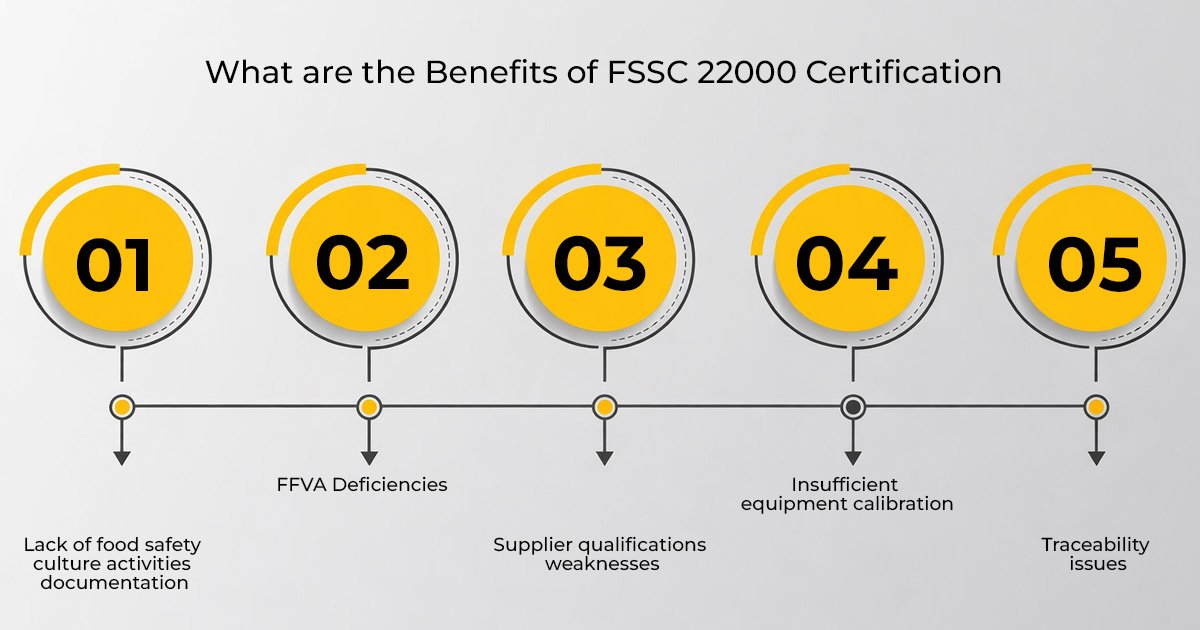
Based on audit results from the Indian food industry, the most common weaknesses identified are as follows:
- Lack of food safety culture activities documentation: Several organizations do not provide any proof that demonstrates activities related to assessing and developing their food safety culture.
- FFVA deficiencies: There is no systematic approach for conducting a FFVA, nor does it consider all ingredients and production processes.
- Supplier qualifications weaknesses: Qualified suppliers’ list is outdated, and supplier inspections are not performed according to specified intervals.
- Insufficient equipment calibration: Temperature measuring devices, balances, and pH sensors at critical control points are not calibrated or do not hold valid calibration certificates.
- Traceability issues: An organization is unable to conduct a traceability assessment within four hours.
>Helpful Guide:- FSSC 22000 Certification Cost In India: Complete Process
Key Takeaways
- The FSSC 22000 audit checklist will help you address compliance gaps before conducting the certification audit.
- FSSC certification meaning is important as it enables food organizations to establish a cultural mindset that aligns with food safety objectives.
- It is vital to know how an organization should conduct a food safety management system based on the FSSC checklist india standards.
- The FSSC 22000 certification process entails an approach that minimizes non-conformances and accelerates the audit process considerably.
- Conducting internal audits according to a detailed FSSC audit guide guarantees your organization’s FSSC 22000 certification validity.
>Top Trending Guide:- BRC Full Form: All 3 Meanings Explained – Food, Export and Education (2026 Guide)
Frequently Asked Questions
What are the FSSC 22000 audit checklist and requirements India food companies must follow?
The FSSC 22000 audit checklist and requirements India include ISO 22000:2018 compliance, the appropriate ISO/TS 22002 PRP guideline, additional requirements from FSSC, and any FSSAI regulation. Companies need to ensure that all FSMS requirements have been documented and effectively implemented in practice.
How to prepare for FSSC audit food companies in India should start with what?
When it comes to preparing for FSSC audit food firms need to start off by carrying out a gap analysis relative to FSSC 22000 Version 6, develop a plan for correction measures, and subsequently schedule their Stage 1 audit with an authorized party.
Where can I find a reliable FSSC audit preparation guide India businesses can use?
An authentic FSSC audit preparation guide India would be one that provides detailed clause-by-clause audit checklists, PRP verification worksheets, and HACCP validation documents based on FSSC 22000 Version 6 and FSSAI requirements.
What is FSSC certification meaning for an Indian food exporter?
It is GFSI-approved confirmation that your food safety program complies with international requirements, which allows you to get on board as a preferred supplier for the world’s biggest retail chains and food producers.
What are the key FSSC benefits for small and medium food manufacturers in India?
The most important FSSC advantages are increased market access opportunities, less frequent inspections by buyers, enhanced reputation, and internal process control that decreases the risk of food safety problems.
What is the FSSC purpose and why was the standard created?
FSSC meaning is a globally recognized and validated food safety certification system that eliminates the necessity for duplication of food safety audits and improves the level of food safety management around the world.
How often should the FSSC 22000 audit checklist be reviewed and updated?
Your FSSC 22000 audit checklist needs to be revised annually, but even more frequently if your product range, processes, ingredients used, or related food safety regulations change.