
The food industry in India is witnessing major changes. Due to increased consumer consciousness, stringent regulations, and desire for exporting their products globally, all food-related businesses are being asked to show their commitment towards food safety. In such an environment, FSSC 22000 certification has become one of the most credible and widely recognized ways of managing a food safety system.
Whether you run a small business, a medium enterprise or a giant food brand, it will be extremely helpful for your organization if you understand the importance of FSSC 22000 certification.
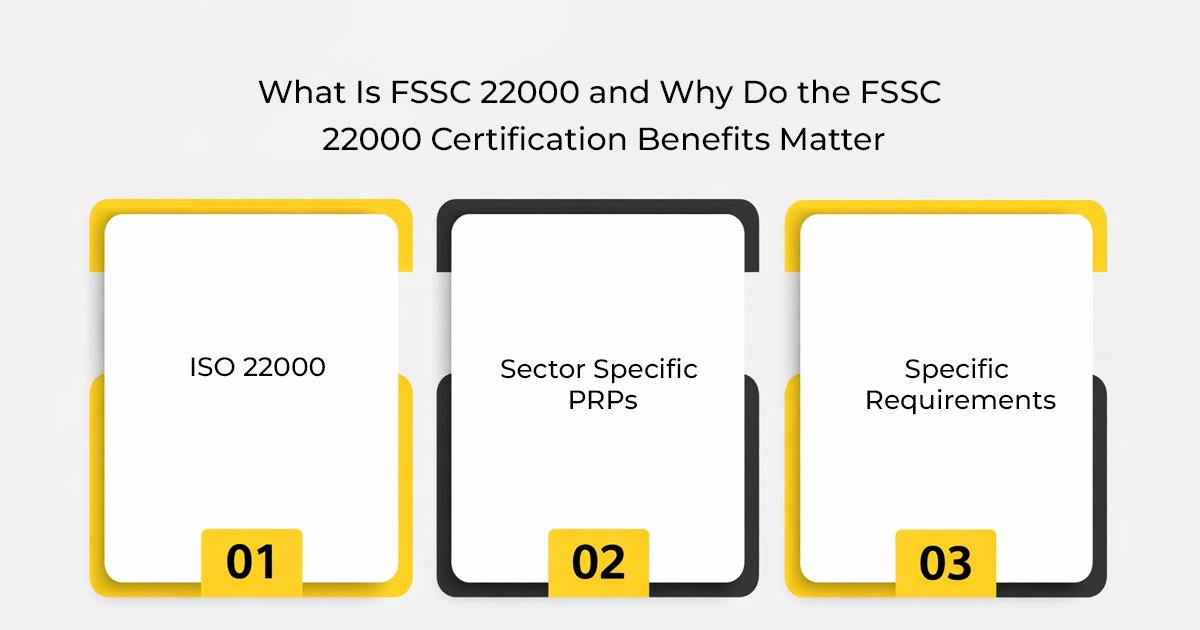
What Is FSSC 22000 and Why Do the FSSC 22000 Certification Benefits Matter
FSSC 22000 is a certification program recognized by GFSI (Global Food Safety Initiative). This program is derived from the currently available ISO 22000 system and comprises extra criteria to meet the demands of international buyers/manufacturers.
This certification can be considered as a packaged product consisting of the following three components:
- ISO 22000: Basic structure for managing food safety.
- Sector Specific PRPs: Pre-Requisite Programmes (like ISO/TS 22002-1 for food production) emphasizing the hygiene and environmental aspects of the organization.
- Specific Requirements: Special regulations developed by the FSSC Foundation related to food fraud mitigation, food defense, and allergen control.
>Helpful Guide:- Think You Don’t Need FSSC 22000? Think Again
Top FSSC 22000 Certification Benefits for Food Businesses in India
- Global Market Access – A Core FSSC 22000 Certification Benefit
One of the most convincing advantages of FSSC certification is that it provides unlimited entry into the world markets. Big retail organizations such as Walmart, Tesco, Carrefour, and Metro Group require GFSI-certified standards from their vendors. FSSC 22000 meets all these requirements.
The importance of this advantage cannot be overemphasized for Indian exporters. Some of the advantages of FSSC 22000 certification for Indian food industries include gaining access to premium market destinations in Europe, America, the Middle East, and Southeast Asia without needing separate audits from each new buyer.
- FSSC Certification Advantages for Exporters in India
There has been a steady increase in India’s food exports, but getting into premium markets generally demands food safety system certifications. The benefits of using FSSC certification for exporters in India include low trade rejects, easy customs clearance in controlled markets, and the necessary credibility to bargain with foreign buyers.
Indian food manufacturers exporting spices, processed foods, seafood products, and packaged foods have found that adopting the FSSC 22000 standard helps in their growth plans. This means that Indian firms are able to conduct business on a world-class level in the international market.
- Strengthened Food Safety Culture
One of the longest-lasting advantages of FSSC 22000 certification is the change in culture that results in the organization. For an organization to become certified in its operations, all employees from the lowest-ranking worker to the top executive need to be aware of their role in food safety and practice it.
The effect of changing the culture in this way ensures that mistakes made by people are minimized, hygiene levels increase, and there is a focus on the prevention of food safety challenges.
- Regulatory Compliance and Reduced Legal Risk
Food regulation is becoming more stringent in India. The Food Safety and Standards Authority of India (FSSAI) keeps increasing the standards expected from food manufacturers and other businesses involved in processing. This means that FSSC 22000 is almost similar to FSSAI guidelines and even Codex guidelines.
That is why it is important for people managing food businesses in India to have some information on why FSSC certification is important. This is because having the certification means having documentation showing that your food business has a good food safety management system in place.
- Consumer Trust and Brand Reputation
Contemporary consumers have grown to be more aware of the origin of their products and the manner in which the products are handled. The inclusion of FSSC 22000 certification on packaging and advertisements is a very effective way of building trust. It shows that the business has undergone an independent audit process to ensure that it meets international standards of food safety.
This has direct implications for consumer choice, brand loyalty, and high-value pricing. The FSSC food certification logo has grown to become a symbol of quality that consumers from India and all over the world look out for.
- Operational Efficiency and Reduced Waste
One less explored but very useful benefit of FSSC 22000 certification is the efficiency gains made from its application. It forces firms to examine the processes involved and make changes where necessary.
As a result, less waste will be generated, fewer products will need to be recalled, less work will require redoing, and resources will be used more efficiently. Ultimately, the expenses associated with certification will pay for themselves and even more.
- Competitive Advantage in a Crowded Market
As a product differentiation tool in an environment where differentiation is becoming increasingly challenging, FSSC 22000 certification gives a significant competitive advantage. In bidding for retail shelf placement, public procurement, and corporate contract competitions, certified companies always beat their un-certified rivals.
It’s more important to highlight the FSSC significance in competitive bidding, where food safety certification has become a mandatory requirement in qualification. Un-certified firms are automatically disqualified, irrespective of the price and other considerations.
>Helpful Guide:- FSSC 22000 Certification Documents Required: Complete Checklist for Food Businesses in India (2026)
Is FSSC Certification Required for the Food Industry?
Although FSSC 22000 is not mandatory in India through legislation, it is gradually becoming compulsory due to market practices. Large retailers, quick service restaurant chains, and institutional customers are increasingly demanding certification for their suppliers. Export-oriented companies have the greatest external pressure, because most destination countries take FSSC certification as the minimum requirement.
In essence, the question of whether FSSC makes it compulsory for businesses in the food industry to be certified should not be asked in terms of legislative compulsion, but rather from the perspective of practical business concerns. Companies which delay FSSC certification will find themselves at a disadvantage in the market due to growing market demands.
In India, Food Safety and Standards Authority’s (FSSAI) requirements for the implementation of FSMS have much in common with FSSC 22000. For those organizations that are working on achieving high levels of FSSAI compliance, it would be easier to move toward FSSC 22000 certification.
FSSC 22000 Certification Benefits Across Different Food Sectors
FSSC 22000 certification advantages can be applied to an unusually broad spectrum of food industry sectors, such as:
- Food producers and processors – ranging from dairy, beverages, confectionery, meat, to seafood
- Agro-products handling and packaging services
- Animal feed and pet food producers
- Packaging and packaging materials manufacturers
- Food storage and distribution companies
- Food catering companies
All these sectors require different pre-requisite programs (PRPs) according to the FSSC 22000 standard, which makes this certification highly versatile and applicable for all types of food industry businesses. High versatility is what people mention among the most important FSSC advantages.
>Helpful Guide:- Most Common Non-Conformities Found in FSSC 22000 V6 Audits
How to Get Started with FSSC 22000 Certification Benefits in Your Business
The road to obtaining FSSC 22000 certification begins with performing a gap analysis. In simple terms, the gap analysis is a process of comparing your present food safety management system with the FSSC 22000 standard. You will be able to determine where you have strong points and what you need to work on.
After conducting a gap analysis, most organizations proceed with:
- Establishing and documenting their food safety management system
- Taking their employees through training sessions on the requirements of FSSC 22000
- Implementing prerequisite programs and applying the principles of HACCP
- Conducting internal audits to confirm the efficiency of the system
- Picking out a FSSC approved certification body for auditing
It takes anywhere between six and eighteen months to complete the process from start to finish. The exact time varies according to the size of your organization and how ready you are. It helps if you consult a professional food safety consultant who understands the rules in India.
The Future of FSSC 22000 Certification Benefits in India’s Food Industry
India’s food business industry is currently experiencing a shift that is indicative of greater changes ahead. In the wake of governmental policies advocating increased exports of food items, rising consumer sophistication within India, and stringent regulations, there is no doubt that a culture of high-quality food standards will be on the horizon.
This is because FSSC 22000 v.6, the latest version of the standard, features new specifications concerning prevention of food fraud, food defense, and environmental monitoring, aspects that have become increasingly critical to food companies across the globe. Companies who decide to certify their food products under the new FSSC standards will be making sure that they are future-proof.
It seems that the FSSC food certification market in India is thriving at a rapid pace, with certification bodies, auditors, and other relevant organizations increasing by the day. Market leaders are reaping the rewards from early FSSC 22000 certifications.
>Helpful Guide:- FSSC 22000 Certification Cost In India: Complete Process
Key Takeaways
- FSSC 22000 Certification leads to opportunities in foreign markets and high-end retail outlets requiring internationally accepted standards of food safety.
- Certified organizations benefit from less product recalls, fewer food safety issues, and lesser overall risk.
- Advantages of having FSSC Certification for an organization include gaining a distinct competitive advantage over uncertified rivals in domestic and export arenas.
- The process of certification helps comply with regulations from FSSAI as well as other Indian regulatory agencies, thus minimizing legal risks for food organizations.
- The level of consumer confidence and brand reputation increases substantially after obtaining FSSC 22000 Certification.
>Top Trending Guide:- BRC Full Form: All 3 Meanings Explained – Food, Export and Education (2026 Guide)
Frequently Asked Questions
What are the key benefits of FSSC 22000 certification for the food industry?
The key benefits include access to international markets, the promotion of the culture of food safety, regulatory compliance, risk reduction, and enhanced brand reputation, which are key to their future development.
What are the FSSC certification advantages for exporters in India?
The FSSC certification benefits for exporters india are numerous. It ensures that multiple buyer audits are not needed and allows the exporters access to the exclusive international markets in Europe, America, and the Middle East without further certification.
Why is FSSC certification important for Indian food businesses?
The necessity of the FSSC certificate for SMEs depends on the ability to differentiate themselves in the market through the FSSC 22000 certificate that will be perceived as credible by their high-end domestic or overseas buyers.
Is FSSC required for the food industry in India?
While there is not a legal obligation, FSSC certification for food business operators has been made compulsory in practice because major buyers, exporters, and supermarket chains made such certification a mandatory prerequisite in their dealings with suppliers.
What are the specific FSSC benefits for food businesses?
The advantages offered to food businesses from FSSC certification are reduced cost of operations due to minimized waste, reduced number of product recalls, better food safety knowledge among employees, and access to business contracts reserved for those who hold the certificate.
How does FSSC food certification improve consumer trust?
The FSSC food certificate is an independent international food safety guarantee and helps increase consumer confidence and allows for better branding as well as customer loyalty.
How long does it take to achieve FSSC 22000 certification and access its benefits?
It takes food businesses operating in India between six and eighteen months from start to finish to achieve FSSC 22000 certification.