
Becoming an organically certified farm, business, or product line is one of the most valuable steps you can make in today’s healthy and information-savvy world. However, the process of becoming organically certified by the USDA may seem too challenging for some agriculturalists and producers who have no previous experience with such things. It is a long journey that requires extensive documentation, inspection, patience, and knowledge of various terms. This comprehensive step-by-step guide will provide all the information about the process of getting an organic certification, from knowing its definition to passing your first inspection and saving money using the Organic Certification Cost Share Program USDA 2026.
USDA Organic Certification: What It Is and Why It Matters
In the discussion about timelines and documentation, it is important to clarify the USDA organic certification definition. This is a certification issued by the United States Department of Agriculture (USDA) via its National Organic Program (NOP). The program certifies farms or handling operations whose production complies with all of the federal regulations on organic farming. These include the regulations regarding soil, pests, animal husbandry, and the use of ingredients.
For customers, the USDA Organic certification serves as the main guarantee that their purchase is free from synthetic pesticides, GMOs, artificial fertilisers, and any synthetic additives. For growers, this certification provides premium prices for products, increased access to retail shops, and access to export markets accepting the NOP standard.
It should be mentioned that the USDA NOP certification can be obtained not only by domestic farmers but also international producers, including the ones receiving organic certification in India or other emerging markets. They acquire the USDA NOP certification in addition to local certification for entry into lucrative foreign markets.
The USDA Organic Certification Timeline: What to Expect
The Three-Year Transition Period
This is arguably the most significant timing consideration in the process of certification. As far as crop production is concerned, the land should be cultivated under organic principles for at least 36 months prior to the first certified organic harvest. The use of prohibited materials such as synthetic pesticides and fertilizers is not allowed throughout this period. Produce grown during the transition stage cannot be labeled as organic, although all other requirements have been met.
As far as livestock is concerned, different transition periods apply depending on animal species and products. Livestock used for organic meat products should be managed organically starting from the last third of gestation.
Application to Certification: The Process Timeline
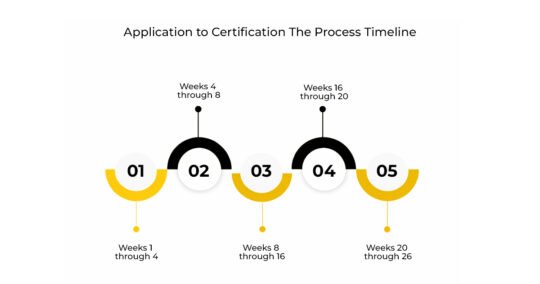
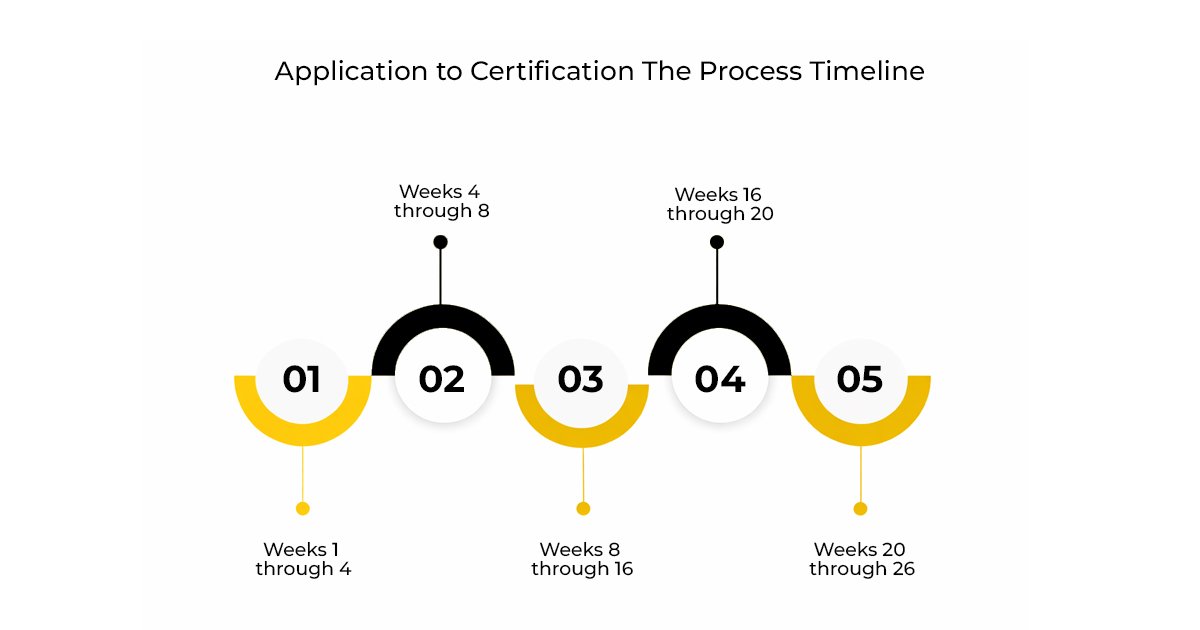
Once you have completed your transition period (or if your land is already free of prohibited materials for three years or more), your active certification process should usually follow this schedule:
- Weeks 1 through 4: Find a certified certifier for your operation. There are more than 80 accredited certifiers recognized by the USDA working within the United States and abroad. Pick a certifier that knows your type of farming business.
- Weeks 4 through 8: Submit your Organic System Plan (OSP). This forms the backbone of your application and contains all the information about your farm including prevention of contamination.
- Weeks 8 through 16: Application review by the certifying agent. The agent might ask for further documentation or explanation of certain matters prior to arranging the site inspection.
- Weeks 16 through 20: An approved inspector carries out the on-site inspection.
- Weeks 20 through 26: Review the report and provide certification. In case of approval, you will receive your USDA organic certificate and be authorized to use the USDA Organic logo.
The entire process, from the application stage up to receipt of certificate, takes between three to six months, assuming that there are no non-conformities discovered during the review process.
USDA Organic Certification Costs: A Realistic Breakdown
USDA Organic Certification
Grow trust, access global organic markets & prove your commitment to sustainable farming.
Certainly, cost can be a serious matter for smaller businesses trying to become certified organically. However, there are many ways in which the cost can be greatly reduced by considering the fact that the cost differs from farm to farm, based on their sizes and the certifying organization involved, among other things.
Typical Cost Ranges
Most application fees are priced at between $400 and $2,000 or even more, depending on the certifier and size of your farm business. Certification fees are usually determined by how much is earned through the sale of organic products each year. Inspection fees that pay for the cost of inspecting the farm can cost between $300 and $1,500 or even more, particularly for places far away.
Some other expenses could include purchasing software for keeping records, soil and water tests, organic inputs, and consultant fees if you hire a consultant for organic farming.
The Organic Certification Cost Share Program USDA 2026
And that’s when things get much more interesting from the standpoint of the money side. The USDA Agricultural Marketing Service manages the Organic Certification Cost Share Program (OCCSP), which provides a refund of a percentage of the costs incurred during organic certification. According to the organic certification cost share program USDA 2026, the producers who meet the eligibility criteria can get up to 75% of the costs covered, with a maximum amount of USD 750 for each certification scope per year.
The application process takes place through the state departments of agriculture, and the period during which applications are accepted usually opens once a year. And if you have planned to obtain USDA organic certification, enrolling in the cost share program would be among the wisest financial decisions to take.
How to Get USDA Organic Certification: Step-by-Step
It need not be difficult to figure out the process of becoming certified as an organic farmer. Below are some useful tips on how to proceed:
Step 1; Check if you qualify for certification. Ensure that you have adhered to the minimum transitional period requirement before starting. Provide evidence of this in terms of purchase invoices for inputs purchased, leases or previous history of land use, among others.
Step 2: Choose a certifier accredited by the USDA. The list of accredited certifiers can be found at the USDA NOP site. Identify two or three from this list and compare their costs, turnaround time, and specialization.
Step 3: Prepare your Organic System Plan (OSP). This plan is essential in applying for organic certification. It should contain all information regarding your organic farming system, including the farm, inputs, implements, water supply, storage, pest control, and record keeping practices.
Step 4: Submit your application together with the application fee.
Step 5: Get ready for and pass the on-site inspection. An independent inspector will come to your facility to ensure that what you do matches the OSP.
Step 6: Receive the certification results. Should your application be successful, the certificate you receive will clearly list the produce and the amount of land covered by the certification.
Step 7: Ensure continuous compliance and annual renewal. Your organic certification through the USDA is an annual process, and you have to submit updated information and face at least one annual inspection.
How to Pass USDA Organic Farm Inspection the First Time
It’s the part of the process that frightens many new applicants most. However, passing USDA organic farm inspection can be relatively easy when you understand the following things regarding how to get USDA organic certification successfully:
Keep your paperwork organized. Inspectors always check the continuity of your audit trail. All inputs purchased by you, field activities performed by you, and any sales that you’ve made should be supported by appropriate documents, stating dates, quantities, and sources. Invoices, labels, field activity record, and sales receipt papers will do the job.
Your OSP should correspond to your practice. Inspection includes walking through your fields, inspecting your storage premises, and interviewing you on your practices. Thus, if your OSP states that you are using certain pest management product, but an inspector found another one at your storage premises, it will cause problems. Amend your OSP accordingly anytime you alter your practices.
Tell the inspectors how you manage contamination risks. If your business operates near some non-organic farms, describe what measures you take to prevent spray drift or contamination – it can include erection of some physical barriers, establishment of buffer strips, or any other measure.
Pose your questions prior to the inspection and never during the inspection. If you have any issues related to compliance, you should contact your certifying agent beforehand since inspectors’ role is not to offer guidance but to confirm information and facts. Do not try to hide your non-compliances; if there was an error on your part, or you accidentally used a prohibited product, inform your certifier ahead of time.
The organic certification process allows for solving minor problems, but deliberate hiding can cause denial, suspension, or even fines.
How to Check USDA Organic Certification: Verify Before You Trust
It is useful to know how to verify organic certification, regardless of whether you are an individual who wants to confirm a product’s certification status, a retailer looking into the validity of a new supplier, or a producer checking out his competitor’s certification status. The U.S. Department of Agriculture provides access to its Organic Integrity Database, accessible via ams.usda.gov/organic-integrity.
This database enables users to look up the certification status of an organic operation based on name, geographical location, certifying agent, or certificate ID number. The database identifies what kind of products and scope are included under each certificate, as well as the status of each certificate, either active, suspended, or revoked.
Businesses importing or exporting organic food products would do well to first verify their suppliers’ status in this database prior to concluding any transaction.
USDA Organic Certification and the Organic Certification Process in India
Whereas USDA organic certification represents a uniquely American standard, it has considerable significance for producers outside the US, especially those exporting their goods to America. As a country that exports a huge amount of organic products across the globe, India possesses its own certification system for organic products; however, the producers wishing to export their goods to the US also undergo USDA NOP certification.
India’s NPOP program is regulated by APEDA (Agricultural and Processed Food Products Export Development Authority). Equivalency arrangements have been reached between NPOP and the EU; however, currently, the NPOP does not possess a full equivalency arrangement with USDA NOP; thus, exporters from India have to apply for separate USDA NOP certification.
Indian manufacturers hoping to sell their certified organic food products in the U.S. market should partner with a certifier that is accredited by the USDA and operates internationally; there are many large certifiers that do business in Asia. It’s best to start out your operation following the NOP standards.
Common Mistakes to Avoid in USDA Organic Certification
Now that we have discussed the roadmap, here are the typical mistakes that applicants tend to make:
Delaying the process. The transition period of three years is compulsory. Many producers are under the wrong impression that they can start selling organic products within that period and hence face disappointment when they are forced to wait.
Inconsistent Organic System Plans. Inconsistency in the OSP is the leading cause of application delays. Make sure you take enough time and draft it accurately.
Failing to document records immediately. This is a major problem because it is both tedious to reconstruct records and it raises suspicion. You should get into the habit of maintaining proper records right from the start.
Use of unverified inputs. All natural products cannot be used as inputs according to the NOP guidelines. You should ensure that the products you use have been verified by checking them against the OMRI listing.
Lapses in renewal of certification. Failure to renew the certification process makes the certification invalid. You should set reminders in your calendars at least several months before the deadline for both the process and the cost-share program.
Key Takeaways
- There will be an obligatory three-year transitional period during which you will have to avoid using any substances forbidden under the rules of USDA organic certification on your farm.
- Organic certification cost share program USDA 2026 offers reimbursement of up to 75 percent of the total cost of your certification, you should apply to the program in the department of agriculture in your state or local FSA office.
- Organic System Plan plays a crucial role in your application, it should be detailed, up-to-date, and reflect all changes of your agricultural activities.
- Knowledge of how to verify organic certification using USDA Organic Integrity Database saves consumers, retailers, and producers from deception.
- Farmers in India and other countries planning to receive USDA organic certification for export should use the services of a USDA-accredited certifying agent since their national certificates like NPOP do not correspond yet with NOP.
Frequently Asked Questions
What is the organic certification definition under USDA rules?
Organic certification definition according to USDA regulations means official verification that the farm or handling business complies with NOP requirements and is organic, meaning that there have been no synthetic pesticides, GMOs, or other prohibited materials used during the production of such produce.
How do I get organic certification for my farm?
To answer the question regarding how one can acquire organic certification, begin with successfully going through the three-year period when your land is transitioning to organics. Next, choose an accredited certifier, develop an Organic System Plan, and finally pass the on-site inspection. The process usually takes from three to six months after the transition period.
What is the organic certification cost share program USDA 2026?
The organic certification cost share program USDA 2026 is meant for reimbursement of 75 percent of certification expenses made by producers and handlers up to the sum of USD 750 per scope annually. To apply, contact the state department of agriculture or local FSA office.
How do I pass USDA organic farm inspection the first time?
In order to know how to succeed with your first USDA organic farm inspection, it’s important to maintain accurate and up-to-date records, make sure that your Organic System Plan mirrors your current practices, and communicate any problems you may have with your certifier in advance of the inspection.
How do I check organic certification of a business or product?
To find out how to check organic certification, use the USDA Organic Integrity Database, available at ams.usda.gov/organic-integrity and search using the name of operation, geographic location, or certificate number.
How do I obtain organic certification if I am based outside the US?
In order to find out how to get organic certification as an international producer, you should choose a USDA-accredited certifying agent in your country and follow NOP requirements from the start of your transition period.
Is the organic certification process in India recognised by the USDA?
The organic certification program in India, NPOP, is not currently USDA NOP equivalent, which means Indian producers who wish to export their products to the US have to go through an additional USDA NOP certification process.