

If your business involves exporting goods or has to deal with international businesses, it is very likely that you have come across the term SMETA audit certification. Today, global businesses and retailers are demanding their Indian suppliers to undergo the audit certification before getting into any kind of business. However, there are many exporters and manufacturers out there who are not aware of what exactly the audit is, how much it costs, and how they should prepare for it.
This blog will cover all the information you need to know regarding the audit.
What Is SMETA Audit Certification?
SMETA is the abbreviation for SEDEX Members Ethical Trade Audit. This is one of the most widely recognized social compliance audits in the world, developed and managed by SEDEX, also known as the Supplier Ethical Data Exchange. The SMETA audit certificate is not a government license, but rather a third-party assessment of the business to determine if the supplier is using ethical business practices.
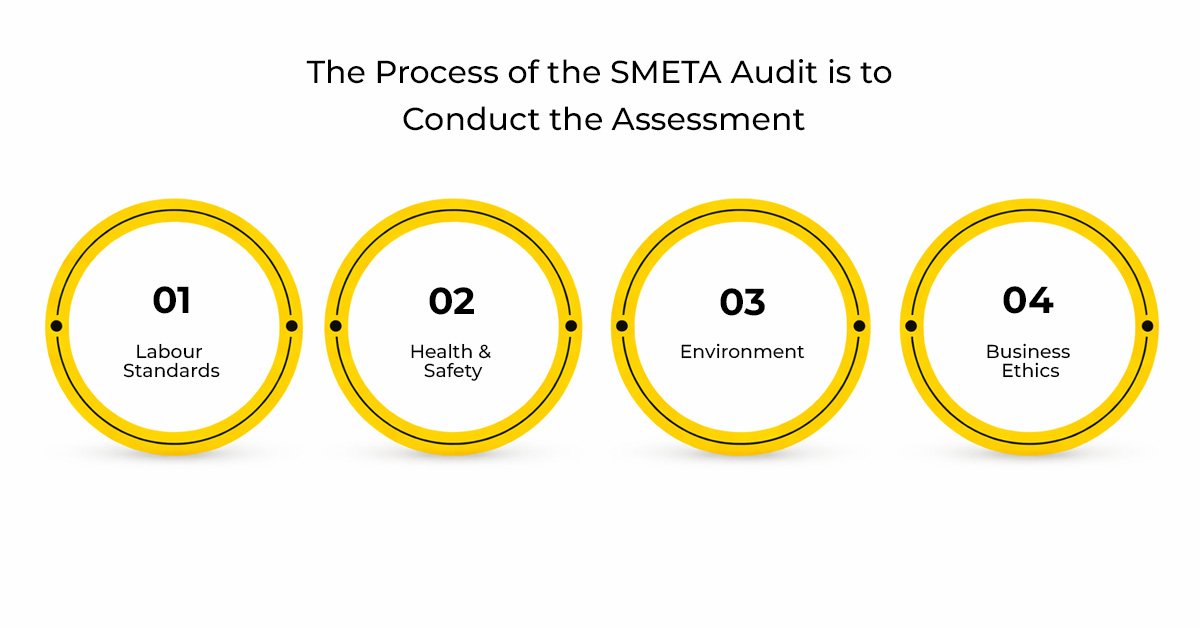
The process of the SMETA audit is to conduct the assessment of the operations of the supplier in comparison with the international standards in the following four important pillars:
- Labour Standards – hours of work, wages, employment contracts, and freedom of association
- Health & Safety – health and safety in the workplace, emergency procedures, and risk assessment
- Environment – environmental policies, waste disposal, and energy efficiency
- Business Ethics – anti-bribery policies, legal compliance, and ethical business practices
The SEDEX SMETA audit is conducted in two different formats: the 2-pillar audit, which includes the Labour and Health & Safety aspects, and the 4-pillar audit, which includes all the above-mentioned aspects. The 4-pillar audit is the requirement of all the international buyers.
Why Does SMETA Audit Certification Matter for Indian Exporters?
India is one of the largest export countries of textiles, garments, handicrafts, food products, and engineering products. With the current focus on the global supply chain, international buyers, especially from the UK, Europe, and North America, are demanding evidence of ethical trade compliance.
The following are the reasons why SMETA audit certification is becoming the norm and not the exception:
- Many international retailers only onboard suppliers with SMETA audit reports.
- One of the major advantages of the SMETA audit is the demonstration of ethical trade compliance.
- There is also the avoidance of audit fatigue, as the SMETA audit can be shared with multiple buyers through the SEDEX platform.
- The SMETA audit also helps in the development of the credibility of the suppliers and opens doors to premium export markets.
SMETA Audit Certification Process
Step 1: Register on the SEDEX Platform
The first step in the SMETA audit certification process is to register your facility on the SEDEX platform at www.SEDEX.com. Membership to SEDEX is a prerequisite for SMETA audit certification. SEDEX offers two types of membership to its suppliers:
AB Member – Suppliers who buy and sell to other SEDEX members
B Member – Suppliers who sell to SEDEX-registered buyers only
Membership fees for Indian suppliers to SEDEX range from $150 to $300 per annum based on membership levels.
Step 2: Complete the Self-Assessment Questionnaire (SAQ)
Before scheduling the SMETA audit, you will be required to complete a Self-Assessment Questionnaire on the SEDEX platform. The Self-Assessment Questionnaire covers labor practices, health and safety, environment, and business ethics.
Step 3: Link With Your Buyer on SEDEX
Your buyer is required to initiate a link request on SEDEX to link with you. Once linked, your buyer will be able to view your audit report and SAQ responses.
Step 4: Choose an Approved Audit Body
The SEDEX SMETA audit needs to be performed by an approved body. In India, there are various approved bodies functioning across key industrial areas such as Delhi NCR, Mumbai, Bengaluru, Tirupur, Surat, and Ludhiana. Some of these approved bodies include Bureau Veritas, SGS, Intertek, and ELEVATE.
Step 5: Pre-Audit Preparation
In this step, many suppliers face difficulties. Before the actual auditing process begins, you will be required to prepare and present various documents such as wage registers, attendance records, and contracts to your auditor. Other key areas to prepare for include health and safety risk assessments, fire drill records, environmental permits, and waste disposal records. An assessment is recommended before the actual auditing process.
Step 6: On-Site Audit
In this step, the approved body will visit your factory for one to two days to carry out the actual auditing process. The SMETA audit process will include a combination of document review, interviewing workers, interviewing management, and a facility walkthrough. The workers will be interviewed confidentially. This is a key step and cannot be tampered with.
Step 7: Corrective Action Plan (CAPR)
The auditor prepares a CAPR after the audit. This contains all the non-conformities identified during the audit. Non-conformities are classified as Critical, Major, and Minor. If there are any instances of child labour or forced labour, the audit fails. Non-conformities must be addressed within a set timeframe.
Step 8: Report Shared on SEDEX
Once all the issues are resolved, the final SMETA report is shared on the SEDEX platform with your associated buyers.
SMETA Audit Certification Cost in India
| Cost Component | Approximate Range (INR) | Notes |
| SEDEX Membership (Annual) | ₹12,000 – ₹25,000 | Based on membership type |
| Gap Assessment / Pre-Audit | ₹15,000 – ₹40,000 | Optional but recommended |
| 2-Pillar SMETA Audit | ₹35,000 – ₹70,000 | Labour + H&S only |
| 4-Pillar SMETA Audit | ₹55,000 – ₹1,20,000 | All four pillars |
| Corrective Action Support | ₹10,000 – ₹30,000 | If external help is needed |
| Total Estimated Cost | ₹70,000 – ₹2,00,000+ | Varies by facility size |
SMETA Audit Certification Requirements: Complete Checklist for Indian Suppliers
It is important to note that meeting SMETA requirements is not just about providing paperwork. Here is a basic check list for you to consider by SMETA pillar:
| Category | Requirement | Evidence/Documentation |
| Labour Standards | Employment Contracts | Verified contracts for all employees and contract workers. |
| Fair Wages | Wage records/pay slips meeting state minimum wage rates. | |
| Working Hours | Time sheets/attendance logs (max 60 hours per week). | |
| Child Labour Prevention | Age verification documents (Aadhar, birth certificates). | |
| Rights of Workers | Formal Freedom of Association Policy in place. | |
| Health & Safety | Legal Licensing | Valid factory license (Factories Act, 1948). |
| Fire Safety | Fire drill logs and equipment inspection records. | |
| Medical Readiness | Stocked first aid kits and list of trained first aiders. | |
| Physical Safety | Installed machine guarding and available PPE. | |
| Emergency Protocols | Visible evacuation plans and marked emergency exits. | |
| Environment | Regulatory Consent | Pollution Control Board (PCB) consent certificate. |
| Waste Management | Effluent treatment plant (ETP) logs and test reports. | |
| Hazardous Waste | Disposal records and valid contracts with authorized vendors. | |
| Resource Tracking | Monitoring records for energy and water consumption. | |
| Business Ethics | Integrity Policy | Formal Anti-bribery and Corruption policy. |
| Supply Chain Ethics | Supplier Code of Conduct signed by management. | |
| Worker Voice | Functional grievance redressal system. | |
| Legal Compliance | Strict prohibition of illegal labour practices. |
SEDEX Audit Certification Benefits
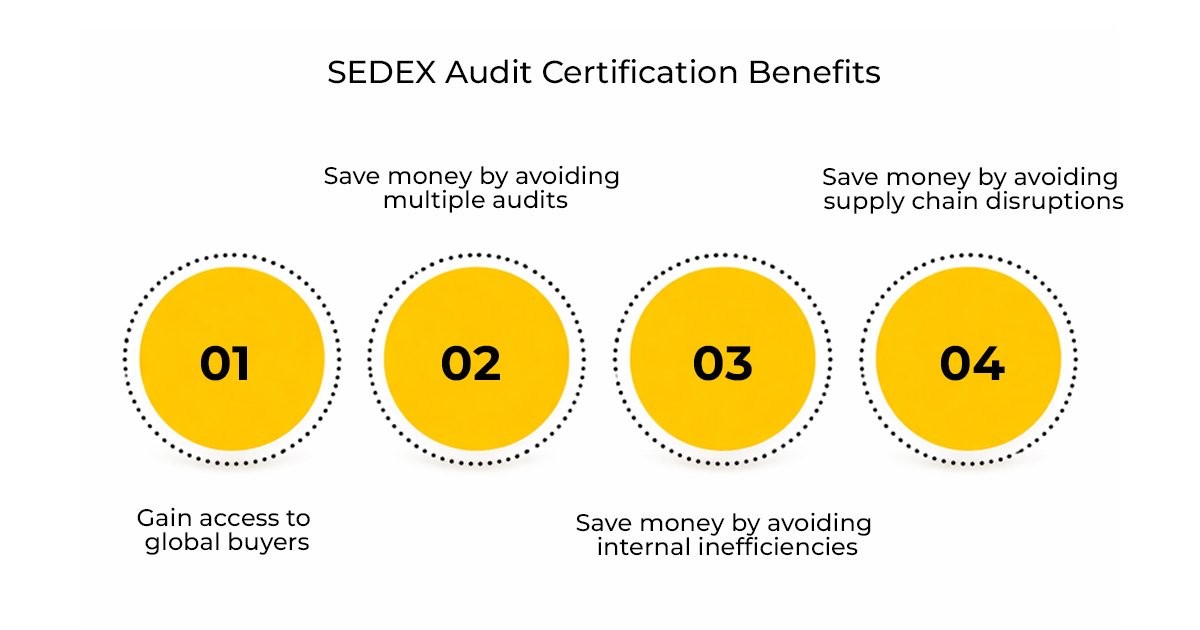
Aside from compliance, there are tangible and long-term benefits of using the SEDEX export process. Here’s what Indian businesses gain after procuring their much-needed SMETA audit certification:
- Gain access to global buyers: The SEDEX export process can open doors to top-class retailers in the world
- Save money by avoiding multiple audits: A single report is enough to share it with an unlimited number of buyers
- Save money by avoiding internal inefficiencies: The audit process will help you identify internal inefficiencies
Save money by avoiding supply chain disruptions: You will avoid supply chain disruptions as you are already compliant with due diligence checks.
>Top Trending Guide:- BRC Full Form, Meaning, Certification Process & Cost in India (2026 Guide)
Frequently Asked Questions
What is the SMETA audit certification process and cost in India?
The process requires SEDEX registration, completing the SAQ, gap assessment, and finally the audit by an approved body. The cost for Indian exporters can vary between ₹70,000 to ₹2,00,000.
What are the SEDEX SMETA audit requirements for exporters India?
Indian exporters require SEDEX membership, completing the SAQ, and meeting SMETA requirements in labour, health & safety, environment, and business ethics.
How to get SMETA audit certification step by step?
SEDEX registration requires you to register on SEDEX, complete the SAQ, conduct a gap assessment and address any non-conformities. Then, book a SEDEX approved auditor and address any CAPR before the report goes live.
Is SEDEX required export from India?
It is not a legal requirement but functionally mandatory if you need to export to international buyers who are already using SEDEX and will not accept you if you are not.
What is the SEDEX export process?
The process of exporting in SEDEX begins with supplier registration in SEDEX, completing the SAQ, linking up with a buyer, passing the SMETA audit, after which your report is sent to the buyers digitally.
What are the SEDEX export benefits for Indian suppliers?
The advantages of exporting in SEDEX include linking up with global buyers, removal of audit duplication, increased credibility in tender processes and increased transparency in supply chain operations.
How long is a SMETA report valid?
The validity of a SMETA report is between one to two years as required by the buyer; after this period, a re-audit is required to renew your certificate in the SEDEX database.